Ctrl K
1770–1829
Occupations
Hendrik Willem Caspari (1770-1829) was a Dutch painter, draughtsman, and engraver of German descent whose career centered on portrait production in Amsterdam during the late eighteenth and early nineteenth centuries. Born in Wesel am Rhein on January 28, 1770, Caspari moved to Amsterdam at age six in 1776, where he would spend the remainder of his life. He studied under G. Grypmoed before establishing a versatile practice that encompassed work for tapestry manufacturers, miniature painting, portrait sketching, and engraving. Caspari's portraits documented Amsterdam's artistic community and notable figures, with several of his portrait drawings subsequently engraved by printmakers like J.E. Marcus, extending their circulation. His subjects included fellow artists Christiaen Andriessen and Jurriaan Andriessen, creating valuable records of Amsterdam's late eighteenth-century artistic milieu. Working across multiple media and scales, from tapestry designs to intimate miniatures, Caspari exemplified the adaptability required of professional artists in an era of changing patronage patterns. He died in Amsterdam on September 8, 1829, at age fifty-nine.
Hendrik Willem Caspari was born in Wesel am Rhein, a fortified city in the Duchy of Cleves (now in North Rhine-Westphalia, Germany), on January 28, 1770. His family relocated to Amsterdam in 1776, when Hendrik Willem was six years old. This move from German territories to the Dutch Republic provided the young Caspari with cultural and linguistic connections to both regions.
In Amsterdam, Caspari received his artistic training under G. Grypmoed, a painter about whom little is now known but who evidently provided solid instruction in drawing, painting, and possibly engraving techniques. This education prepared Caspari for the varied professional activities that would characterize his career.
Caspari's early professional work included employment with the Troost van Groenendoelen tapestry manufacturers, for whom he created designs. This work in applied arts provided steady income while developing his skills in large-scale composition and decorative design—capabilities different from but complementary to easel painting.
Subsequently, Caspari turned to miniature painting, an art form requiring exceptional technical precision and patience. Miniature portraits, often painted on ivory or vellum, served as intimate keepsakes and jewelry elements, appealing to clients who desired portable, personal images of loved ones. The shift from large-scale tapestry design to minute miniature work demonstrated Caspari's technical versatility.
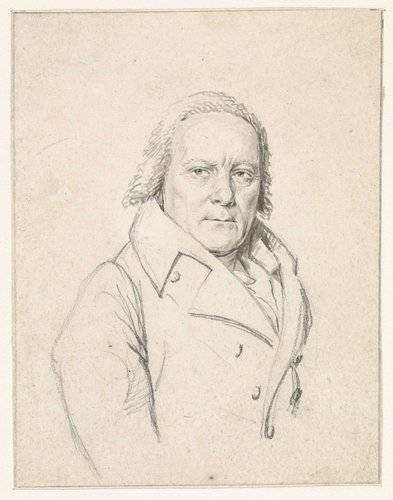
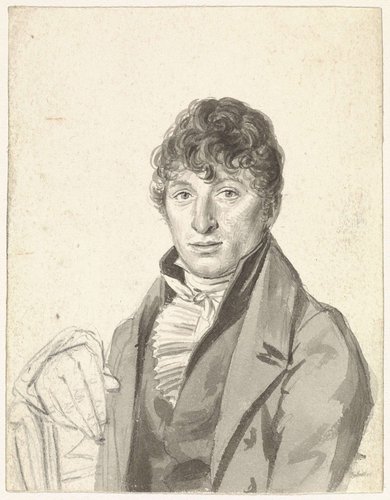
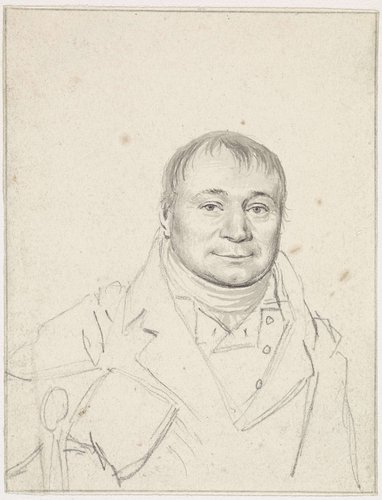
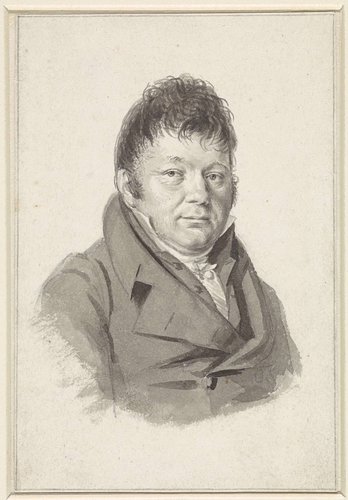
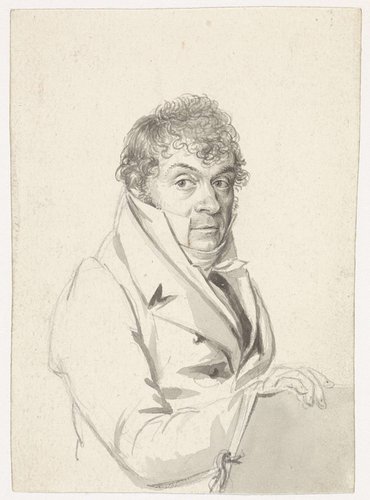
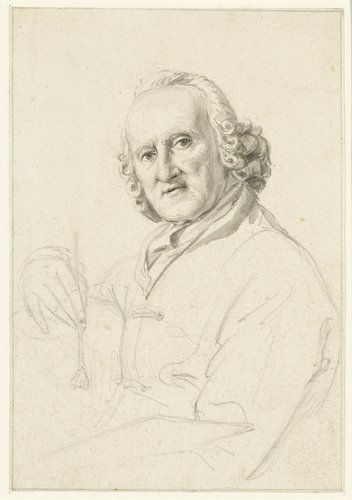
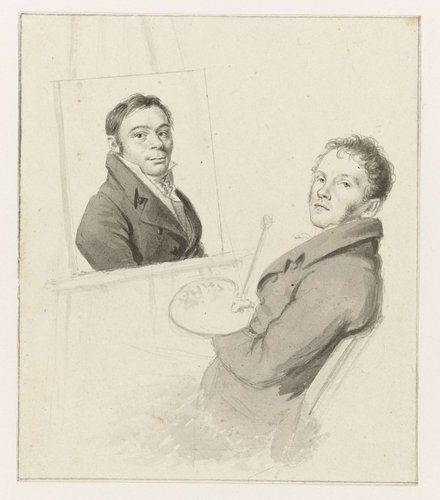
Caspari also produced portrait sketches, many of which were subsequently engraved by J.E. Marcus and other printmakers. This collaboration between draughtsman and engraver followed common practice: Caspari created original portrait drawings, which Marcus then translated into engravings for reproduction and sale. This process extended the circulation of Caspari's portraits beyond single drawn examples to multiple printed impressions.
His subjects included members of Amsterdam's artistic community, providing valuable documentation of late eighteenth-century Dutch artists. Notable examples include his portrait of Christiaen Andriessen depicting that artist painting a portrait of Izaäk Riewert Schmidt (c. 1780-1829), and his portrait of Jurriaan Andriessen (1780-1829). These works preserve not only likenesses but also insights into artistic practice and professional relationships.
Caspari's works are preserved in major Dutch collections, particularly the Rijksmuseum and the British Museum, testifying to the quality and historical value of his production. He died in Amsterdam on September 8, 1829, at age fifty-nine, having spent fifty-three years in the city that became his adopted home.
Artheon Research Team
Last updated: 2025-11-09
Biography length: ~448 words
Wikidata (CC0); Getty ULAN (ODC-By)