
Ctrl K
1677–1777
Charles Donzé (1677–1777) was a French artisan active in Paris, best known today for his exquisite silversmithing. Born in the vibrant cultural hub of the French capital during the late Baroque era, Donzé lived through an extraordinary century that spanned the grandeur of Louis XIV's reign, the opulent Regency under Philippe II, and the refined elegance of Louis XV's rococo period. Remarkably long-lived at 100 years, he witnessed the evolution of French decorative arts from monumental splendor to intricate domestic luxury. However, details of his early life and training remain not well documented, with no records of specific teachers, mentors, or formal apprenticeships surfacing in historical sources.
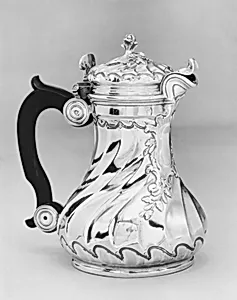
Working in the prestigious tradition of Parisian silversmiths, Donzé crafted objects that embodied the technical mastery and aesthetic sophistication prized by the French aristocracy and bourgeoisie. His surviving oeuvre is limited, but a standout piece is the coffeepot now in the collection of The Metropolitan Museum of Art. This elegant silver vessel exemplifies the period's attention to form and function, likely featuring chased decoration, hallmarks, and a graceful spout suited to the rising popularity of coffee in elite salons during the 18th century. While specific dates for the coffeepot are not detailed in available records, it reflects the high standards of the Paris guild system, where makers like Donzé stamped their work with maker's marks and town assays to guarantee quality.
Donzé's legacy endures through such rare artifacts, which offer glimpses into everyday luxury amid France's artistic golden age. Preserved in major institutions like the Met, his coffeepot serves as a tangible link to the silversmiths who supplied the tables of Versailles and Parisian hôtels particuliers. Though overshadowed by more prolific contemporaries, Donzé represents the unsung craftsmen whose precision elevated French metalwork to international renown, influencing later neoclassical designs. His work invites modern viewers to appreciate the artistry in functional beauty, a hallmark of 18th-century Paris.