Ctrl K
1864–1919
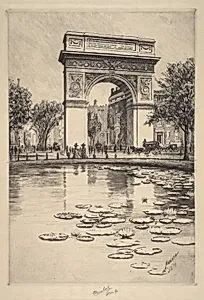
Charles Frederick William Mielatz (1864–1919) was an etcher and printmaker who became one of the most dedicated recorders of New York City in the age of its dramatic transformation into a modern metropolis. Born in Germany, he emigrated to the United States and settled in New York, where the spectacle of the rapidly changing city — its bridges, harbor, wharves, and crowded streets — became the central subject of his artistic life. He studied at the National Academy of Design in New York and became closely associated with the etching revival that flourished in America in the late nineteenth century.
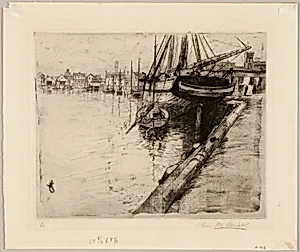
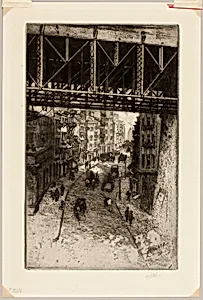
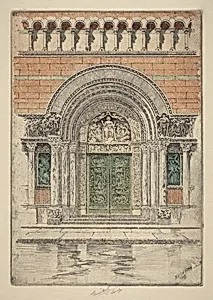
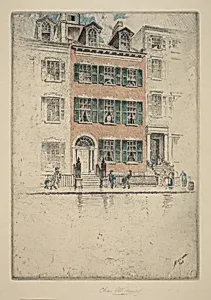
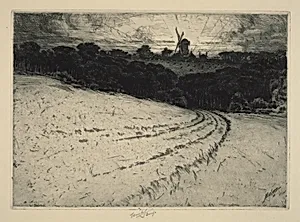
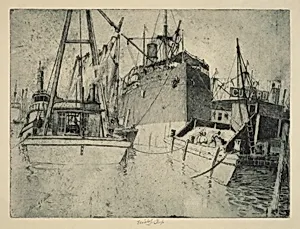
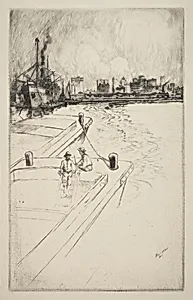
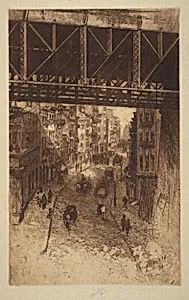
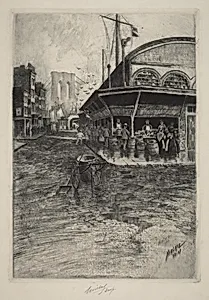
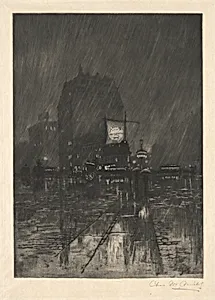
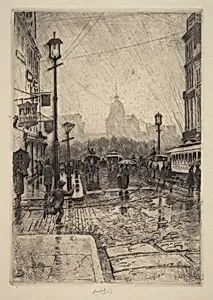
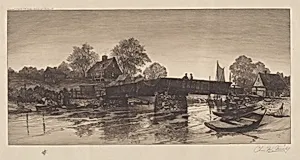
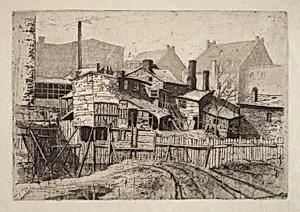
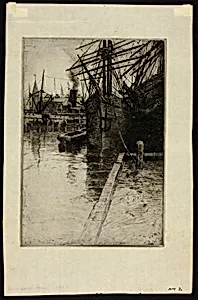
Mielatz was elected to the New York Etching Club and became a member of the National Academy of Design, affiliations that situated him within the organized professional world of American printmaking at a time when etching was celebrated as a fine art of great expressive potential. His prints are characterized by their documentary precision combined with an atmospheric sensitivity to light and weather — the mist rising from the East River, the shadows falling across the Brooklyn Bridge, the bustle of lower Manhattan captured in fine, descriptive line.
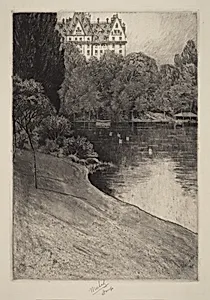
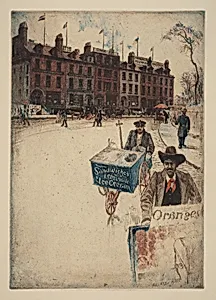
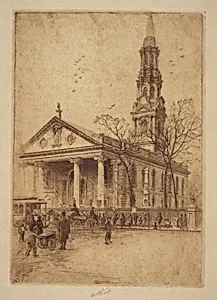
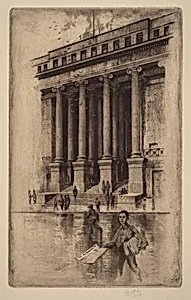
His most sustained achievement was his series of New York views, which together constitute a rich visual chronicle of the city at the turn of the twentieth century. At a moment when steel-frame skyscrapers were beginning to redefine the skyline and older neighborhoods were vanishing under the pressure of development, Mielatz's etchings preserved the texture and character of a city in the midst of reinventing itself.
Though less widely known today than some of his contemporaries, Mielatz's work holds considerable historical and aesthetic value. His prints are held in American museum collections and are prized by students of both urban history and the art of etching as accomplished records of a pivotal moment in New York's visual and architectural life.