Ctrl K
1863–1937
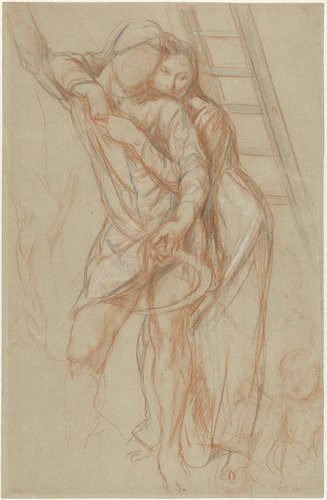
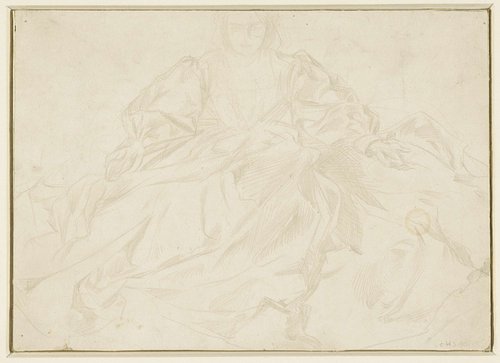
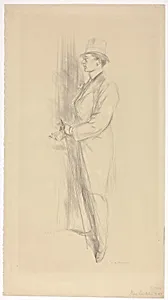
Charles Haslewood Shannon (1863–1937) was an English painter, lithographer, and printmaker whose career embodied the late Victorian and Edwardian artistic ideals of aestheticism and technical refinement. Born in Lincolnshire, Shannon formed a lifelong partnership with artist and designer Charles Ricketts, with whom he co-founded The Dial magazine and operated the Vale Press, creating some of the finest examples of Arts and Crafts book design. As a painter, Shannon sought to revive the techniques of Venetian Old Masters, particularly Titian, using rich, glowing colors in his classical and figure subjects. His dedication to perfecting his craft paid off when he won a gold medal in Munich in 1897, leading to election to the Royal Academy in 1920. Tragically, a fall in 1928 caused neurological damage that brought amnesia and ended his artistic career nine years before his death.
Born on April 26, 1863, near Sleaford, Lincolnshire, Charles Haslewood Shannon showed early artistic talent. He studied at Lincoln School of Art before moving to London to attend Lambeth School of Art in 1882.
At Lambeth, Shannon met Charles Ricketts, beginning what would become one of the most important artistic partnerships in late Victorian Britain. The two shared not only artistic interests but also a commitment to the aesthetic movement and the ideal of art for art's sake. They would live and work together for the rest of Shannon's active life, collaborating on numerous projects.
In 1889, Shannon and Ricketts founded The Dial, an avant-garde art magazine that ran until 1897. The magazine provided a platform for their artistic circle and promoted aesthetic principles in both visual art and literature.
From 1896 to 1904, the partnership operated the Vale Press, one of the finest private presses of the Arts and Crafts movement. The Vale Press produced beautifully designed books that integrated typography, illustration, and decoration into unified aesthetic wholes, demonstrating Shannon and Ricketts's commitment to total design and fine craftsmanship.
A meeting with the French Symbolist painter Pierre-Cécile Puvis de Chavannes in 1887 proved transformative for Shannon. Inspired by Puvis de Chavannes's monumental decorative style and his revival of Renaissance fresco techniques, Shannon decided to retire from commercial work to perfect his abilities as a painter.
For a decade, while Ricketts provided income through illustration work, Shannon devoted himself to studying Old Masters, particularly the Venetian painters. He was fascinated by Titian and sought to revive Venetian techniques through the use of rich, glowing color in his own classical and figure subjects.
This intensive study bore fruit in 1897 when Shannon won a gold medal at the Annual Exhibition of Fine Arts in Munich, establishing his international reputation. In 1907, he held his first solo exhibition at the Leicester Galleries in London. He was elected an Associate of the Royal Society of Painter-Etchers and Engravers in 1891 and achieved the pinnacle of British artistic recognition when elected to the Royal Academy in 1920.
In 1928, at age sixty-five, Shannon suffered a catastrophic accident while hanging a picture. The fall caused severe neurological damage, resulting in amnesia and effectively ending his artistic career.
Shannon lived for nine more years but was unable to return to painting. He died on March 18, 1937, at age seventy-three. His works are held in major collections including the National Portrait Gallery, Tate Britain, and the Metropolitan Museum of Art, testament to his achievement as one of the finest British painters of his generation.
Artheon Research Team
Last updated: 2025-11-09
Biography length: ~495 words
All 3 artworks loaded