Ctrl K
Charles Le Morvan (1865–1932), born Charles Marie Le Morvan in Pleubian, Brittany, emerged as a pivotal figure in the dawn of astronomical photography during the late nineteenth and early twentieth centuries. Joining the Paris Observatory staff in 1890, he worked as an assistant to astronomers Maurice Loewy and Pierre Puiseux, contributing essential photographic observations and glass plate preparations to their groundbreaking *Atlas photographique de la Lune*, published in installments from 1896 to 1910. Following Loewy's death in 1907, Le Morvan carried forward this meticulous tradition, employing the observatory's massive Great Equatorial Coudé telescope—a 60 cm aperture instrument with an 18-meter focal length—to capture thousands of lunar images over hundreds of nights.
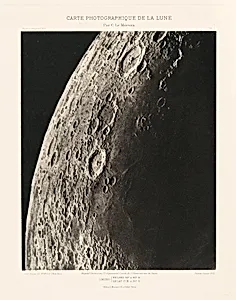
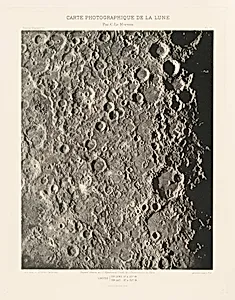
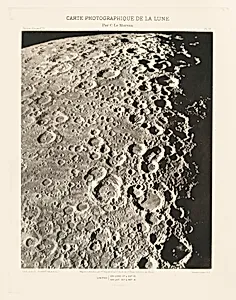
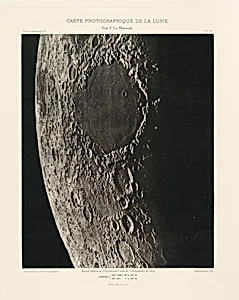
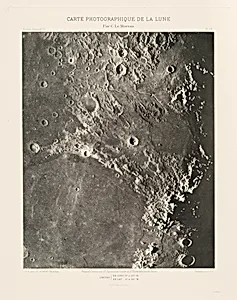
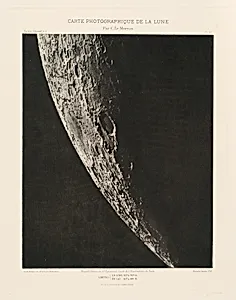
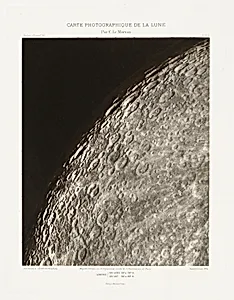
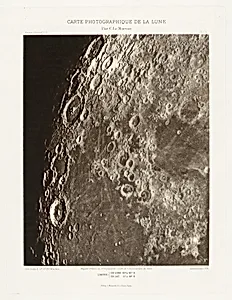
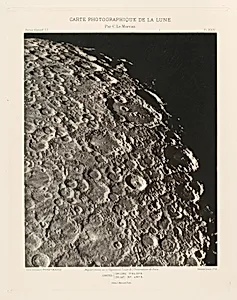
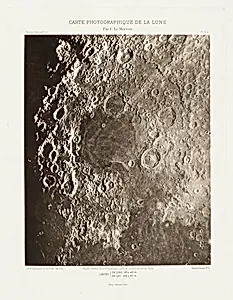
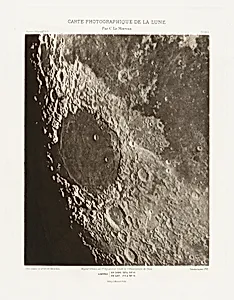
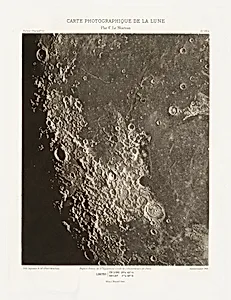
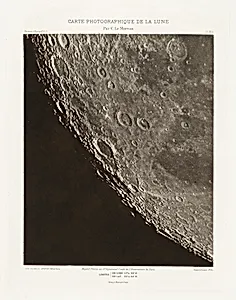
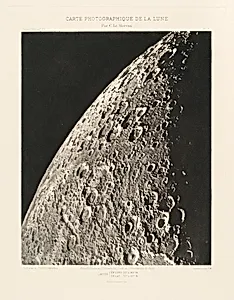
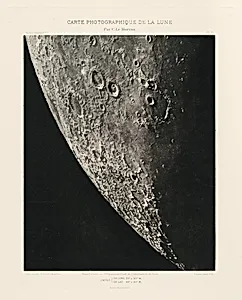
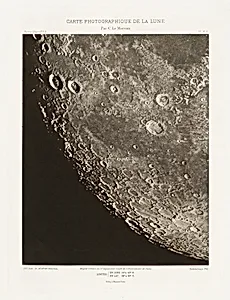
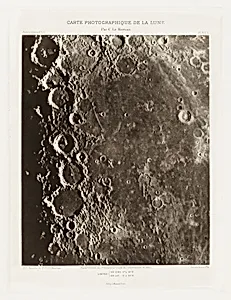
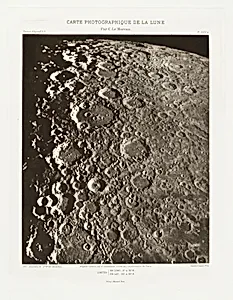
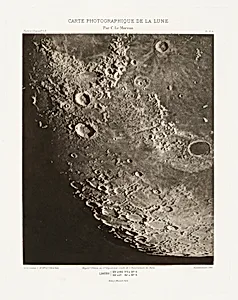
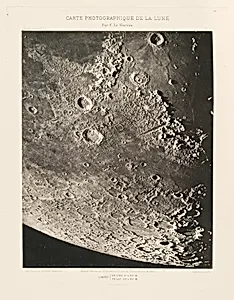
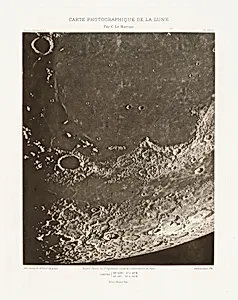
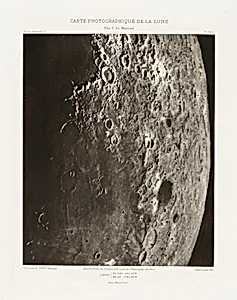
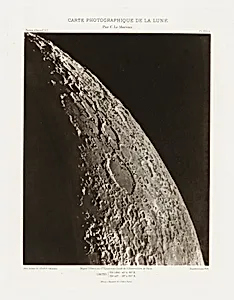
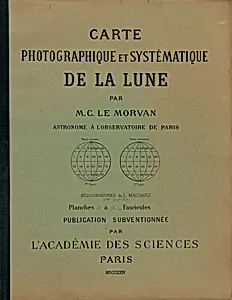
Le Morvan's oeuvre belongs to the pioneering school of scientific photography at the Paris Observatory, where precision and systematic documentation transformed raw celestial data into visual artistry. His photogravures, blending sharp detail with ethereal tonal gradations, elevated lunar cartography to an aesthetic plane, rivaling traditional fine art in their compositional rigor. The crowning achievement was his *Carte photographique et systématique de la lune* (1914), a monumental portfolio of 48 large-scale photogravures (38 x 49 cm) across six fascicles, depicting the Moon's entire visible hemisphere in waxing and waning phases, complete with transparent tissue overlays naming craters and features. Individual plates, such as *Carte photographique de la lune, planche I* (February 23, 1909, printed 1914) and *planche XII.A* (October 11, 1908, printed 1914), exemplify this series, with over 50 examples preserved in collections like the National Gallery of Art. A revised edition followed in 1926.
Le Morvan's legacy endures as the architect of the first comprehensive photographic lunar atlas, bridging science and visual splendor; his maps remained authoritative until the Space Age rendered them obsolete around 1960. Beyond photography, he discovered the asteroid (774) Armor in 1913, underscoring his dual prowess in observation and documentation. Today, his rare complete sets—housed in institutions like the Paris Observatory and Linda Hall Library—invite viewers to ponder the Moon not merely as a scientific subject, but as a canvas of cosmic poetry, forever mapping humanity's gaze skyward.