Ctrl K
1820–1880
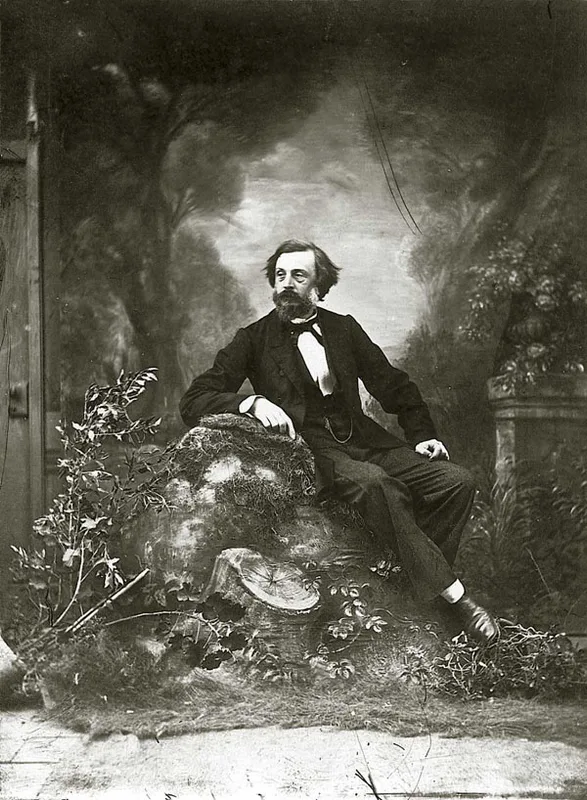
Charles Nègre (1820–1880) was a French painter and photographer who became one of the most innovative practitioners of early photography. Born in Grasse in the south of France, he trained as a painter in Paris under Paul Delaroche, Michel Martin Drolling, and Jean-Auguste-Dominique Ingres at the École des Beaux-Arts. He initially took up the calotype and later the collodion process as aids to his painting, but photography quickly became his primary medium.
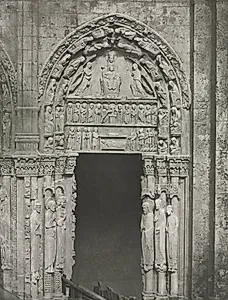
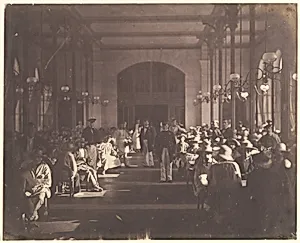
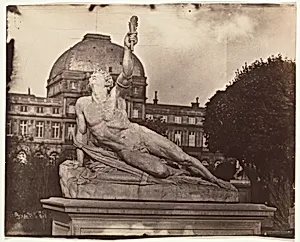
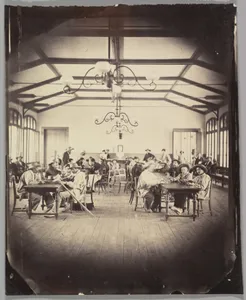
Nègre was a pioneer of street photography, capturing scenes of everyday Parisian life — chimney sweeps, organ grinders, and market vendors — with a spontaneity that was remarkably advanced for the 1850s. His images of the Petit Palais and the streets around Notre-Dame remain among the most vivid documents of mid-nineteenth-century Paris. He also produced an important photographic survey of Chartres Cathedral commissioned by the French government.
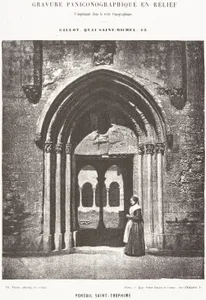
A restless technical innovator, Nègre developed a photogravure process — the héliogravure — that allowed photographic images to be printed with printer's ink on a press, a breakthrough that anticipated modern photomechanical reproduction. He patented the process in 1856 and used it to produce exquisite prints that rivaled the tonal range of original photographs.
Despite his innovations, Nègre struggled financially and returned to the south of France, where he spent his later years teaching drawing in Nice. His contributions to both the art and technology of photography were largely overlooked until the twentieth century, when scholars recognized him as one of the medium's most important early figures. His work is now held by the Musée d'Orsay, the Metropolitan Museum of Art, and the National Gallery of Canada.
![[Chartres Cathedral, Central Portal of the South Transept; The Last Judgment]](https://images.artheonmuseum.org/met/ph/thumb/chartres-cathedral-central-portal-of-the-south-transept-the-last-judgment-267296.webp)
![[Lord Brougham and his Family, Cannes]](https://images.artheonmuseum.org/met/ph/thumb/lord-brougham-and-his-family-cannes-286170.webp)
![[Trees and Waterfalls]](https://images.artheonmuseum.org/met/ph/thumb/trees-and-waterfalls-285852.webp)
![[Still Life with Game Birds]](https://images.artheonmuseum.org/met/ph/thumb/still-life-with-game-birds-286169.webp)
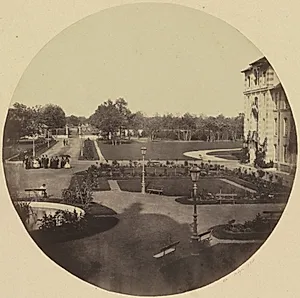
![[The 15th of August. Imperial Asylum at Vincennes]](https://images.artheonmuseum.org/met/ph/thumb/the-15th-of-august-imperial-asylum-at-vincennes-286165.webp)
![[Plaster Casts of Bishops' Miters, South Porch, Chartres]](https://images.artheonmuseum.org/met/ph/thumb/plaster-casts-of-bishops-miters-south-porch-chartres-285016.webp)
![[Family Group]](https://images.artheonmuseum.org/met/ph/thumb/family-group-286173.webp)
![[Self-Portrait in Eastern Costume]](https://images.artheonmuseum.org/met/ph/thumb/self-portrait-in-eastern-costume-286164.webp)