Ctrl K
1859–1935
Frederick Childe Hassam, born on October 17, 1859, in Dorchester, Massachusetts, to a family of New England descent with ties to Nathaniel Hawthorne through his mother, Rosa Delia Hawthorne, displayed an early aptitude for art. After his father's cutlery business was ruined by the Great Boston Fire of 1872, Hassam apprenticed as a wood engraver under George E. Johnson while taking drawing and watercolor lessons at the Mather School and classes at the Lowell Institute and Boston Art Club. He began his career as a freelance illustrator for magazines like *Harper's Weekly* and held his first solo watercolor exhibition in 1883, establishing himself in Boston's art scene. In 1884, he married Kathleen Maude Doane, and by the mid-1880s, he was teaching at the Cowles Art School.
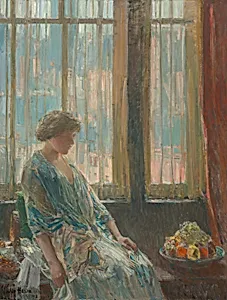
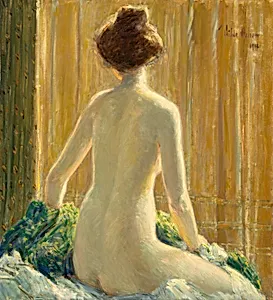
From 1886 to 1889, Hassam studied at the Académie Julian in Paris under Gustave Boulanger and Jules Joseph Lefebvre, though he chafed against its academic rigor, preferring to absorb Impressionist techniques from Monet, Sisley, Pissarro, and Renoir through museum visits and plein air practice. Returning to New York in 1889, he adopted a brighter palette and broken brushwork hallmarking American Impressionism, chronicling bustling urban life and New England coasts. A founding member of The Ten American Painters in 1897 alongside John Henry Twachtman and J. Alden Weir, Hassam rebelled against conservative academies, exhibiting vibrant cityscapes that captured "humanity in motion."
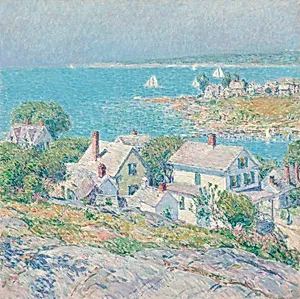
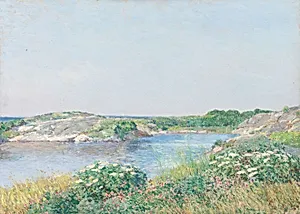
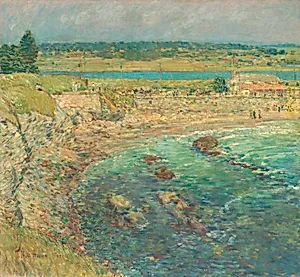
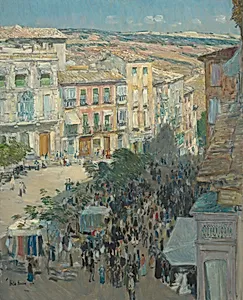
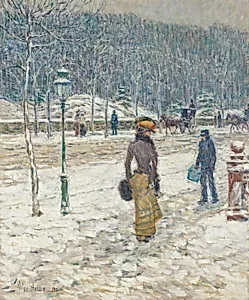
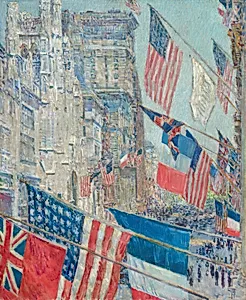
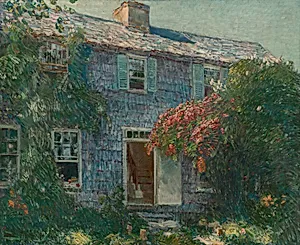
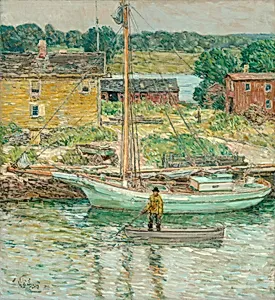
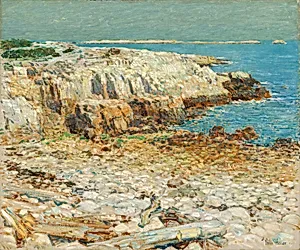
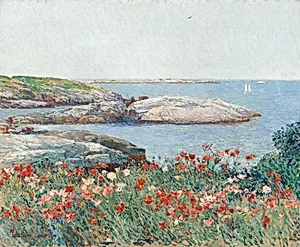
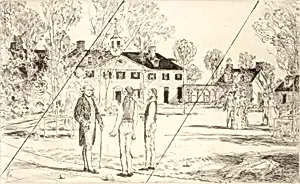
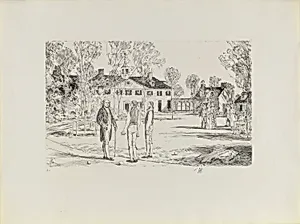
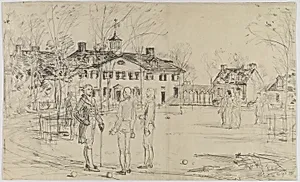
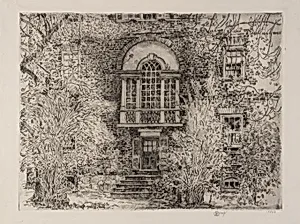
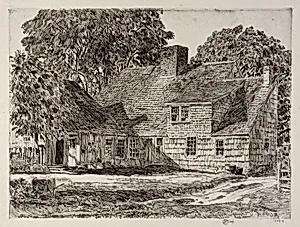
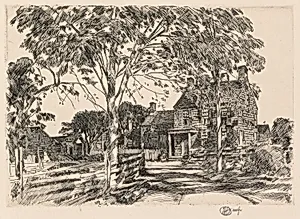
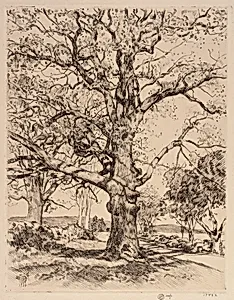
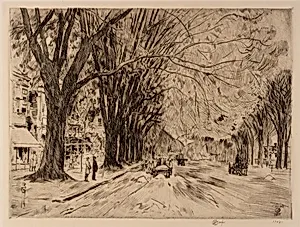
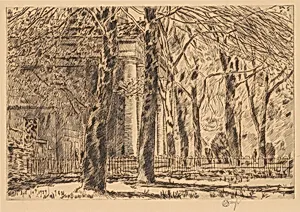
Hassam's oeuvre exceeds 3,000 works, including oils like *Rainy Day, Boston* (1885), *Washington Arch, Spring* (1890), *Coast Scene, Isles of Shoals* (1901), and his iconic World War I flag series such as *The Avenue in the Rain* (1917) and *Avenue of the Allies* (1918), which draped Fifth Avenue in patriotic banners. His luminous coastal scenes from the Isles of Shoals and Old Lyme Art Colony, painted with pure, tube-squeezed colors on unprimed canvas, evoke shimmering light and atmosphere. Later embracing etching, he produced over 400 prints after 1912. Hassam died on August 27, 1935, in East Hampton, New York, leaving a legacy as American Impressionism's most prolific champion, blending French innovation with native subjects to immortalize turn-of-the-century America's vibrancy.