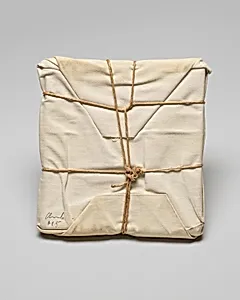
Christo Vladimirov Javacheff, born on June 13, 1935, in Gabrovo, Bulgaria, emerged from a childhood marked by wartime upheaval and a bohemian family environment that nurtured his artistic inclinations. The second of three sons to a textile manufacturer father and a politically active mother who worked at Sofia's Academy of Fine Arts, Christo received private art lessons from a young age, with his parents hosting visiting artists in their home. He studied at the Sofia Academy of Fine Arts from 1953 to 1956, where he chafed under the constraints of Soviet Socialist Realism, painting propaganda posters while drawing inspiration from smuggled Western art books and visiting Russian modernist professors. Fleeing communist Bulgaria in 1957, he briefly attended the Vienna Academy of Fine Arts, studying sculpture under Fritz Wotruba for one semester before moving to Paris.
In Paris, Christo met Jeanne-Claude Denat de Guillebon on October 6, 1958, while painting her mother's portrait; the two, born on the same day in 1935, soon became inseparable collaborators, marrying and having a son, Cyril, in 1960. Relocating to New York in 1964, they pioneered large-scale environmental installations in the Nouveau réalisme tradition, wrapping everyday objects, buildings, and landscapes in fabric to reveal hidden forms and temporal beauty. Their site-specific works, self-funded through sales of preparatory sketches and drawings, emphasized sensory experience over symbolism, transforming public spaces into immersive spectacles.
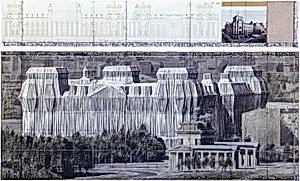
Among their iconic projects were *Iron Curtain* (1962), a barricade of oil barrels blocking a Paris alley in response to the Berlin Wall; *Valley Curtain* (1972), an orange nylon span across a Colorado valley lasting 28 hours; *Running Fence* (1976), a 24.5-mile white fabric fence along California's coast; *Wrapped Reichstag* (1995), silver fabric encasing Berlin's parliament after 24 years of planning; *The Gates* (2005), 7,503 saffron frames threading New York’s Central Park; and the posthumously realized *L'Arc de Triomphe, Wrapped* (2021), shimmering blue fabric over Paris's arch. Jeanne-Claude died in 2009, but Christo continued until his death on May 31, 2020.
Their legacy endures in redefining public art as ephemeral, participatory events that demanded bureaucratic navigation and environmental stewardship, influencing generations to challenge institutional norms. By funding projects solely through their art sales—no grants accepted—they proved the viability of autonomous, monumental creativity, with works now celebrated in major collections worldwide.

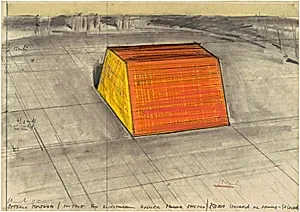
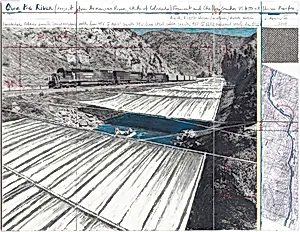
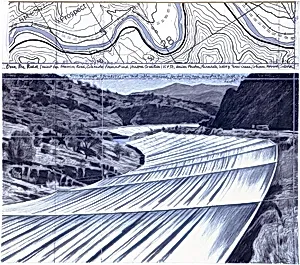
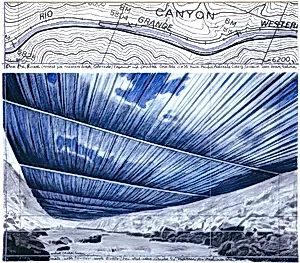
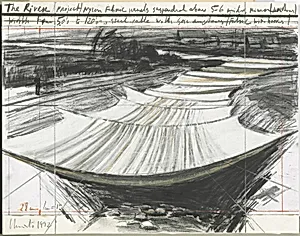
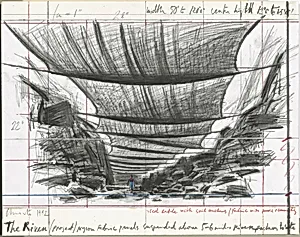
![Over the River, Project for the Arkansas River, Colorado [top panel]](https://images.artheonmuseum.org/nga/thumb/over-the-river-project-for-the-arkansas-river-nga-120706.webp)
![Over the River, Project for the Arkansas River, Colorado [bottom panel]](https://images.artheonmuseum.org/nga/thumb/over-the-river-project-for-the-arkansas-river-nga-120707.webp)
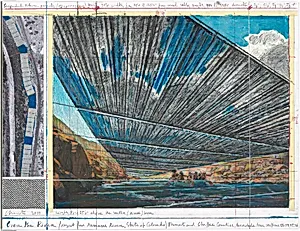
![Over the River, Project for the Arkansas River, Colorado [top panel]](https://images.artheonmuseum.org/nga/thumb/over-the-river-project-for-the-arkansas-river-nga-120708.webp)
![Over the River, Project for the Arkansas River, Colorado [bottom panel]](https://images.artheonmuseum.org/nga/thumb/over-the-river-project-for-the-arkansas-river-nga-120709.webp)
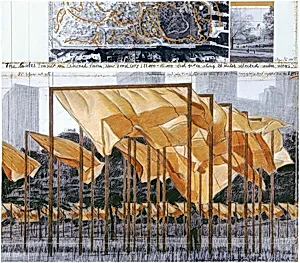
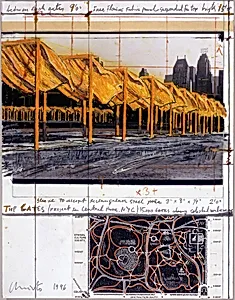
![The Gates, Project for Central Park, New York City [top panel]](https://images.artheonmuseum.org/nga/thumb/the-gates-project-for-central-park-new-york-city-nga-120784.webp)
![The Gates, Project for Central Park, New York City [bottom panel]](https://images.artheonmuseum.org/nga/thumb/the-gates-project-for-central-park-new-york-city-nga-120785.webp)
![Wrapped Reichstag, Project for Berlin [top panel]](https://images.artheonmuseum.org/nga/thumb/wrapped-reichstag-project-for-berlin-top-panel-nga-120716.webp)
![Wrapped Reichstag: Project for Berlin [bottom panel]](https://images.artheonmuseum.org/nga/thumb/wrapped-reichstag-project-for-berlin-bottom-panel-nga-120717.webp)
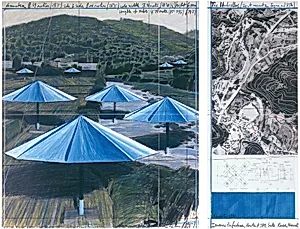
![The Umbrellas, Joint Project for Japan and U.S.A. [left panel]](https://images.artheonmuseum.org/nga/thumb/the-umbrellas-joint-project-for-japan-and-usa-nga-120702.webp)
![The Umbrellas, Joint Project for Japan and U.S.A. [left panel]](https://images.artheonmuseum.org/nga/thumb/the-umbrellas-joint-project-for-japan-and-usa-nga-120700.webp)
![The Umbrellas, Joint Project for Japan and U.S.A. [right panel]](https://images.artheonmuseum.org/nga/thumb/the-umbrellas-joint-project-for-japan-and-usa-nga-120703.webp)
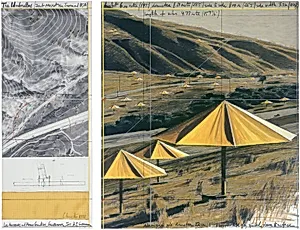
![The Umbrellas, Joint Project for Japan and U.S.A. [right panel]](https://images.artheonmuseum.org/nga/thumb/the-umbrellas-joint-project-for-japan-and-usa-nga-120701.webp)