Ctrl K
1834–1904
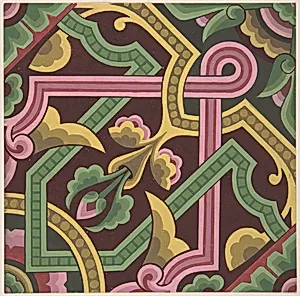
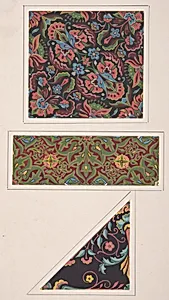
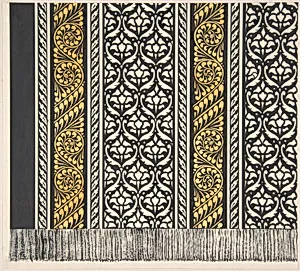
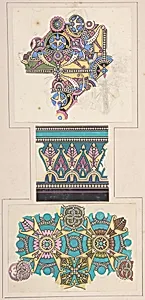
Christopher Dresser (1834–1904) was one of the most innovative and prolific designers of the nineteenth century, widely regarded as a pioneer of industrial design long before that discipline had a name. Born in Glasgow, Scotland, he trained at the Government School of Design in London, where he studied under leading educators committed to improving the quality of British manufactured goods. He went on to earn a doctorate in botany, and his deep knowledge of plant structures profoundly informed his aesthetic philosophy — he believed that natural forms encoded universal principles of beauty that could be translated into functional objects.
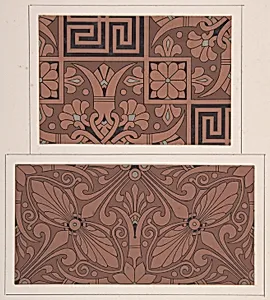
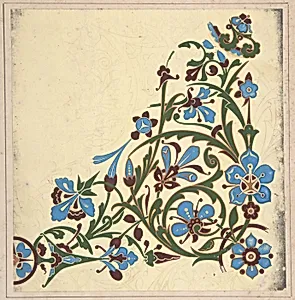
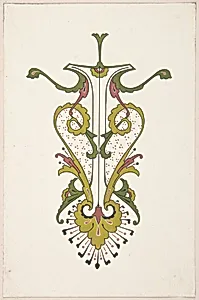
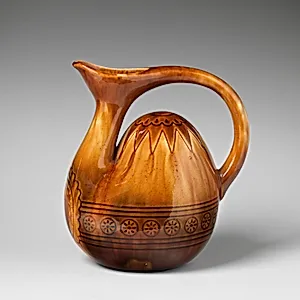
Dresser broke decisively from the ornate historicism that dominated Victorian design, embracing simplicity, geometric clarity, and honest expression of materials. He worked across an extraordinary range of media including metalwork, ceramics, glass, textiles, wallpaper, and furniture, collaborating with manufacturers such as Hukin and Heath, James Dixon and Sons, and Minton. His metalwork in particular — marked by angular, almost severe forms that anticipate twentieth-century Modernism — has attracted renewed critical attention in recent decades. His 1876–77 journey to Japan, one of the first such visits by a Western designer, deepened his engagement with Japanese aesthetics and reinforced his move away from Victorian excess.
Dresser also worked as a theorist, authoring influential books including The Art of Decorative Design (1862) and Principles of Decorative Design (1873), which disseminated his ideas to a wide audience of students and manufacturers. His written work helped establish a vocabulary for thinking about ornament that would resonate well into the twentieth century.
His legacy is immense. Dresser is now recognized as a founding figure of the Arts and Crafts movement's more commercially minded wing and a direct ancestor of Art Nouveau and Modernist design. His objects are held in major museum collections worldwide, and his reputation has only grown as design history has come to appreciate the radicalism embedded in his deceptively austere forms.