Ctrl K
1431–1506
**Circle of Andrea Mantegna** represents the workshop, followers, and close imitators active around the great Paduan-Mantuan master Andrea Mantegna (c. 1431–1506). These artists operated within Mantegna’s orbit in northern Italy, producing paintings, drawings, and decorative works that closely echo his distinctive style during the late fifteenth and early sixteenth centuries.
Mantegna himself trained under Francesco Squarcione, the Paduan painter and antiquarian who became his adoptive father and provided rigorous instruction in classical sculpture, perspective, and the study of ancient remains. The circle inherited this disciplined approach, working in the Paduan tradition that fused Gothic precision with emerging Renaissance naturalism and a profound engagement with Greco-Roman antiquity. Their output often features crisp linear contours, dramatic foreshortening, sculptural modeling of figures, and a cool, archaeological palette that evokes antique reliefs and cameos.
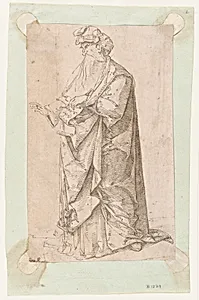
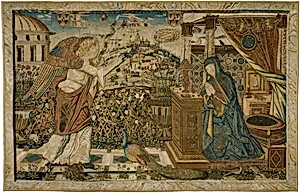
Among the works associated with the circle are devotional panels such as *Madonna and Child* (c. 1505/1510, possibly by the young Correggio), narrative scenes like *Christ in Limbo* (c. 1465), and the striking *The Dead Christ* (distemper on linen), which reprises Mantegna’s famous foreshortened composition. Tapestries and drawings, including *The Lovers* (1490/1500) and studies of standing figures, further demonstrate the workshop’s versatility in both painting and the applied arts.
The legacy of Mantegna’s circle lies in its role as a vital conduit for his innovations across northern Italy. By disseminating his mastery of perspective, illusionism, and classical revival, these artists helped shape the visual language of the High Renaissance, influencing subsequent generations while preserving the master’s exacting standards of draftsmanship and compositional rigor well into the sixteenth century. Their collective production remains essential for understanding the broader impact of Mantegna’s studio on Italian art.