
Ctrl K
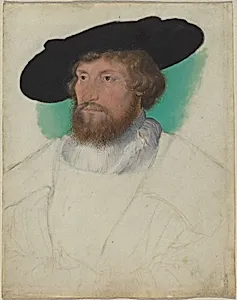
**Circle of Lucas Cranach the Elder** designates works produced in the workshop or by followers of the prominent German Renaissance painter Lucas Cranach the Elder (1472–1553), rather than by the master himself. These pieces reflect the distinctive style and themes popularized by Cranach’s prolific studio in Wittenberg, where assistants and imitators carried forward his techniques and iconography during the height of the Protestant Reformation.
Lucas Cranach the Elder was born in Kronach and likely received early training from his father, the painter Hans Maler. He established himself in Vienna before becoming court painter to the Electors of Saxony in Wittenberg around 1505, a position he held for nearly five decades. There he developed close ties with Martin Luther, producing influential portraits of the reformer and numerous woodcuts that helped disseminate Protestant ideas through the printing press. His large workshop, which included his son Lucas Cranach the Younger, enabled the mass production of paintings, prints, and designs for court and church patrons.
Artists working in the “circle” adopted Cranach’s characteristic Northern Renaissance approach: precise line work, luminous color, and a blend of religious, mythological, and portrait subjects. Common motifs include elongated female figures, hunting scenes, and allegorical themes rendered on panel with fine detail. Examples range from drawings such as *Standing Woman* (ca. 1505–10) to oil portraits like *Portrait of a Man* (1537), both now in major museum collections.
The legacy of the Cranach circle lies in its role sustaining the master’s visual language across Germany and beyond during the Reformation era. Workshop productions helped standardize Protestant imagery while preserving the elegant, courtly aesthetic that defined Saxon art in the sixteenth century. Today these works provide valuable insight into the collaborative nature of Renaissance studios and the widespread influence of one of the period’s most versatile painters.