Ctrl K
1834–1887
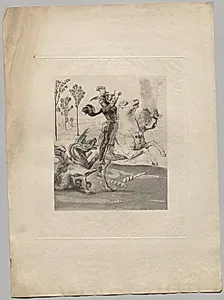
Claude Ferdinand Gaillard was born in Paris on 7 January 1834 and died in the same city on 19 January 1887. He studied under Léon Cogniet, entering the École des Beaux-Arts in 1850 and beginning his work as an engraver that same year. His early studies were probably with James Hopwood and Lecouturier. After winning the prestigious Prix de Rome for engraving in 1856, he spent several years in Italy, honing his skills amid the classical tradition. To support himself initially, he produced commercial fashion plates, but his dedication soon distinguished him.
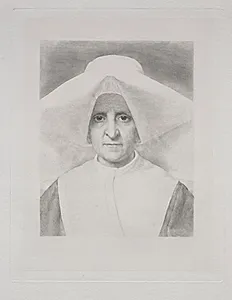
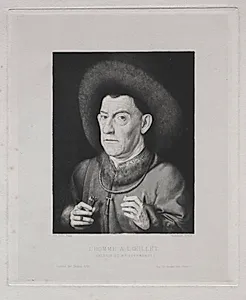
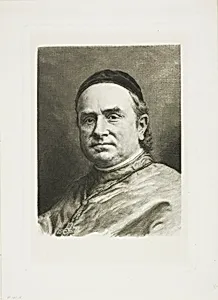
Gaillard developed a distinctive and innovative engraving technique using the burin, employing soft, delicate lines drawn closely together without crossing, which allowed him to capture every fold, wrinkle, and mark on the skin with extraordinary precision and a vaporous delicacy reminiscent of early Flemish masters like Van Eyck. This approach shocked contemporaries accustomed to more conventional, dramatic burin work; his first public exhibition in 1860 drew criticism for appearing labored and flaccid, more akin to drypoint. Yet in 1863, at the Salon des Refusés, his portrait of Bellini was praised by Philippe Burty as the work of a master who engraved with religious care and high classical talent. Thereafter, both his engravings and paintings appeared regularly at the Salon. As a painter, he produced small, highly characterized canvases with the same minute accuracy, including the Orientalist Odalisque of 1859./Claude_Ferdinand_Gaillard)
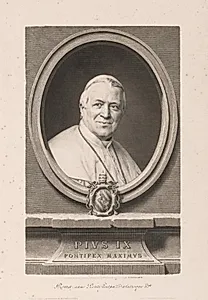
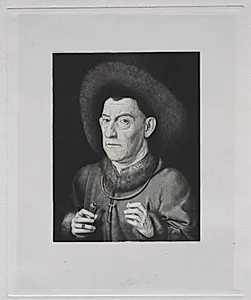
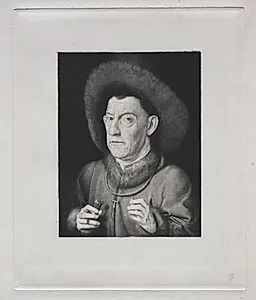
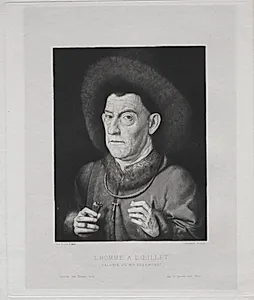
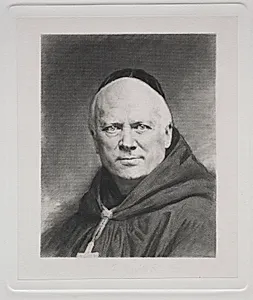
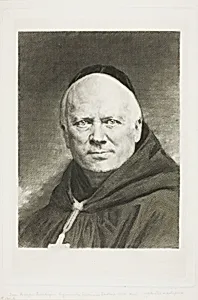
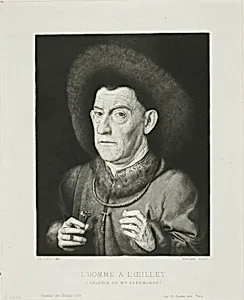
Among his most celebrated works are the engraving L'Homme à l'Oeillet (The Man with the Carnation), completed in just eight days, portraits of Popes Pius IX and Leo XIII that established his fame, a St. Sebastian of remarkable relief and chiaroscuro, and a portrait of Prosper Guéranger. He also created a Virgin after Bellini. Gaillard once declared, “My aim is not to charm, but to be true; my art is to say all.” His penetrating observation of the human face, rather than any secret process, accounted for the lifelike quality that led many to regard him as the most celebrated engraver of his day. He taught François-Eugène Burney and served as president of the Société des Graveurs au Burin. Decorated in 1876 and made an officer of the Légion d'honneur in 1886, he received a government commission shortly before his death to engrave Leonardo da Vinci’s Last Supper and Mona Lisa. Gaillard’s legacy endures in his fusion of academic training with a revolutionary, truthful naturalism that elevated engraving to new heights of psychological insight.