Ctrl K
1471–1571
Colin Nouailher, also known as Couly II Nouailher or simply Colin—a patois diminutive for Nicolas—was a prominent French enameler born around 1514 in Limoges and died circa 1588. The son of Couly Nouailher I, another enameler from the same city, he was the second family member to adopt the sobriquets Couly and Colin. Active from at least 1539 to 1545, with works extending later, Nouailher signed his pieces "Colin" or with the initials "CN." His career highlights include serving as consul of Limoges in 1567, reflecting his civic prominence alongside artistic success.
Little is known of Nouailher's formal training, though as part of a family of enamel painters, he likely apprenticed in the familial workshop tradition of Limoges, the epicenter of Renaissance enamel production in France. He worked in the renowned Limoges enamel school, mastering painted and partly gilded enamels on copper in both grisaille (monochrome gray tones) and vivid polychrome styles. His compositions often drew from Northern European prints, adapting them into dynamic, narrative plaques for caskets, medallions, and decorative objects—hallmarks of the era's secular and religious iconography.
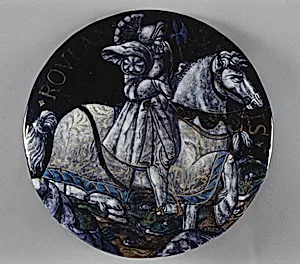
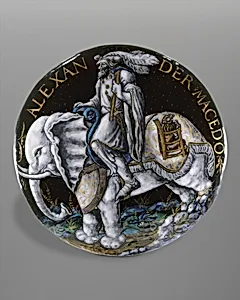
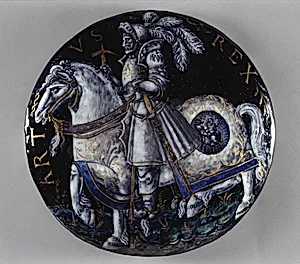
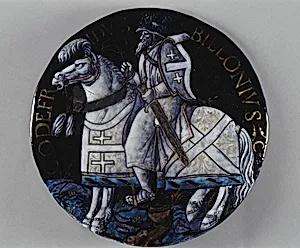
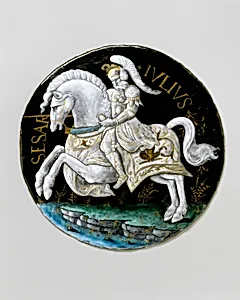
Nouailher's workshop produced over thirty medallions from the celebrated "Nine Heroes" (Neuf Preux) series, including *Alexander the Great* (ca. 1541, Metropolitan Museum of Art, after Jacob Cornelisz van Oostsanen), *Julius Caesar*, and *David* (both Louvre). Religious subjects featured prominently, such as *The Meeting of Abraham and Melchizedek* (ca. 1560–1570, Louvre), *Christ Crowned with Thorns* (ca. 1530–1535, Musée national de la Renaissance), and *The Descent from the Cross* (Châlons-en-Champagne). Caskets like the one with *Scenes from the Life of Hercules* (Taft Museum of Art) showcase his skill in narrative cycles.
Nouailher's legacy endures through his contributions to Limoges enamels, bridging medieval techniques with Renaissance humanism. His prolific output, now treasured in institutions like the Louvre, Metropolitan Museum, and Frick Collection, exemplifies the technical virtuosity and thematic richness that elevated Limoges as Europe's enamel capital during the 16th century.