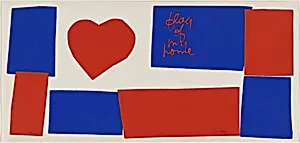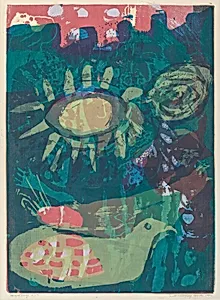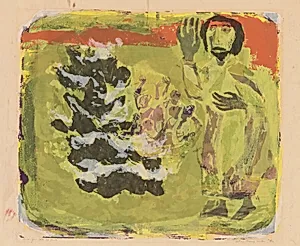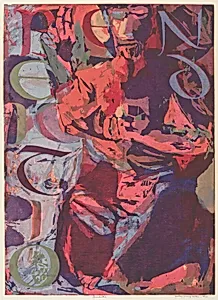
Corita Kent (1918–1986) was an American artist and educator whose vibrant serigraphs combined Pop Art aesthetics with social justice messages and spiritual themes, making her one of the most distinctive voices in American art of the 1960s and 1970s. Born Frances Elizabeth Kent in Fort Dodge, Iowa, she entered the religious order of the Immaculate Heart of Mary in Los Angeles at eighteen, taking the name Sister Mary Corita.
As head of the art department at Immaculate Heart College, Corita developed an innovative, joyful approach to art education that attracted national attention. Her silkscreen prints drew on advertising imagery, commercial packaging, song lyrics, biblical texts, and the writings of poets and activists, combining bold colors and hand-lettered typography in compositions that radiated energy and optimism while addressing civil rights, poverty, and the Vietnam War.
Corita's work occupied a unique intersection of Pop Art, graphic design, and social activism. She appropriated the visual language of consumer culture — supermarket logos, billboard slogans, product packaging — and repurposed it to carry messages of love, justice, and spiritual hope. Her 1964 print "the juiciest tomato of all," based on a Del Monte tomato paste label, exemplifies her ability to find transcendence in the everyday. She was featured on the cover of Newsweek in 1967.
In 1968, Corita left her religious order, moved to Boston, and continued making art as a laywoman. She designed the iconic rainbow swash on the Boston Gas Tank (now the National Grid LNG tank), one of the largest copyrighted works of art in the world. Despite battling cancer in her final years, she remained prolific. Her work is held by the Museum of Modern Art, the Whitney Museum, the National Gallery of Art, and the Corita Art Center in Los Angeles.