Ctrl K
1472–1553
Movements
Occupations
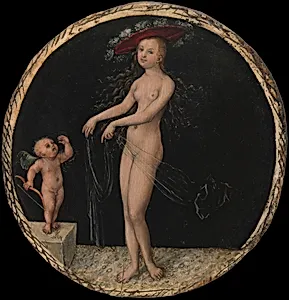
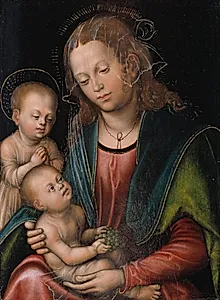
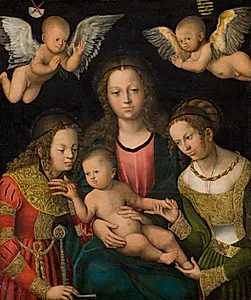
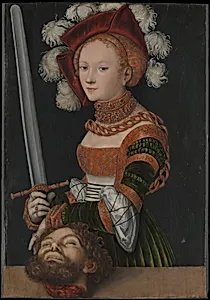
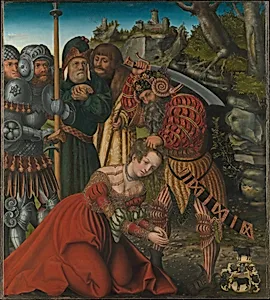
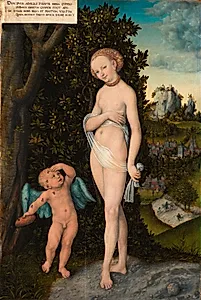
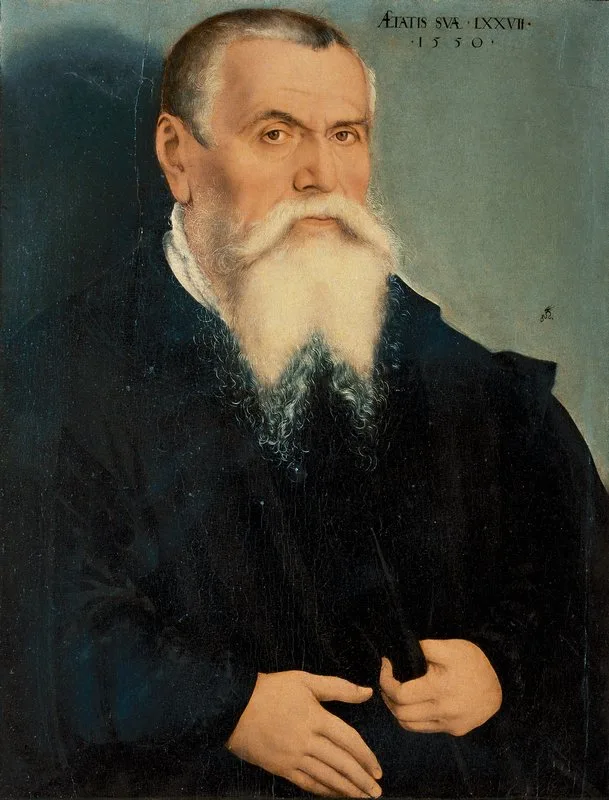
Lucas Cranach the Elder (c. 1472-1553) was one of the most prominent German Renaissance painters and a key artistic figure of the Protestant Reformation. Born in Kronach, Franconia, to the painter Hans Maler, Cranach began his career in Vienna around 1502, where he became one of the founders of the Danube School, a movement characterized by expressive landscape painting and emotional force. His early works, including 'St. Jerome in Penitence' (1502) and portraits of Johannes Cuspinian, showcased dramatic Alpine landscapes with windswept trees and ruins, establishing him as an avant-garde artist of considerable power. In 1505, Cranach was appointed court painter to Frederick the Wise, Elector of Saxony, in Wittenberg, where he would remain for 45 years and serve three successive electors. He received an unprecedented salary—two and a half times that of his predecessor—and in 1508 was granted a coat of arms featuring a winged serpent with a ruby ring, which became his signature mark. Beyond painting, Cranach became a prominent citizen, serving as town councilor (1519-1520) and burgomaster three times (1537-1544), while building a thriving workshop that made him the wealthiest civilian in Wittenberg. His workshop, which included his sons Hans and Lucas the Younger, operated as a proto-industrial enterprise, producing thousands of paintings, woodcuts, and engravings through standardized templates and modular designs. Cranach's close friendship with Martin Luther defined much of his later career and secured his legacy as 'the artist of the Reformation.' He served as Luther's matchmaker, stood as godfather to Luther's first son, and created at least eleven portraits of the reformer that helped establish Luther's image throughout Protestant Europe. His artistic output was vast and diverse: courtly portraits of German princes, sensuous mythological paintings featuring elongated female nudes (particularly Venus and Cupid compositions), religious altarpieces embodying Protestant theology, and woodcut illustrations for Luther's German Bible. His style featured characteristic linear contours, enamel-like glazes, rich decorative details, and idealized serpentine poses. When Elector Johann Friedrich was imprisoned in 1547, the elderly Cranach joined him in exile, eventually settling in Weimar, where he died on October 16, 1553. His gravestone described him as 'pictor celerrimus' (swiftest of painters), a testament to his extraordinary productivity. His workshop continued under his son Lucas the Younger, who had taken over operations in 1550, ensuring the Cranach artistic legacy endured for decades.
Born around 1472 in Kronach, a Franconian town in the bishopric of Bamberg, Lucas took his surname from his birthplace
Trained under his father Hans Maler, a painter, receiving his earliest artistic education in the family workshop
Little is known about his early travels, but he is documented in Coburg in 1501 before moving to Vienna
During this period, he absorbed the artistic traditions of southern Germany and prepared for his breakthrough in Vienna
Arrived in Vienna around 1502 at age 30, where he created his first dated works and established his reputation
Became a founding figure of the Danube School, the first artistic movement devoted primarily to expressive landscape painting
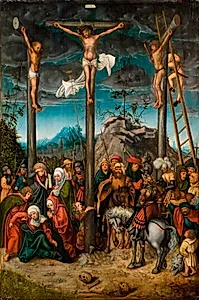
Created intensely emotional religious works set against dramatic Alpine landscapes, including 'St. Jerome in Penitence' (1502) and 'Crucifixion' (c. 1503)
Painted double portraits of the humanist scholar Johannes Cuspinian and his wife Anna (1502-1503), showcasing his skill in portraiture
Developed a distinctive style featuring wild, windswept landscapes, ruins, and pathetically passionate figures
His Vienna works displayed an avant-garde sensibility and considerable emotional force that contrasted with the high finish of traditional Northern Renaissance painting
Received his appointment as court painter to Frederick the Wise while still in Vienna, testament to his growing fame
Arrived in Wittenberg in spring 1505 as court painter to Frederick the Wise, Elector of Saxony, receiving an exceptional salary
Served successively under three Saxon electors: Frederick the Wise (1505-1525), Johann the Steadfast (1525-1532), and Johann Friedrich the Magnanimous (1532-1547)
In 1508, Frederick the Wise granted him a coat of arms featuring a winged serpent with a ruby ring, which became his signature
Transformed Wittenberg into an art center through his workshop, attracting numerous young artists to the city
Established himself as a prominent citizen: town councilor (1519-1520) and burgomaster three times (1537-1544)
Built a thriving workshop enterprise that included his sons Hans (c. 1513-1537) and Lucas the Younger (1515-1586)
Became the wealthiest civilian in Wittenberg through his painting workshop, printing press, and other business ventures
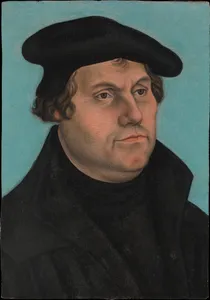
Befriended Martin Luther and became the principal artist of the Protestant Reformation, creating portraits and propaganda woodcuts
Served as Luther's matchmaker when he courted Katharina von Bora, who lived in Cranach's house from 1523-1525
Stood as godfather to Luther's first son in 1526, after Luther had been godfather to Cranach's daughter Anna
After his son Hans died in 1537, modified his serpent signature to feature bird wings instead of bat wings
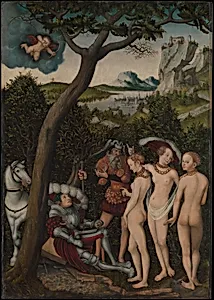
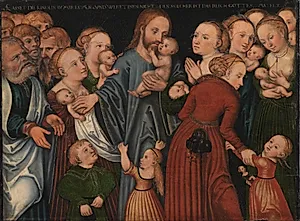
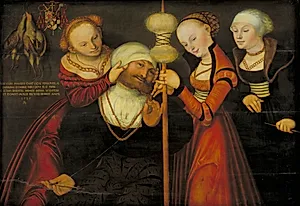
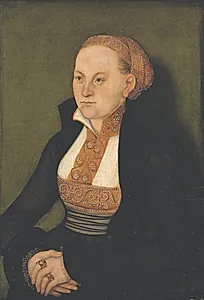
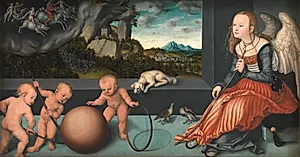
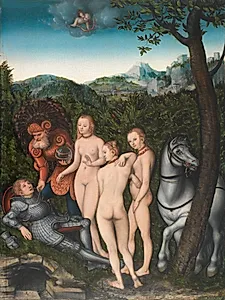
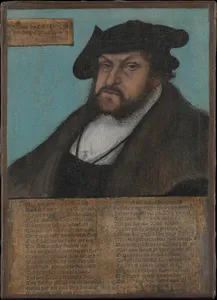
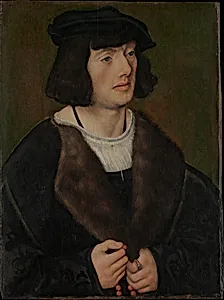
Produced an enormous output: portraits of reformers and princes, religious altarpieces, mythological nudes, and thousands of woodcuts
In 1550, handed workshop operations to Lucas the Younger and left Wittenberg to follow Johann Friedrich into exile
When Johann Friedrich was imprisoned by Emperor Charles V in 1547, Cranach loyally joined him in exile to Augsburg and Innsbruck
In 1552, followed Johann Friedrich to Weimar, where the elector re-established his court
Continued painting despite his advanced age, collaborating with Lucas the Younger on the Wittenberg Reformation Altarpiece (begun 1547)
Died in Weimar on October 16, 1553, at age 81
His house in Weimar's marketplace still stands today as a memorial to his legacy
His gravestone honored him as 'pictor celerrimus' (swiftest of painters), recognizing his extraordinary productivity
The Lutheran Church commemorates Cranach alongside Albrecht Dürer on April 6 as a great Christian artist
Artheon Research Team
Last updated: 2025-11-28
Biography length: ~1,247 words
Wikidata/Wikimedia Commons