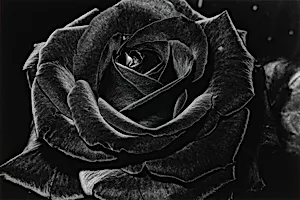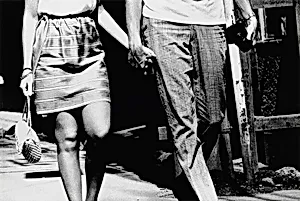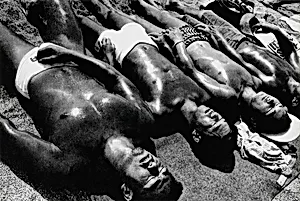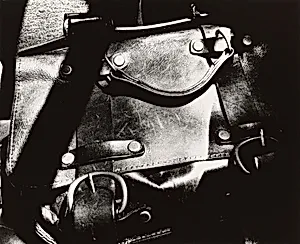
**Daidō Moriyama**, born Hiromichi Moriyama on October 10, 1938, in Ikeda near Osaka, Japan, experienced a nomadic childhood as his family relocated frequently due to his father's job, living in Tokyo, Hiroshima, Chiba, and Shimane before settling back in Osaka around age 11. From ages 16 to 20, he apprenticed in graphic design at the studio of photographer Takeji Iwamiya in Osaka. In 1961, at 23, Moriyama moved to Tokyo, drawn to the avant-garde collective VIVO, and became an assistant to Eikoh Hosoe—a key VIVO member—for three years. Hosoe taught him the fundamentals of photography and technique, including work on the series *Ordeal by Roses* (1962), though Moriyama hesitated to produce his own images until encouraged.
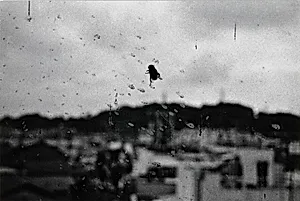
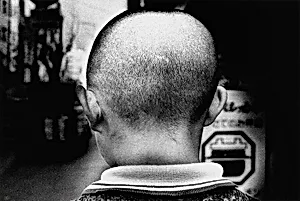
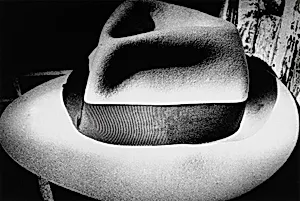
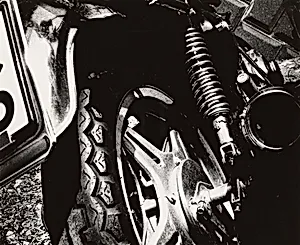
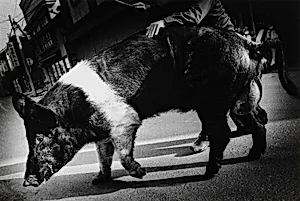
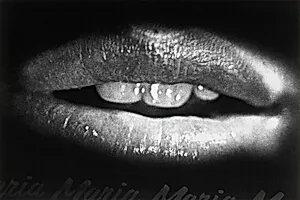
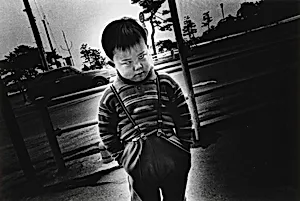
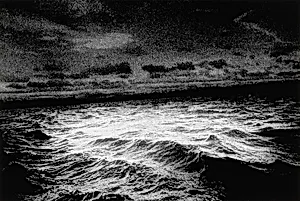
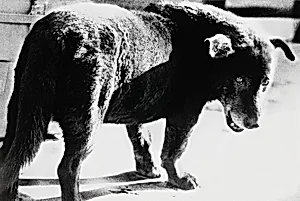
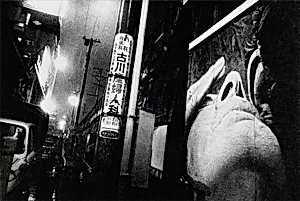
Moriyama's style emerged amid Japan's postwar turmoil, economic boom, and cultural shifts, defined by gritty black-and-white street photography featuring high-contrast, grainy textures, tilted angles, motion blur, and the "are, bure, boke" aesthetic (rough, blurry, out-of-focus) popularized by the *Provoke* magazine, to which he contributed starting with its second issue in 1969. Influenced by William Klein, Andy Warhol, and urban Shinjuku, his work captured the chaos of city life—blurred faces, neon signs, rubble, and erotic undercurrents. Major early works include *Japan: A Photo Theater* (1968), a dizzying montage of urban frenzy co-edited with Shūji Terayama; the *Accident* series (1968–69), rephotographing news images to undermine singular photographic value; *Farewell Photography* (1972), reveling in film flaws like sprocket holes; and *A Hunter* (1972), a Kerouac-inspired road trip yielding fragmented highway scenes, highlighted by the iconic "Stray Dog, Misawa" (1971).
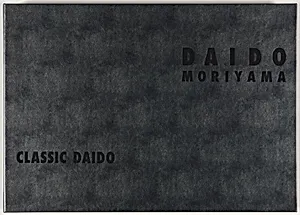
In 1974, Moriyama co-founded the Workshop Photography School with Shōmei Tōmatsu, Eikoh Hosoe, Nobuyoshi Araki, and Masahisa Fukase, teaching experimental approaches and publishing *Workshop Quarterly*, before launching gallery Image Shop Camp. Over 150 photobooks followed, from *Memories of a Dog* (1984) to color series like *Tokyo Colour* (2008–15) and digital works. Key exhibitions include his 1968 Ginza Nikon Salon debut (*Pantomime*), 1974 MoMA *New Japanese Photography*, and retrospectives like *Stray Dog* (1999, SFMOMA) and *Daido Tokyo* (2016, Fondation Cartier). The National Gallery of Art holds 15 of his works, including *Classic Daidō* (2023).
Moriyama's legacy endures as a provocateur of Japanese photography, earning awards like the ICP Infinity Lifetime Achievement (2012), Hasselblad (2019), and Asahi Prize (2020). His relentless street wandering—shooting vast negatives without a viewfinder—embodies a philosophy of chance and immediacy, influencing global photographers with raw depictions of modernity's underbelly.
All 15 artworks loaded