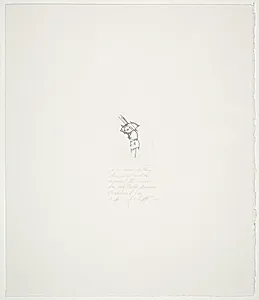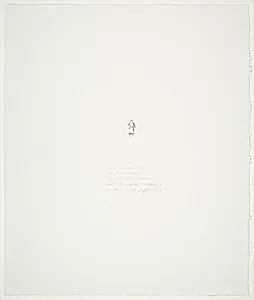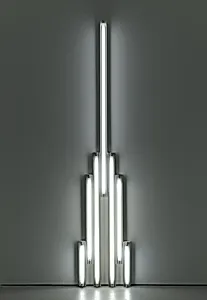
Dan Flavin (1933–1996) was an American minimalist artist known exclusively for his sculptures and installations made from commercially available fluorescent light fixtures. Born in Jamaica, Queens, New York, he studied art history at Columbia University and attended the Hans Hofmann School before beginning his artistic career in the early 1960s.
Flavin's breakthrough came in 1963 with "the diagonal of May 25, 1963 (to Constantin Brancusi)," a single gold fluorescent tube mounted at a 45-degree angle on a wall. This deceptively simple gesture — taking an industrial, mass-produced object and presenting it as an art work that transformed its surrounding space with colored light — established the vocabulary he would explore for the rest of his career.
Working exclusively with standard fluorescent tubes in commercially available colors (red, blue, green, pink, yellow, ultraviolet, and four whites), Flavin created installations that ranged from single fixtures to room-filling environments of extraordinary beauty and spatial complexity. His light works dissolve the boundaries between the artwork and its architectural setting, filling corners, defining corridors, and transforming entire rooms into immersive fields of colored radiance.
Flavin dedicated many of his works to friends, fellow artists, and historical figures through their titles. His permanent installations include the Dan Flavin Art Institute in Bridgehampton, New York, a former firehouse and church he transformed with site-specific works. His art is held by the Dia Art Foundation, the Museum of Modern Art, the National Gallery of Art, the Solomon R. Guggenheim Museum, and the Chinati Foundation in Marfa, Texas.

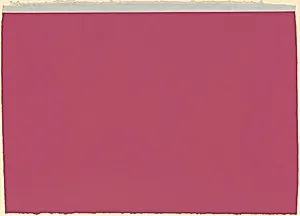






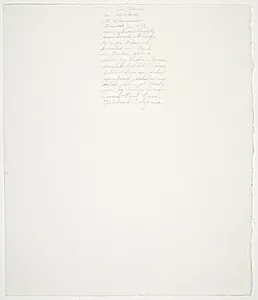
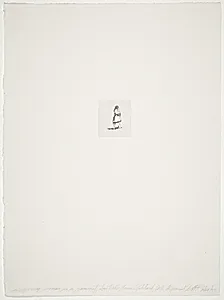
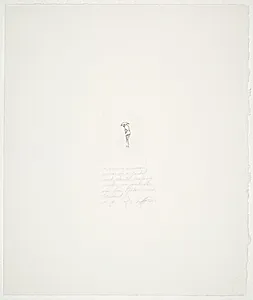
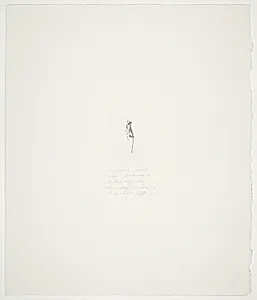
![Second Sails [10] from Second Sails](https://images.artheonmuseum.org/nga/thumb/second-sails-10-from-second-sails-nga-101097.webp)

![Second Sails [8] from Second Sails](https://images.artheonmuseum.org/nga/thumb/second-sails-8-from-second-sails-nga-101095.webp)
![Second Sails [9] from Second Sails](https://images.artheonmuseum.org/nga/thumb/second-sails-9-from-second-sails-nga-101096.webp)
![Second Sails [4] from Second Sails](https://images.artheonmuseum.org/nga/thumb/second-sails-4-from-second-sails-nga-101091.webp)
![Second Sails [5] from Second Sails](https://images.artheonmuseum.org/nga/thumb/second-sails-5-from-second-sails-nga-101092.webp)
![Second Sails [6] from Second Sails](https://images.artheonmuseum.org/nga/thumb/second-sails-6-from-second-sails-nga-101093.webp)
![Second Sails [7] from Second Sails](https://images.artheonmuseum.org/nga/thumb/second-sails-7-from-second-sails-nga-101094.webp)