Ctrl K
1593–1616
Daniel Mignot (active 1593–1616) was a French goldsmith and engraver who flourished in the prosperous German city of Augsburg, a hub for ornamental metalwork during the late Renaissance. Presumably of Huguenot origins, he relocated from France amid religious tensions, establishing himself as a specialist in intricate jewelry designs. His early life remains not well documented, with no records of specific training or mentors, though he was recognized as a skilled goldsmith capable of producing highly detailed engravings.
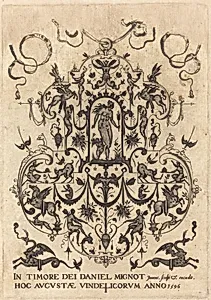
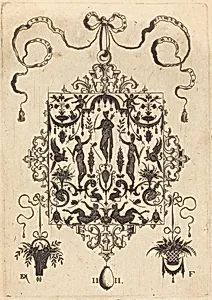
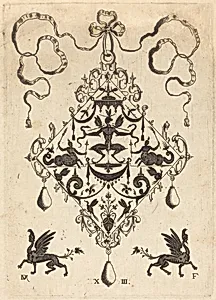
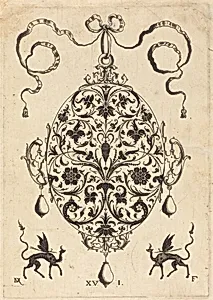
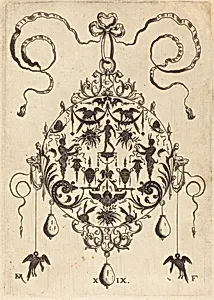
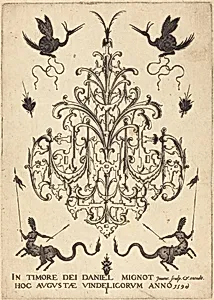
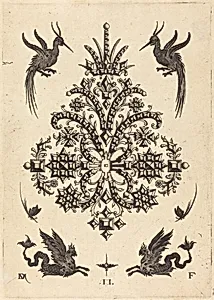
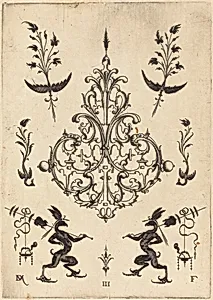
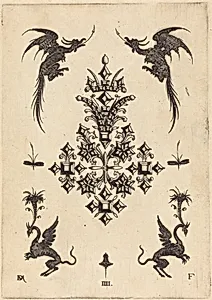
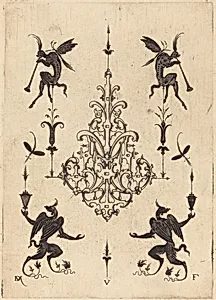
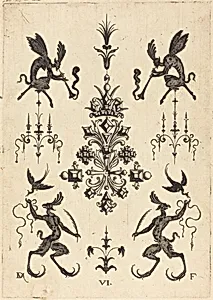
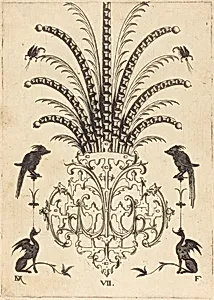
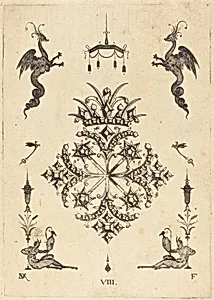
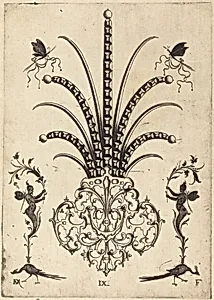
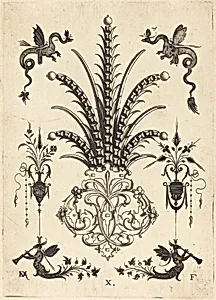
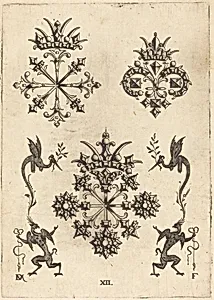
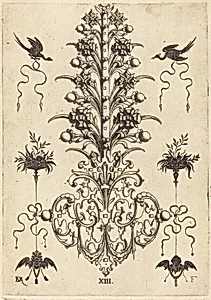
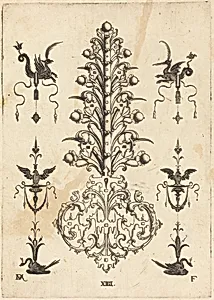
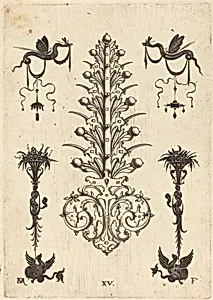
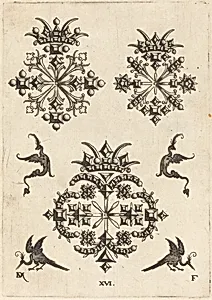
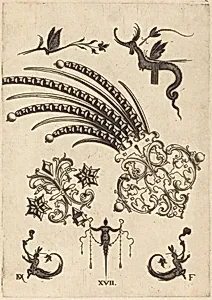
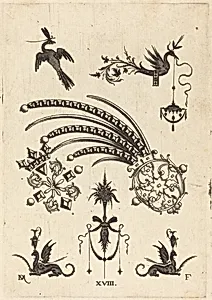
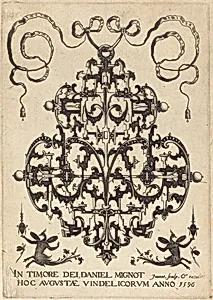
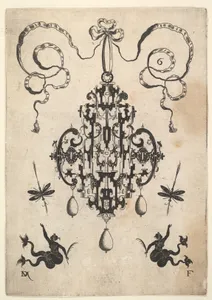
Mignot's artistic style epitomized the era's Mannerist fascination with fantastical and nature-inspired motifs, blending swirling strapwork, foliage, mythical creatures, and allegorical figures into compact, luxurious forms suited for pendants, brooches, and niello work. Working primarily in blackwork engraving—a technique yielding rich tonal contrasts—he created designs that evoked abundance and virtuosity, often incorporating winged griffins, fauns, dragons, centaurs, insects, and classical nudes amid pearl suspensions and table-cut stones. These prints served as models for goldsmiths across Europe, reflecting Augsburg's tradition of ornamental printmaking rather than any formal school affiliation.
Among his major works are expansive series published in Augsburg, including a 1593 suite of eight plates depicting the Seven Virtues (such as *Fides*, *Iustitia*, and *Fortitudo*) with enamel motifs; a 1595 set of strapwork pendants; and profuse 1596 engravings like *Title Page: Large Pendant with Venus and Amor*, *Brooch with Winged Fauns Blowing Trumpets*, *Large Pendant with Flora Holding a Fruit Garland*, and *Brooch with Dragons and Winged Monsters*. Later pieces, dated 1616, feature sirens, dragonflies, and elaborate niello patterns across sets of 14 to 18 plates.
Though his career was brief, Mignot's legacy endures in major collections, with nearly 70 works at the National Gallery of Art alone, alongside holdings at the Metropolitan Museum, British Museum, Harvard Art Museums, and Victoria & Albert Museum. His designs influenced jewelry production in Munich, Dresden, and the Netherlands into the 17th century, even inspiring later adaptations like Chinese carved ivories, cementing his role in the transition from Renaissance opulence to Baroque extravagance.