Ctrl K
1610–1690
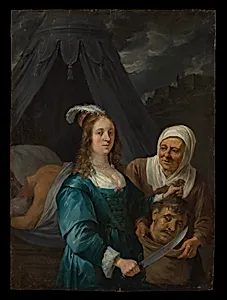
David Teniers the Younger (1610–1690) was a Flemish painter who became one of the most versatile and prolific artists of the seventeenth-century Southern Netherlands, renowned for his peasant genre scenes, elegant gallery paintings, and his role as court painter and curator. Born in Antwerp, he trained under his father, David Teniers the Elder, and was influenced by Adriaen Brouwer's peasant subjects and by Rubens, whose collection he later managed.
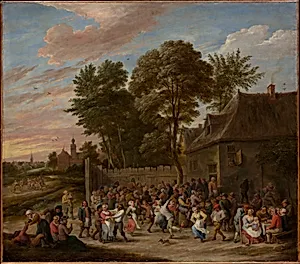
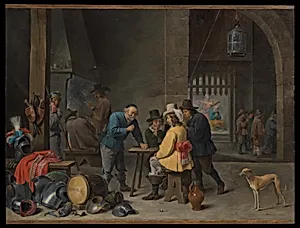
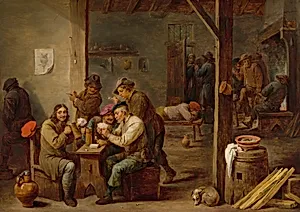
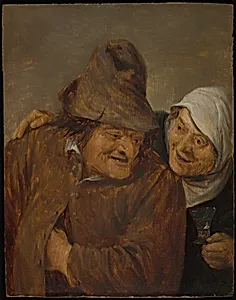
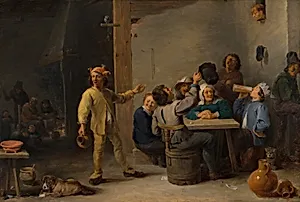
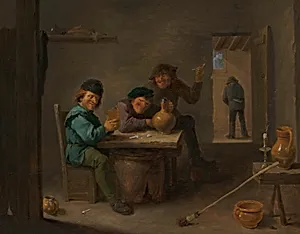
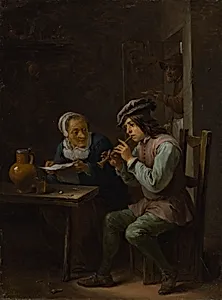
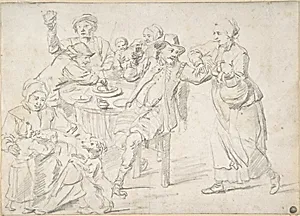
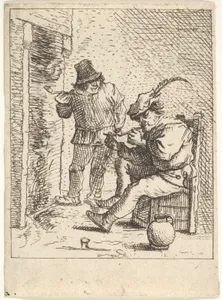
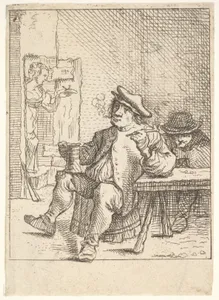
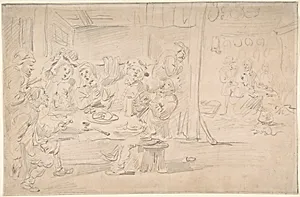
Teniers's most characteristic works are his lively peasant genre scenes — depicting village kermesses, tavern interiors, card games, and rustic festivities — painted with a silvery palette, fluid brushwork, and a sympathetic humor that distinguished them from the coarser peasant paintings of earlier Flemish tradition. These works were enormously popular across Europe and were widely collected by aristocratic patrons.
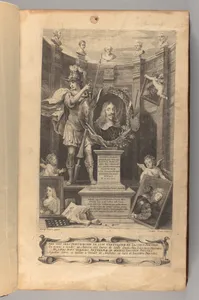
In 1651, Teniers became court painter and keeper of the picture gallery for Archduke Leopold Wilhelm, the Habsburg governor of the Southern Netherlands. In this role, he produced his celebrated "gallery paintings" — meticulously detailed depictions of the Archduke's vast art collection displayed in palatial interiors — which are invaluable documents of seventeenth-century collecting and connoisseurship. He also published an illustrated catalogue of the collection, the "Theatrum Pictorium" (1660).
Teniers was co-founder of the Antwerp Academy of Fine Arts in 1663. His enormous output — estimated at over 2,000 works — and his wide-ranging subject matter made him one of the most commercially successful artists of his era. His paintings are held by the Kunsthistorisches Museum in Vienna, the Prado, the National Gallery in London, the Louvre, and the Hermitage Museum.