Ctrl K
**De Porceleyne Claeuw** (also known as The Porcelain Claw or The Blue Claw) was a prominent Delft pottery factory active in the Netherlands from approximately 1658 until 1840. Located in the historic center of Delft, the workshop specialized in tin-glazed earthenware, producing the iconic blue-and-white wares that made the city famous across Europe as an affordable alternative to imported Chinese porcelain.
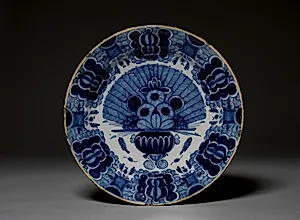
The factory’s output reflected the broader Delft school tradition of faience, characterized by intricate hand-painted designs in cobalt blue on a white ground. Popular motifs included peacock floral patterns, Oriental figures, gazebos, and elaborate floral baskets, often applied to chargers, plates, beakers, vases, and garnitures. Many surviving pieces bear the factory’s distinctive blue claw mark, sometimes accompanied by numbers or painter’s marks, allowing collectors to attribute works precisely to the second half of the eighteenth century.
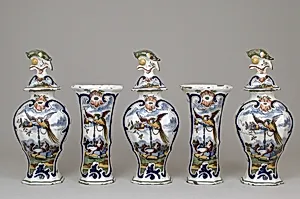
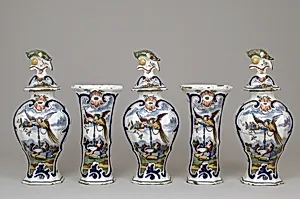
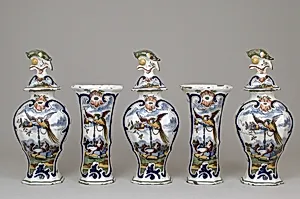
Notable examples include a pair of beakers forming part of a garniture in the Metropolitan Museum of Art and large peacock-pattern chargers from the mid-to-late 1700s. Individual painters occasionally signed or were associated with specific pieces; one documented example is a charger painted by Lambertus Sanderus during the factory’s active years.
De Porceleyne Claeuw contributed significantly to the enduring legacy of Dutch Delft ware. Its finely executed pieces helped sustain the international reputation of Delft ceramics well into the nineteenth century, and examples continue to appear in major museum collections and the antiques market today, valued for their technical quality and decorative charm.