Ctrl K
1706–1783
Occupations
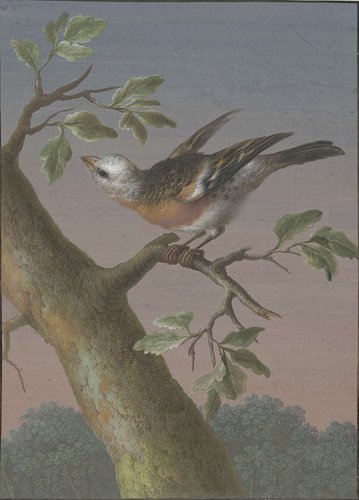
Barbara Regina Dietzsch (1706–1783) was a distinguished German botanical illustrator and watercolorist who achieved international recognition during the Enlightenment period. Working in Nuremberg, one of Europe's premier centers for botanical illustration, she specialized in extraordinarily detailed watercolor drawings of plants and animals rendered against dramatic black backgrounds. Born into an artistic family, Dietzsch became the principal flower painter in her father's collaborative workshop, yet her individual talent earned her independent fame as 'our countrywoman, Miss Barbara Regina Dietzsch, now quite famous everywhere,' according to contemporary Nuremberg physician and botanist Christoph Jacob Trew. Dietzsch's work existed at the intersection of art and science. While her compositions possessed undeniable aesthetic beauty, they also served scientific purposes, with her drawings being translated into engraved illustrations for significant natural history publications including Trew's 'Plantae Selectae' (1750–1773). Her meticulous technique captured every detail of petals, leaves, stems, and accompanying insects with extraordinary precision. Today her works are held in major international museums including the J. Paul Getty Museum, Metropolitan Museum of Art, and National Gallery of Art, testament to her enduring importance as both artist and scientific illustrator.
Barbara Regina Dietzsch was born on September 22, 1706, in Nuremberg, Bavaria, into a family deeply engaged in artistic production. Her father, Johann Israel Dietzsch (1681–1754), was an accomplished landscape painter and engraver who established a successful family workshop.
Johann Israel trained his six children to participate in the workshop's production of flower and animal still life compositions, creating a collaborative artistic enterprise. Within this family structure, Barbara Regina emerged as the principal flower painter, demonstrating exceptional skill that distinguished her work from that of her siblings.
Nuremberg during this period was a major center for botanical illustration, providing an ideal environment for Dietzsch to develop her specialized skills. The city's thriving scientific community, particularly its physicians and botanists, created steady demand for precise botanical illustrations.
By the mid-eighteenth century, Dietzsch had achieved recognition extending beyond artistic circles into Nuremberg's scientific community. Physician and botanist Christoph Jacob Trew praised her as 'our countrywoman, Miss Barbara Regina Dietzsch, now quite famous everywhere,' indicating her international reputation.
Dietzsch and her sister contributed botanical drawings to be translated into engraved illustrations for major scientific publications. Most notably, their work appeared in Trew's 'Plantae Selectae' (1750–1773) and 'Hortus nitidissimis' (1750–1786), landmark works of Enlightenment natural history.
Her artistic production continued until her death on May 1, 1783, in Nuremberg. Throughout her career, she maintained the distinctive style that made her work immediately recognizable: individual botanical specimens posed against solid black backgrounds, rendered with exceptional attention to detail.
Unlike many women artists of her era whose work remained anonymous or attributed to male relatives, Dietzsch achieved individual recognition during her lifetime and signed her own works, ensuring her artistic legacy.
Dietzsch's illustrations served scientific purposes, appearing in major botanical publications of the Enlightenment including Trew's 'Plantae Selectae' and 'Hortus nitidissimis.'
Artheon Research Team
Last updated: 2025-11-09
Biography length: ~472 words
Wikidata (CC0); Getty ULAN (ODC-By)
All 5 artworks loaded