
Ctrl K
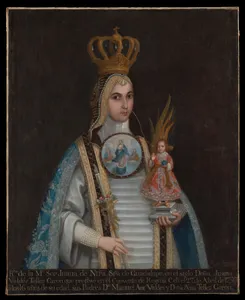
**Domingo Ortiz** was a Mexican painter active in New Spain (present-day Mexico) during the late eighteenth and early nineteenth centuries. Little is known about his early life or formal training, as biographical details remain sparsely recorded in historical sources. He worked within the established traditions of colonial Mexican art, producing religious portraits that reflected the cultural and devotional practices of the Viceregal period.
Ortiz specialized in a distinctive genre of portraiture unique to colonial Mexico: images of “crowned nuns,” which commemorated young women’s entry into religious orders. His sole documented work in a major public collection is the *Portrait of Sor Juana de Nuestra Señora de Guadalupe* (1797), an oil-on-canvas painting now at The Metropolitan Museum of Art. The work depicts a sixteen-year-old Conceptionist nun in full profession regalia, including a nuptial crown, rings, and a pictorial badge of the Virgin Mary, while holding a small sculpture of the Christ Child. Formerly Juana Valdés, the sitter adopted a new religious and patriotic identity referencing the Virgin of Guadalupe, patroness of New Spain. Such portraits served both devotional and social functions, displayed in family homes to signify piety, wealth, and prestige.
Beyond this Met acquisition, Ortiz’s paintings occasionally surface in the art market, notably in sales of seventeenth- and eighteenth-century Latin American works. His output exemplifies the refined yet regionally specific artistic conventions of New Spain, blending European portrait traditions with local religious symbolism. Though his career remains modestly documented, Ortiz’s surviving works provide valuable insight into the visual culture of colonial Mexico and the role of women in its religious institutions. His contributions continue to be appreciated by collectors and scholars interested in Viceregal art.