Ctrl K
1895–1965
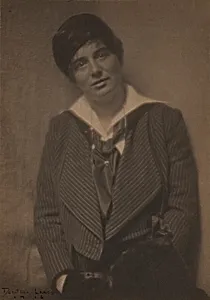
Dorothea Lange, born Dorothea Margaretta Nutzhorn on May 26, 1895, in Hoboken, New Jersey, overcame significant personal challenges to become one of America's most influential documentary photographers. Stricken with polio at age seven, she developed a lifelong limp that she credited with shaping her empathetic worldview, famously stating it "formed me, guided me, instructed me, helped me, and humiliated me." When her father abandoned the family at twelve, she adopted her mother's maiden name, Lange, and moved to New York City's Lower East Side. After graduating from Wadleigh High School for Girls, she studied photography at Columbia University under Clarence H. White, a Pictorialist master and Photo-Secession founder who emphasized capturing the extraordinary in everyday subjects. She also apprenticed with portraitist Arnold Genthe, honing skills in retouching and aesthetics before opening her own successful San Francisco portrait studio in the 1920s, where she married artist Maynard Dixon and had two sons, Daniel (1925) and John (1930).
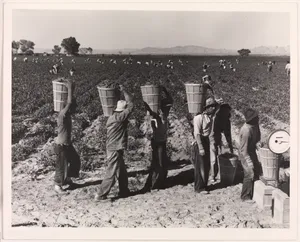
The Great Depression transformed Lange from society portraitist to pioneering documentary photographer. In 1933, she captured *White Angel Breadline*, a haunting image of a weary man at a San Francisco soup kitchen that marked her shift to street photography. Hired by the Resettlement Administration (later Farm Security Administration), she documented rural poverty and migrant workers, producing icons like *Migrant Mother* (1936), portraying destitute pea picker Florence Owens Thompson with her children, and *Ditched, Stalled and Stranded* (1936–1937), evoking widespread despair. Her style blended modernist techniques—dramatic angles, intimate compositions—with journalistic captions from subject interviews, aligning with the Documentary Photography movement and Straight Photography traditions. Divorcing Dixon in 1935, she married economist Paul S. Taylor, collaborating on social reform projects.
In her later years, Lange photographed Japanese American internment (*Members of the Mochida Family*, 1942), wartime tensions (*Argument in a Trailer Camp*, 1944), and global poverty, teaching at the California School of Fine Arts alongside Ansel Adams, Imogen Cunningham, and Minor White. Co-founding *Aperture* magazine in 1952, she died of esophageal cancer on October 11, 1965, in San Francisco. Her unflinching images humanized the Depression, influenced John Steinbeck's *The Grapes of Wrath*, and inspired social change, earning her induction into the International Photography Hall of Fame (1984) and National Women's Hall of Fame (2003). Lange's legacy endures in major collections like MoMA and the Oakland Museum, proving photography's power to advocate for the marginalized.
All 2 artworks loaded