Ctrl K
1855
Douglas Campbell was an American artist active around 1935 whose precise watercolor renderings form part of one of the most ambitious documentary art projects of the Great Depression era. His early life is not well documented, and no records of formal training or specific teachers have come to light. What survives of his output consists of highly detailed studies created for the Index of American Design, a Federal Art Project of the Works Progress Administration that employed hundreds of artists between 1935 and 1942 to produce a visual survey of American crafts and decorative arts from the colonial period through 1900.
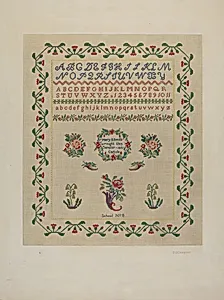
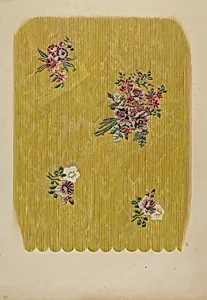
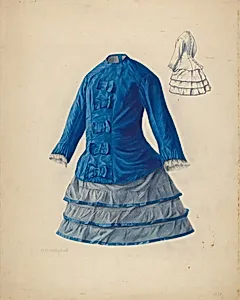
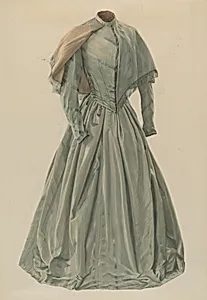
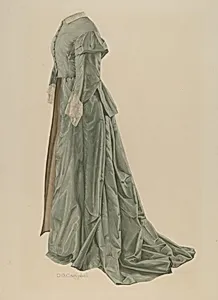
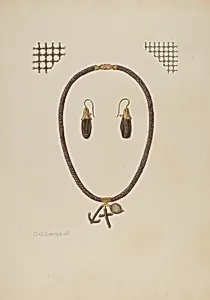
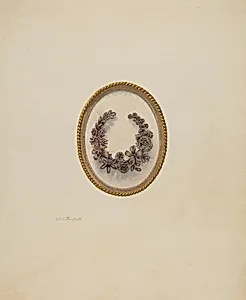
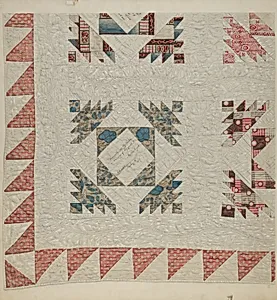
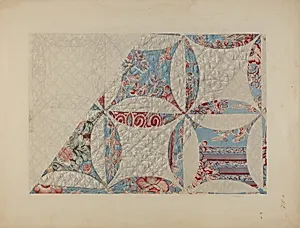
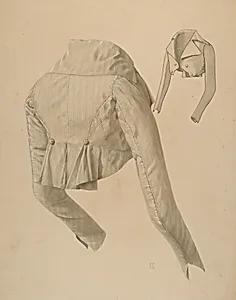
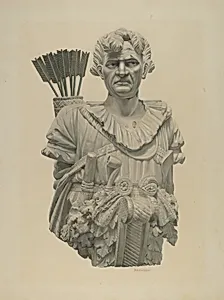
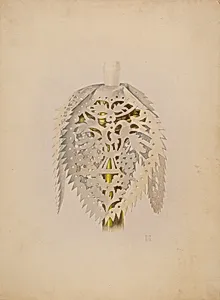
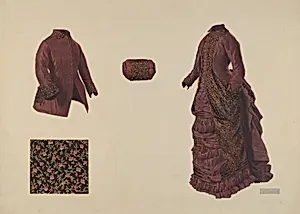
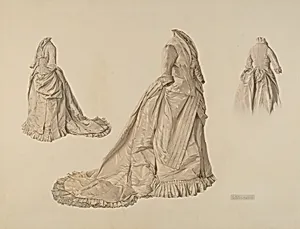
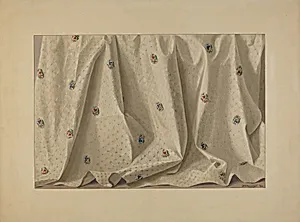
Working in watercolor, graphite, gouache, and occasional pen and ink, Campbell specialized in faithful transcriptions of textiles, clothing, jewelry, and folk-art objects. Among the sixteen works now held by the National Gallery of Art are a Sampler of about 1942, Silk with Embroidered Flowers of about 1941, several Gowns and a Child’s Dress of about 1940, Hair Ornament and Hair Jewelry of the same year, a Quilt of about 1939, Drapery for Candlestick, and the striking “Tamanend” Figurehead. These sheets capture not only pattern and color but also the tactile qualities of embroidery, silk, hairwork, and carved wood, treating each artifact with the clarity of scientific illustration rather than personal expression.
The Index itself was conceived as both employment relief and a national archive; its more than 18,000 watercolors were intended to establish a visual foundation for understanding uniquely American design traditions. Campbell’s contributions sit comfortably within that documentary school, sharing the project’s emphasis on accuracy over invention. Although individual artists of the Index remain largely anonymous, the collection they produced has become an indispensable resource for historians of American decorative arts, costume, and folk culture. Campbell’s sixteen sheets, now part of the National Gallery’s holdings, continue to illustrate the richness of everyday objects that once filled American homes and ships, preserving their appearance for later generations of designers, scholars, and the public.