Ctrl K

1626–1678
Movements
Occupations
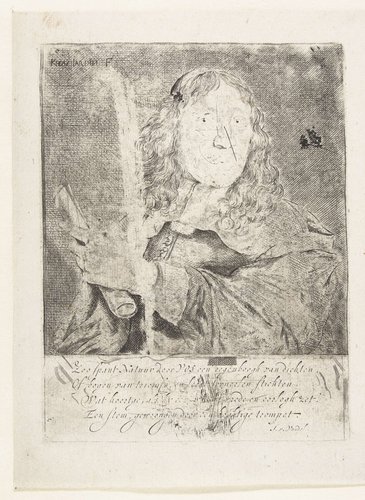
Karel Dujardin, born in Amsterdam on September 27, 1626, was the son of the little-known painter Guilliam du Gardin. His early training came under the guidance of Nicolaes Berchem, a master whose influence is evident in Dujardin's animal and landscape depictions, while he was also inspired by the works of Paulus Potter. As a young artist, Dujardin traveled to Italy, where he immersed himself in the vibrant artistic community of Rome, joining the Bentvueghels, an informal society of Northern painters, under the nickname "Barba di Becco" or "Bokkebaart" (goat-beard). This early exposure shaped his lifelong affinity for Italianate themes, blending Dutch precision with the sunlit warmth of Roman landscapes.
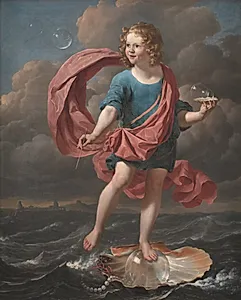
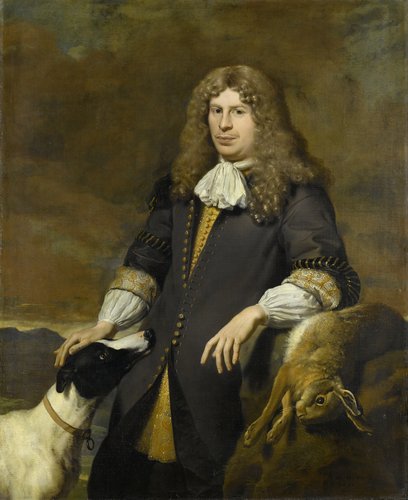
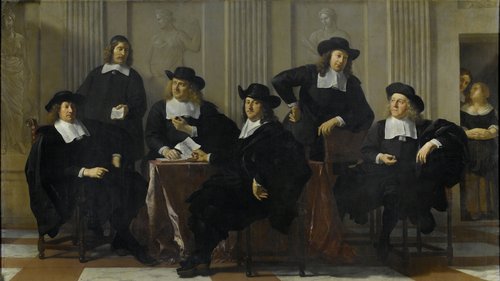
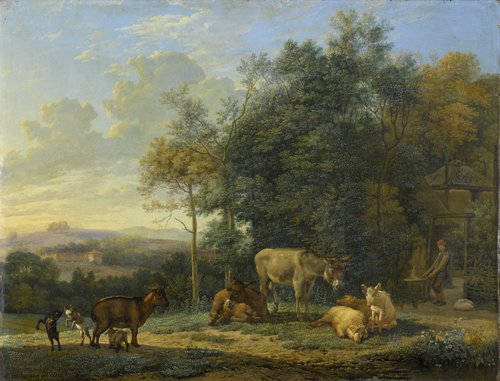
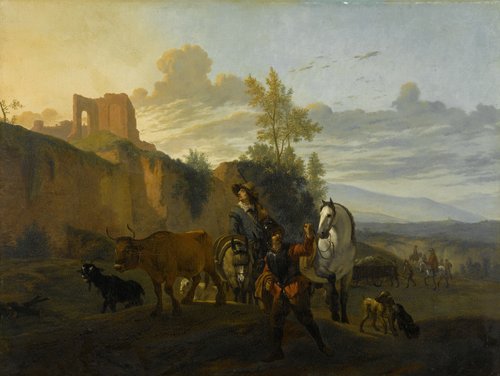
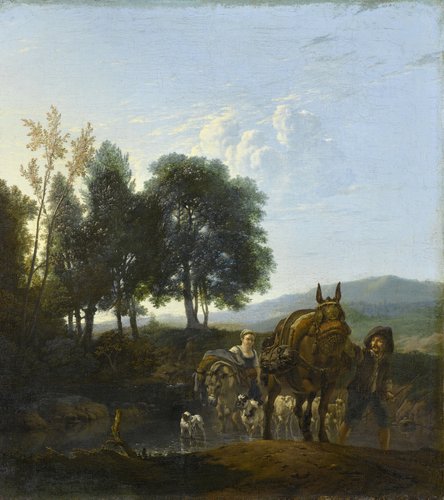
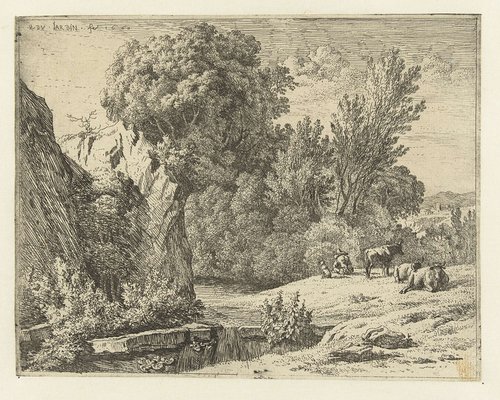
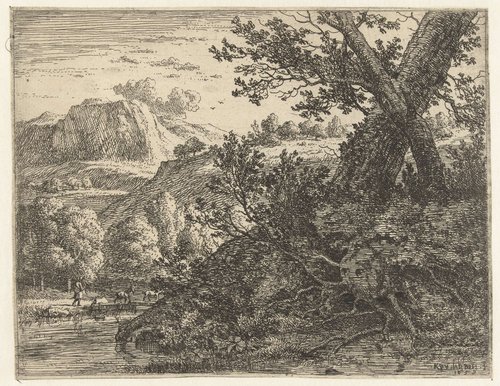
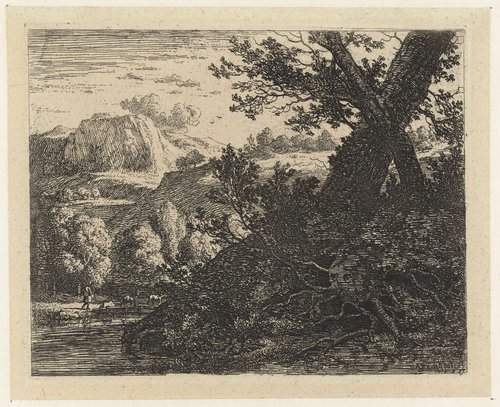
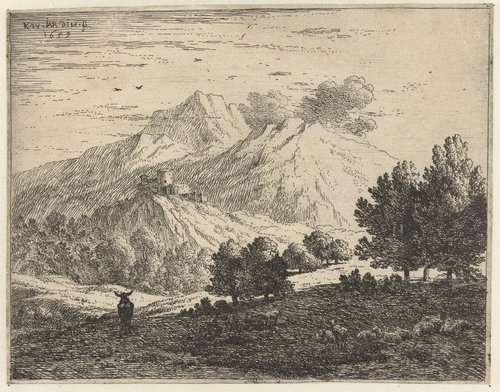
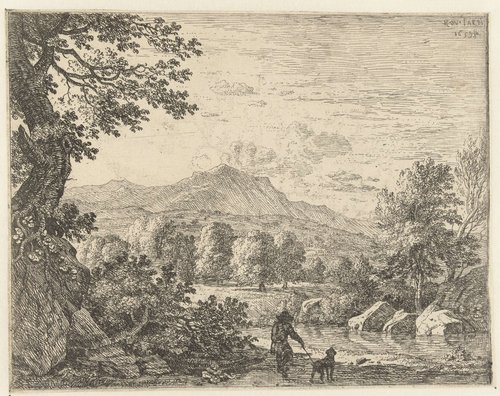
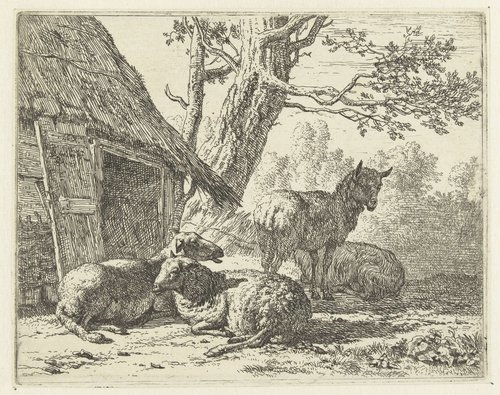
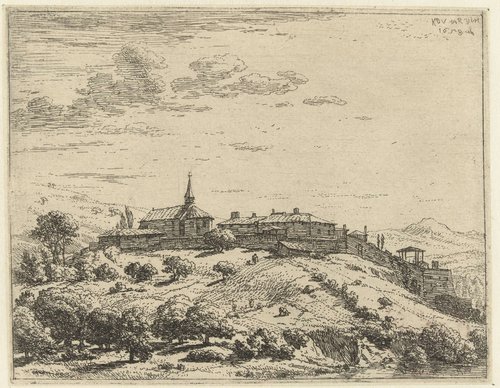
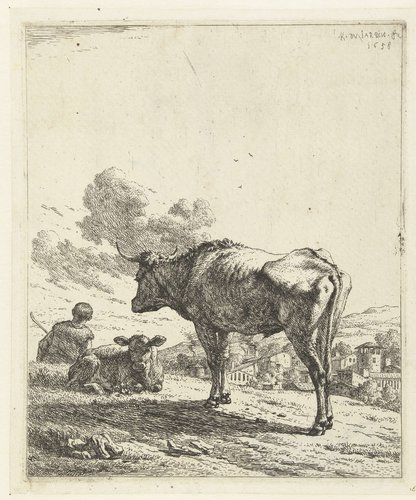
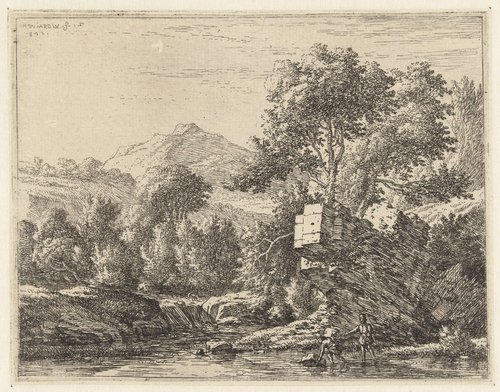
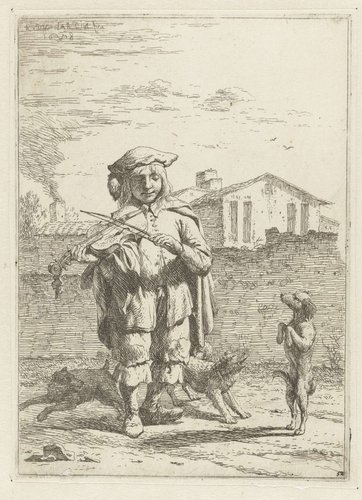
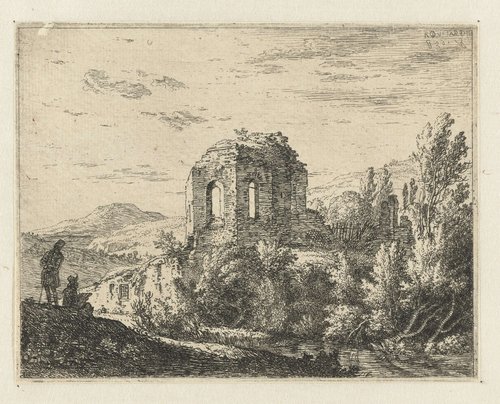
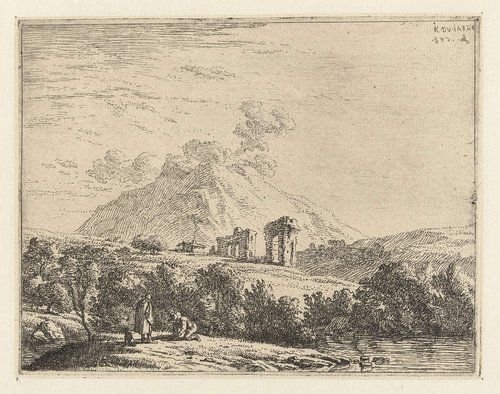
Working within the Dutch Golden Age tradition, Dujardin became a versatile Romanist painter, excelling in intimate Italianate landscapes populated by peasants, shepherds, and livestock. His style featured spirited, naturalistic figures and animals bathed in golden light, often evoking the pastoral idylls of Arcadia. He also ventured into genre scenes, portraits, religious histories, and etchings, though his landscapes with herds remain his hallmark. Returning to Amsterdam and The Hague in the 1650s, his works gained high acclaim; he later sojourned in Lyon before settling back in the Netherlands until 1675.
Among his notable works are *Farm Animals in the Shade of a Tree* (1656, National Gallery, London), *Commedia dell'Arte Show* (1657, Louvre), *Woman Milking a Red Cow*, *A Party of Charlatans in an Italian Landscape*, *The Waterfalls at Tivoli*, *Italian Landscape with a Young Shepherd Playing with his Dog*, and *Italianate Landscape with Cattle*. These pieces capture the lively interplay of humans and beasts against rugged terrains, showcasing his etching prowess and oil mastery.
In 1675, invited by patron Joan Reynst, Dujardin returned to Italy for a Grand Tour, remaining in Rome and Venice. He died unexpectedly in Venice on November 20, 1678, while painting for a Dutch merchant, and was buried in Catholic rites despite his Reformed faith. His pupils included Jacob van der Does II and others, perpetuating his legacy. Today, Dujardin's canvases grace prestigious collections worldwide, from the Rijksmuseum to the J. Paul Getty Museum, embodying the Dutch Golden Age's fascination with idealized Italian vistas and affirming his enduring influence on landscape painting.
Wikidata/Wikimedia Commons