Ctrl K
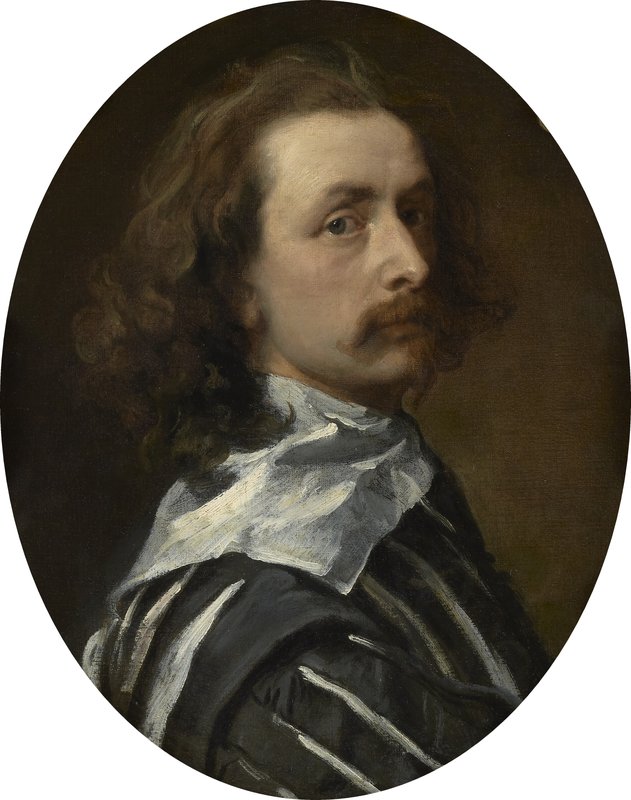
1599–1641
Movements
Occupations
Sir Anthony van Dyck (1599-1641) was a Flemish Baroque artist who revolutionized portrait painting and became the most influential court painter in 17th-century England. Born in Antwerp as the seventh of twelve children to a prosperous silk merchant, van Dyck displayed extraordinary artistic talent from childhood. He trained under Hendrick van Balen before joining Peter Paul Rubens's workshop as an assistant in 1618, quickly becoming Rubens's most accomplished pupil. His early success led him to work briefly in London for James I in 1620-1621, followed by an extended Italian sojourn (1621-1627) where he studied the masters, particularly Titian, whose luminous color and refined technique profoundly influenced his style. In 1632, Charles I of England appointed van Dyck as his principal court painter, knighting him and granting him a generous pension. Over the next nine years, van Dyck created an astonishing body of work at the Caroline court, painting approximately 400 portraits including forty of the king himself, thirty of Queen Henrietta Maria, and numerous depictions of courtiers and aristocrats. His portraits combined Baroque dynamism with unprecedented elegance and psychological insight, depicting his subjects in relaxed, natural poses rather than the stiff formality that had characterized earlier court portraiture. His masterful rendering of luxurious fabrics, especially silk and lace, his innovative use of light and shadow, and his ability to convey both authority and approachability in his subjects set new standards for portraiture. Van Dyck's influence on British art proved enduring and transformative. His sophisticated style dominated English portrait painting for over 150 years, directly inspiring Joshua Reynolds, Thomas Gainsborough, Thomas Lawrence, and even American expatriate John Singer Sargent. He introduced new portrait types to Britain including groups of children without parents, double portraits of friends or siblings, and powerful equestrian portraits. A tireless worker who painted, drew, and created an important series of portrait etchings (the Iconography), van Dyck died exhausted at age 42 in London on December 9, 1641, the same day his daughter was baptized. He was buried in St. Paul's Cathedral, though his tomb was destroyed in the Great Fire of London in 1666. His artistic legacy, however, remains imperishable.
Born March 22, 1599, in Antwerp to Frans van Dyck, a prosperous silk merchant, and Maria Cuypers, a talented embroiderer. Seventh of twelve children in a comfortable, art-appreciating household.
Began formal artistic training at age ten with Hendrick van Balen the Elder, a successful painter of cabinet pictures. Studied with van Balen for approximately 2-4 years, developing rapidly beyond his teacher's influence.
By age 15, was painting sophisticated portraits that displayed unique sensitivity. Became a master in the Antwerp Guild of Saint Luke on October 18, 1617, at the extraordinary age of 18.
Joined Peter Paul Rubens's studio in 1618, working as an assistant rather than a pupil. Rubens described him as 'the best of my pupils.' Collaborated on major commissions including the ceiling paintings for the Carolus Borromeuskerk (Jesuit church in Antwerp, lost to fire in 1718).
Developed early style showing Rubens's influence in rich color palettes, dynamic compositions, and dramatic chiaroscuro, while beginning to develop his own softer, more introspective approach to portraiture.
In 1620, at the instigation of George Villiers, Marquess of Buckingham, traveled to England for the first time, working for King James I and receiving £100 for his services. Brief but important first exposure to English court patronage.
Departed for Italy in late 1621, spending approximately six years traveling and working, primarily in Genoa, but also visiting Rome, Venice, Palermo, and other artistic centers.
In Italy, encountered the works of the great Renaissance masters, especially Titian, whose influence proved transformational. Titian's use of warm, glowing colors, loose brushwork, and technique of creating depth through layers of transparent glazes fundamentally enriched van Dyck's style.
Established himself as a highly sought-after portrait painter among the Italian aristocracy, particularly in Genoa where he painted members of the city's leading families including the Grimaldi, Spinola, and Doria dynasties.
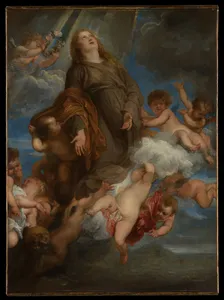
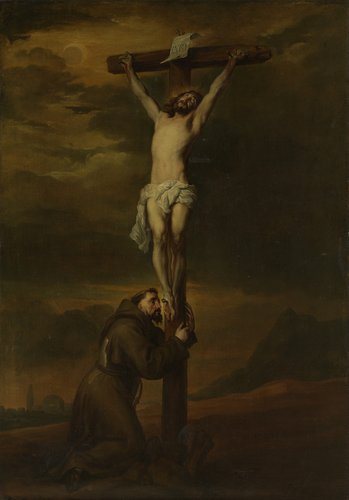
Created important religious compositions during this period, including 'The Crowning with Thorns' and 'The Taking of Christ' (both now in the Prado), demonstrating his ability to handle large-scale narrative works with emotional depth.
Compiled his famous Italian Sketchbook (now in the Devonshire Collection at Chatsworth House), documenting his studies of Italian masters and developing his observational and compositional skills.
Returned to the Spanish Netherlands in late 1627, bringing with him a refined, cosmopolitan style that synthesized Northern and Italian traditions.
Established himself in Antwerp with a large workshop, creating religious works, portraits, and allegorical paintings. The city's relative decline and Rubens's dominance may have motivated his continued international ambitions.
In 1630, became official court painter to Archduchess Isabella, the Habsburg Governor of the Spanish Netherlands. This prestigious appointment brought status and important commissions.
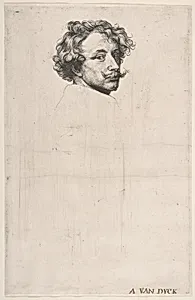
Completed his celebrated Iconography series during this period - a collection of portrait etchings depicting approximately 80 artists, scholars, and notable contemporaries. The series demonstrated his mastery of printmaking and his connections to the intellectual elite.
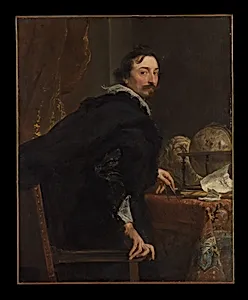
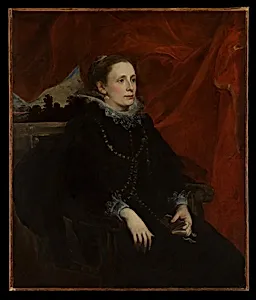
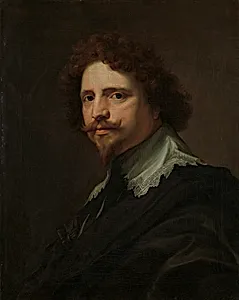
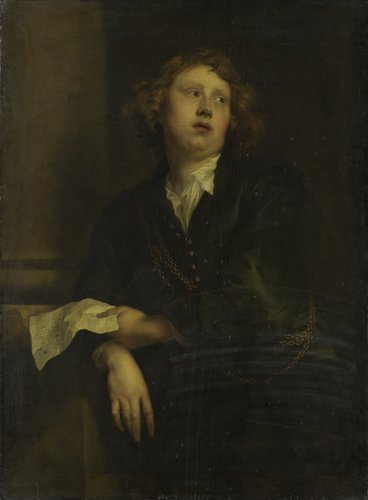
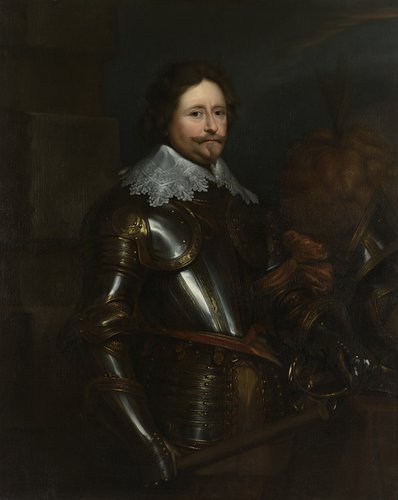
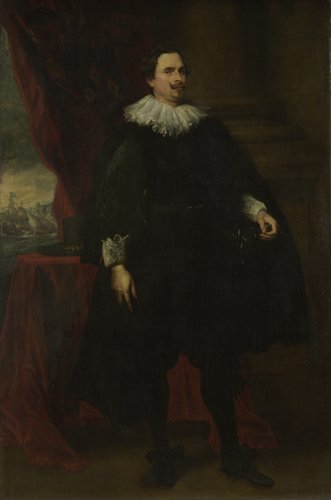
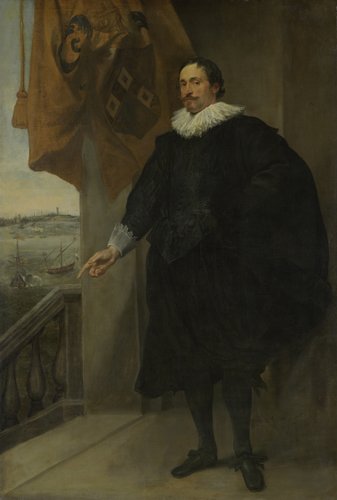
Continued to develop his distinctive portrait style, characterized by elegant poses, luxurious settings, psychological penetration, and masterful rendering of textures, particularly silks, velvets, and lace.
Maintained workshop production with assistants handling backgrounds and drapery while he focused on faces and hands - the elements requiring his personal touch.
By 1632, his reputation had spread throughout Europe, setting the stage for his triumphant return to England as principal painter to Charles I.
Returned to London in April 1632 and was immediately embraced by the court. Knighted by Charles I in July 1632 and granted an annual pension of £200, described in the grant as 'principalle Paynter in ordinary to their majesties.'
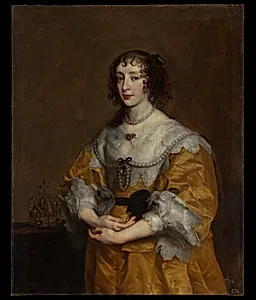
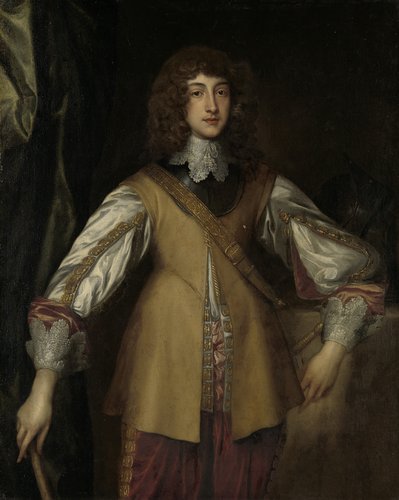
Painted approximately 400 portraits during his nine years at the Caroline court - an astonishing output that included about 40 portraits of Charles I, 30 of Queen Henrietta Maria, 9 of the Earl of Strafford, and multiple portraits of other courtiers.
Created some of his most iconic works including the majestic 'Equestrian Portrait of Charles I' (National Gallery, London), 'Charles I with M. de St. Antoine' (Royal Collection), and numerous portraits that defined the image of the English monarchy.
Given a studio in Blackfriars, London, which was frequently visited by the King and Queen. A special causeway was built to ease their access, demonstrating the close relationship between artist and patrons.
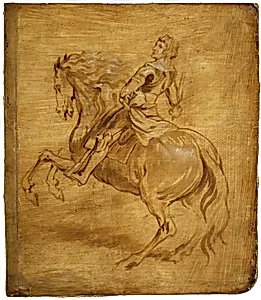
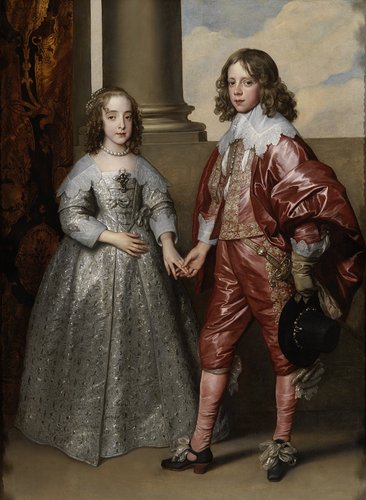
Introduced new portrait types to British art: groups of children without parents, double portraits showing friends or siblings, powerful men with their secretaries, and sophisticated equestrian portraits. Worked on canvases of unprecedented scale for British portraiture.
In 1640, married Mary Ruthven, a lady-in-waiting to the Queen and granddaughter of the 1st Earl of Gowrie. Their daughter Justiniana was born in 1641.
Traveled to Paris in late 1641 to paint Cardinal Richelieu, but his health deteriorated. Returned to London in November 1641. Died on December 9, 1641, in Blackfriars, the same day his daughter was baptized. Buried December 11 in the choir of St. Paul's Cathedral; his tomb, erected by the king, was destroyed in the Great Fire of London in 1666.
Artheon Research Team
Last updated: 2025-11-28
Biography length: ~1,247 words
Wikidata/Wikimedia Commons