
Ctrl K
1780–1789
T. Thornton was a British printmaker and engraver active in London from 1780 to 1789. Little is known of his early life or training, but his professional output places him firmly within the vibrant late-eighteenth-century London print trade, where engravers reproduced paintings and drawings for a growing market of illustrated books, topographical views, and historical scenes.
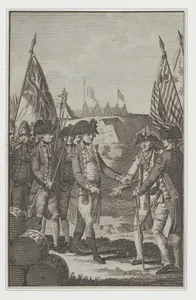
Thornton specialized in reproductive engravings, often working after designs by more established artists. Notable examples include his print of *The Surrender of Earl Cornwallis* (after William Hamilton), which depicts the pivotal 1781 Yorktown surrender involving figures such as George Washington, Brigadier General Charles O’Hara, and Charles, Earl Cornwallis. He also produced *The Devastations occasioned by the Rioters of London* and topographical subjects such as *View of the Cathedral Church of Worcester* (after an unknown artist associated with Hamilton) and views of Crosby Place. These works were frequently published by Alexander Hogg or sold through outlets like William Birch, reflecting Thornton’s role in disseminating both current events and architectural imagery to a wide audience.
Although his career was brief, Thornton’s prints contributed to the popular visual record of the American Revolutionary War’s conclusion and Georgian London’s landmarks. His engravings survive in major institutional collections, including the Yale Center for British Art, the Metropolitan Museum of Art, and the British Museum, ensuring his modest but precise contributions to reproductive printmaking remain accessible to scholars and the public today.