Edward Ruscha, born Edward Joseph Ruscha IV on December 16, 1937, in Omaha, Nebraska, grew up in Oklahoma City after his family relocated there in 1941. From a young age, he was drawn to cartooning, supported by his mother, and his early artistic spark was nurtured amid the American Midwest before he moved to Los Angeles in 1956. There, he enrolled at the Chouinard Art Institute (now California Institute of the Arts), studying painting, graphic design, and commercial art from 1956 to 1960 under teachers Robert Irwin and Emerson Woelffer. This training honed his skills in lettering, layout, and abstraction, while exposure to Jasper Johns and Marcel Duchamp shifted his focus toward integrating graphics and everyday imagery into fine art.
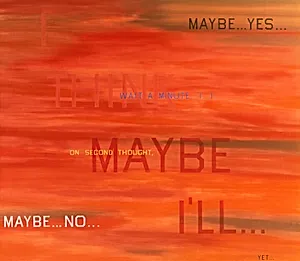
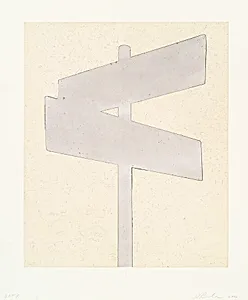
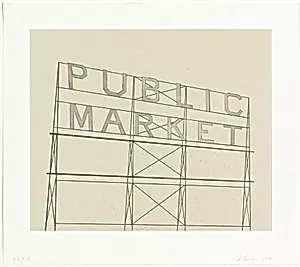
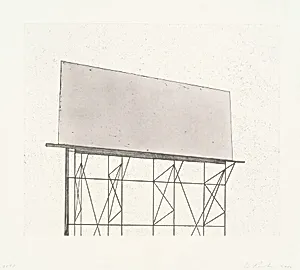
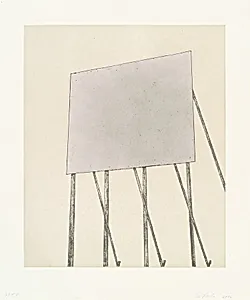
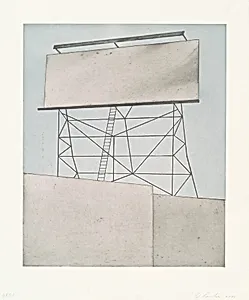
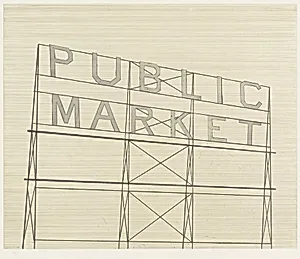
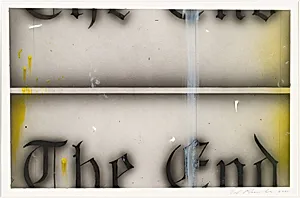
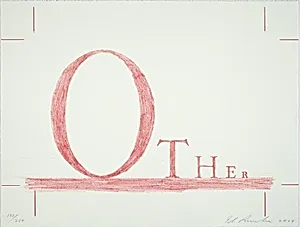
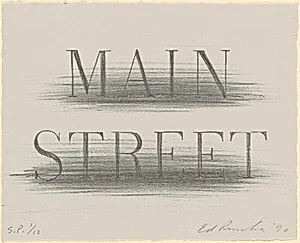
Ruscha emerged as a key figure in the Los Angeles art scene of the 1960s, aligning with the Pop art movement through his deadpan depictions of banal urban landscapes, consumer culture, and Hollywood iconography. Working in painting, photography, drawing, printmaking, and artist books, he elevated the ordinary—gas stations, parking lots, billboards—into conceptual statements, often using bold typography where words became sculptural objects with comedic or surreal weight. His association with the Ferus Gallery group and innovations like split-fountain printing captured the sprawling, car-centric ethos of Southern California, blending Pop's irony with Conceptual art's emphasis on idea over illusion.
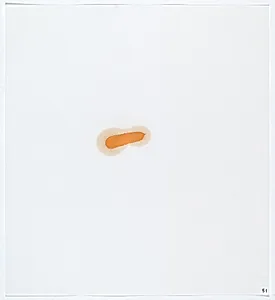
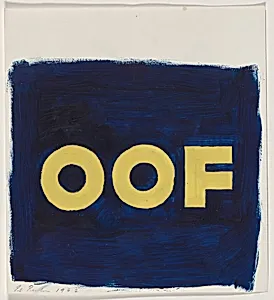
Among his breakthrough works are the self-published artist book *Twentysix Gasoline Stations* (1963), a serial documentation of roadside pumps from his Route 66 drives, and *Every Building on the Sunset Strip* (1966), a 25-foot accordion-fold panorama of LA's facades. Paintings like *Standard Station, Amarillo, Texas* (1963), inspired by Edward Hopper's *Gas*, and word canvases such as *Honk* (1962), *OOF* (1962–63), and *Large Trademark with Eight Spotlights* (1961)—a monumental 20th Century Fox logo—exemplify his trompe l'oeil mastery and cultural critique. Later series, including fiery diners like *Norm's, La Cienega, on Fire* (1964) and chocolate-scented installations like *Chocolate Room* (1970), pushed material and sensory boundaries.
Ruscha's legacy endures as a pioneer of artist books and typographic painting, influencing Neo-Pop artists like Jeff Koons and conceptual photographers like Stephen Shore. With over 16 books, countless retrospectives—from the Whitney (2004) to MoMA (2023)—and accolades including the J. Paul Getty Medal (2019), he remains a vital chronicler of American vernacular, his works in major collections worldwide.