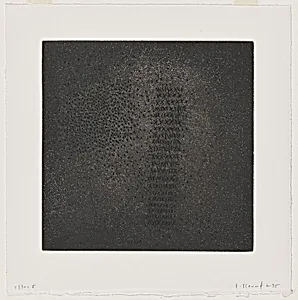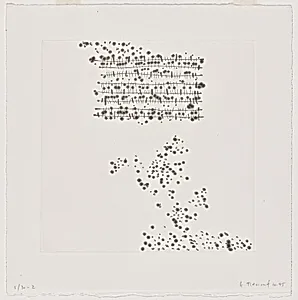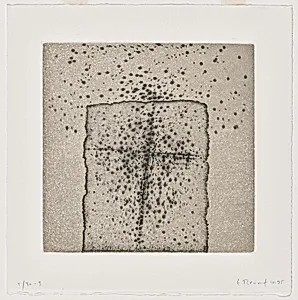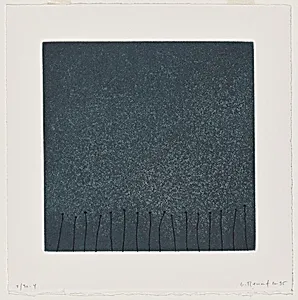
Edda Renouf was born in Mexico City in 1943 to an artistic family — her father, Edward Renouf, was himself a painter. She moved to the United States in 1957 and began her formal training at Sarah Lawrence College in 1961, later earning her Master of Fine Arts from Columbia University, where she studied under the painter Richard Pousette-Dart. A year spent at the Akademie der Bildenden Künste in Munich from 1969 to 1970 deepened her engagement with European traditions of material investigation, and since 1972 she has divided her time between New York and Paris.
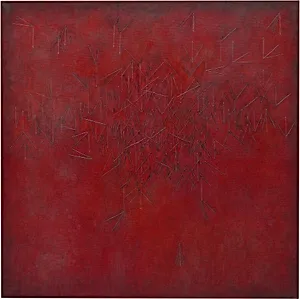
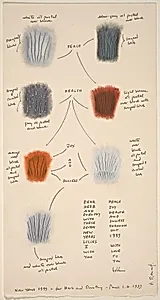
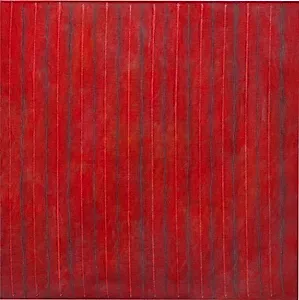
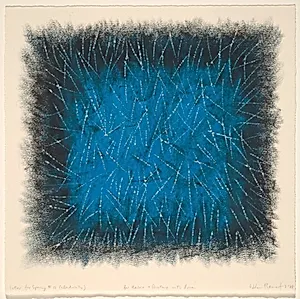
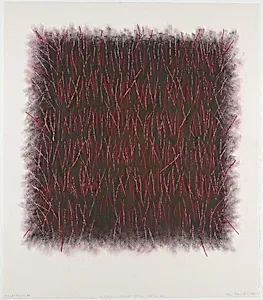
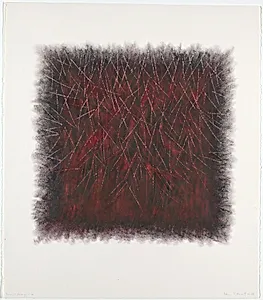
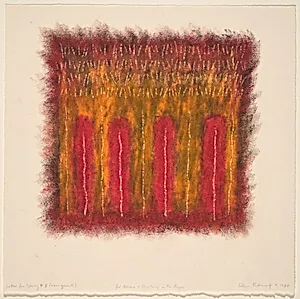
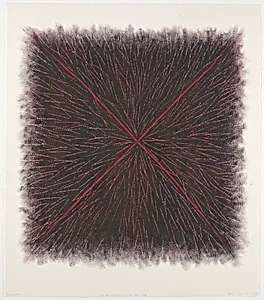
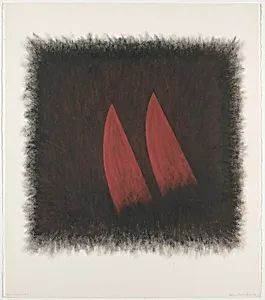
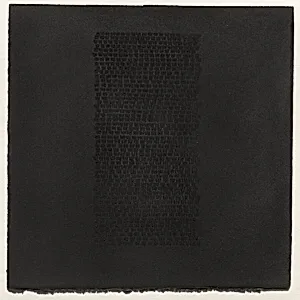
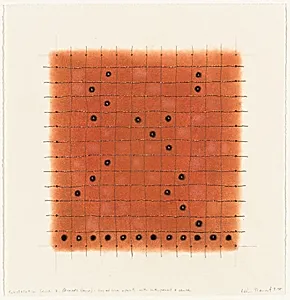
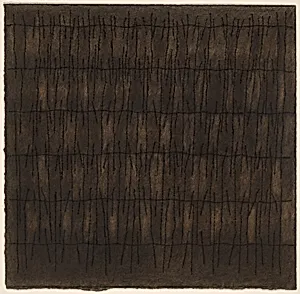
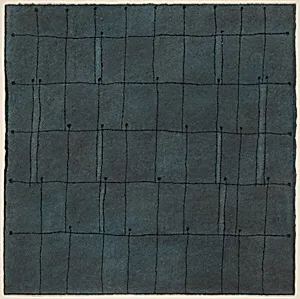
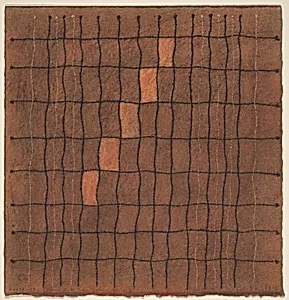
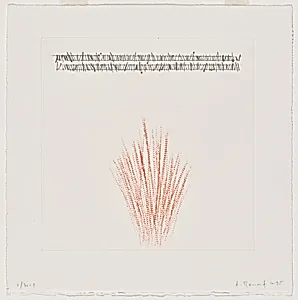
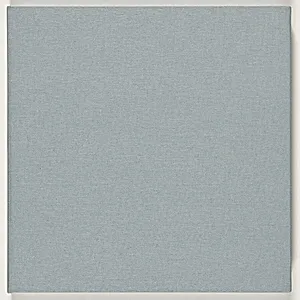
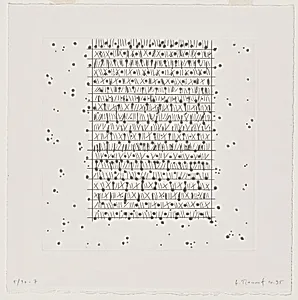
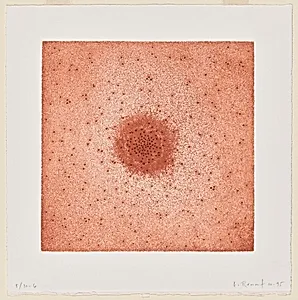
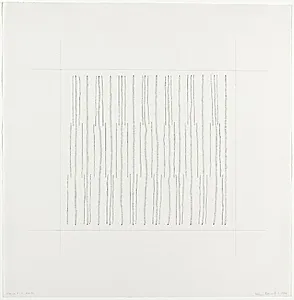
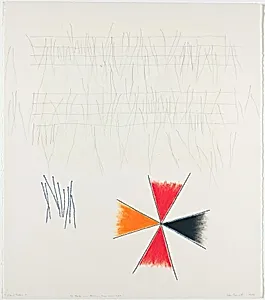
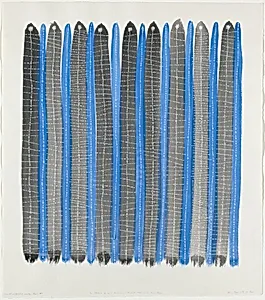
Renouf's practice is rooted in a sustained investigation of the physical properties of the materials she employs. When working on canvas, she intervenes in the fabric itself before applying paint, carefully withdrawing individual threads from the woven linen and then reintegrating them, adding pigment, and sanding the surface to create compositions of extraordinary subtlety in which the boundary between mark and material dissolves. In her works on paper, she incises fine lines into the surface before applying pastel, so that the furrows in the paper become active elements of the composition. This meticulous attention to the logic of materials — to what the substance itself makes possible — places her in dialogue with the European Arte Povera tradition while maintaining the restraint and clarity of American minimalism.
Renouf's work has been exhibited widely in Europe and North America. A major retrospective was presented at the Staatliche Kunsthalle Karlsruhe in Germany in 1997, and the National Museum of Women in the Arts in Washington, D.C., mounted a solo exhibition titled Revealed Structures in 2004. She received a Pollock-Krasner Foundation grant in 1990. Her works are held in the permanent collections of the Metropolitan Museum of Art, the Museum of Modern Art, the Whitney Museum of American Art, and numerous other institutions.
What sets Renouf apart in the landscape of postwar abstraction is her insistence on a mode of making that is as much a form of attention as it is a form of production. Each canvas or sheet is the record of a slow, deliberate encounter with the inherent structure of its support, producing works that reward equally close and sustained looking.