Ctrl K
1813–1889
Édouard-Denis Baldus (1813–1889), born in Grünebach, Prussia, moved to Paris in 1838 at age twenty-five to study painting outside the École des Beaux-Arts and atelier system. Trained initially as a painter, draughtsman, and lithographer, he exhibited at the Paris Salons from 1841 to 1851 without notable recognition. Around 1849, Baldus pivoted to photography, embracing William Henry Fox Talbot's paper negative-positive process shortly after encountering Louis Daguerre's work. This shift propelled him into the forefront of French photography, where his technical innovations and compositional rigor transformed architectural documentation into an art form.
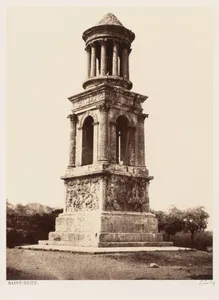
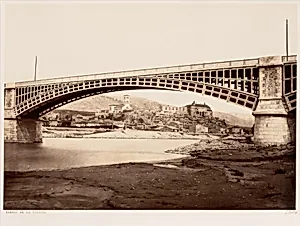
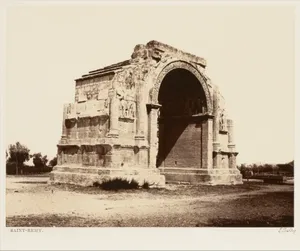
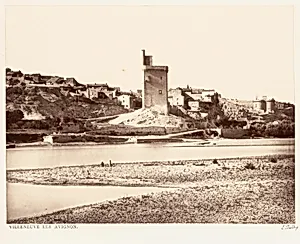
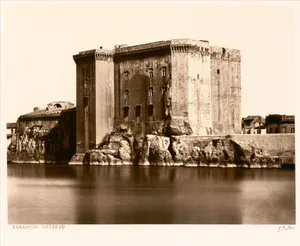
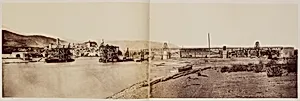
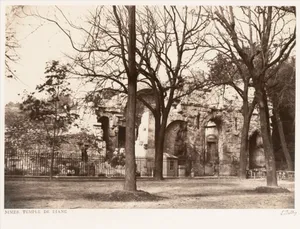
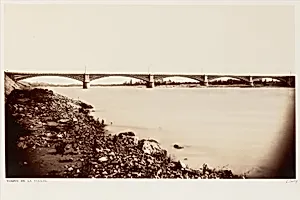
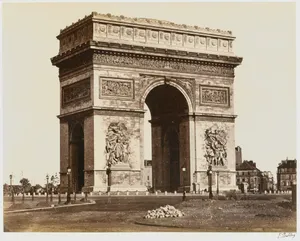
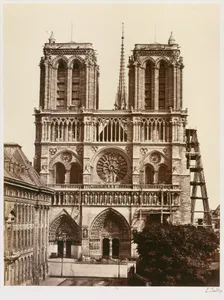
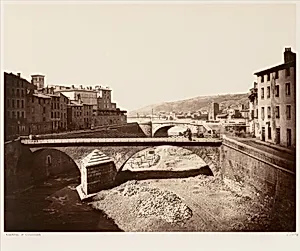
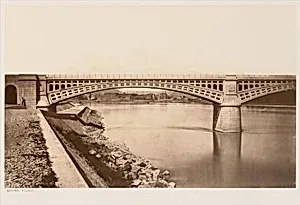
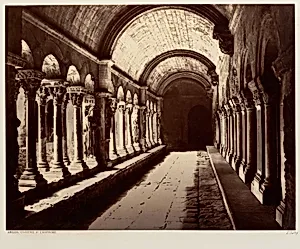
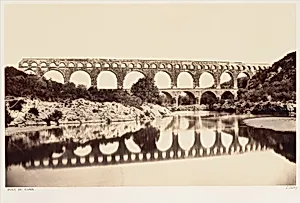
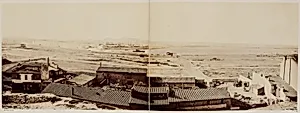
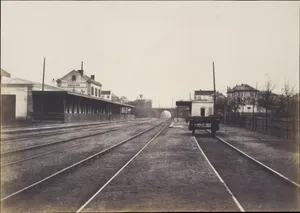
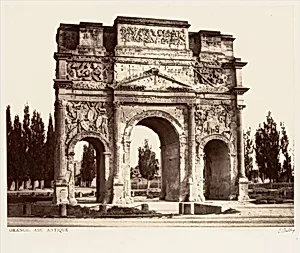
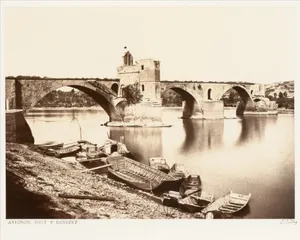
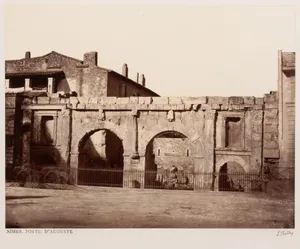
Baldus's career peaked with prestigious commissions that showcased France's heritage and modernity. In 1851, he joined the Missions Héliographiques, tasked by the Commission des Monuments Historiques to photograph medieval structures across southern France, including the Roman Arch at Orange and Nîmes's Tour Magne (1853). He produced *Les Villes de France photographiées* (Paris, 1852; south, 1853) and Auvergne landscapes (1854). Landmark projects followed: Baron James de Rothschild's 1855 railway album from Paris to Boulogne for Queen Victoria; extensive New Louvre construction records (1855–57) for architect Hector Lefuel, compiled into albums gifted by Napoleon III; flood devastation in Lyon, Avignon, and Tarascon (1856); and a 1861 rail album from Lyon to Marseille and Toulon. Iconic images include the Imperial Library of the Louvre (1856–57), Pont du Gard, and panoramic Paris views (c. 1860).
Baldus pioneered large-scale paper negatives (up to 10x14 inches), wet and dry collodion processes, contact prints, and composite panoramas reaching eight feet, often retouching to enhance clarity or insert skies. His precise, unromanticized views balanced documentary utility for architects and historians with poetic depth, juxtaposing ancient monuments against railways and floods to celebrate progress. By 1855, hailed as France's premier architectural photographer, his work influenced genres like topographic surveys and construction records, with albums enduring in collections like Windsor Castle. Baldus died in Arcueil in 1889, his legacy a bridge between photography's technical dawn and artistic maturity.
![[Entrance to the Port of Boulogne]](https://images.artheonmuseum.org/met/ph/thumb/entrance-to-the-port-of-boulogne-266644.webp)
![[Church of Saint-Honorat, Arles]](https://images.artheonmuseum.org/met/ph/thumb/church-of-saint-honorat-arles-267018.webp)
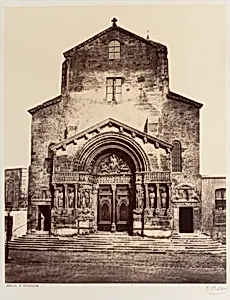
![[Portal, Church of Saint-Trophime, Arles]](https://images.artheonmuseum.org/met/ph/thumb/portal-church-of-saint-trophime-arles-267017.webp)