Ctrl K
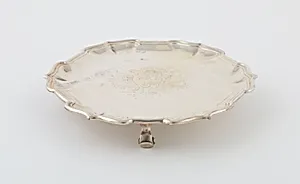
**Edward Feline (c. 1720–1753)** was an English silversmith active in London during the early Georgian period. Born the son of tailor Peter “Fellen” of St. Martin’s-in-the-Fields, he was apprenticed to the prominent Huguenot silversmith Augustine Courtauld on 31 March 1709 and gained his freedom in April 1721. He entered his first maker’s marks as a largeworker in September 1720, initially working from Rose Street, Covent Garden, and later from King Street in the same parish.
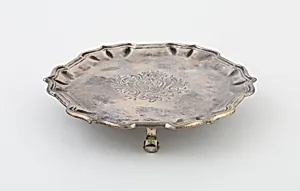
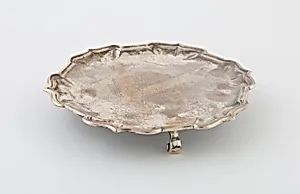
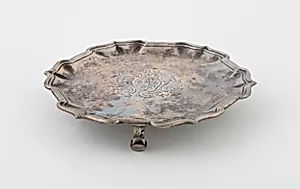
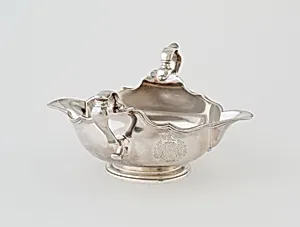
Feline produced refined tableware and domestic silver in the elegant Rococo style then fashionable in Britain. His output included kettles on stands, lamps, boxes, and other vessels often featuring graceful scrolling handles, leaf motifs, and balanced proportions. The Art Institute of Chicago holds five works by him, among them pieces in soft-paste porcelain, gilded silver combined with coconut shell, and glass-mounted forms, demonstrating his versatility across materials.
In 1720 Feline married Renee Barbut at the West Street Huguenot Church. He registered a third mark in 1739 and took on an apprentice, his own son Edward, in 1745. He appears to have died by May 1753, when his widow Magdalen Feline entered her own mark at the same King Street address and continued the business as both largeworker and plateworker.
Feline’s surviving silver, now dispersed among museum collections including the Art Institute of Chicago and various English institutions, attests to the high quality of London craftsmanship in the Rococo era. His workshop’s continuity through his widow further underscores the enduring reputation of the Feline name in eighteenth-century British silver.
All 5 artworks loaded