Ctrl K
1812–1888
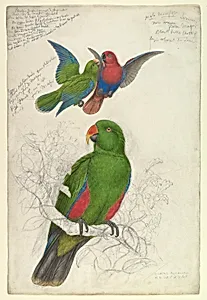
Edward Lear (1812–1888) was a British artist, illustrator, author, and poet whose creative output ranged from meticulous natural history illustration to landscape painting and the beloved comic verse of his limericks and nonsense poetry. Born in London as the twentieth of twenty-one children, Lear largely educated himself as a draughtsman and began his professional career illustrating parrots for the Zoological Society of London, producing work of exceptional scientific precision that won the admiration of the ornithologist John Gould.
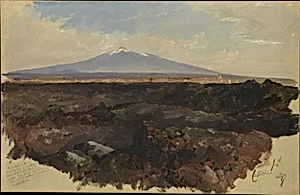
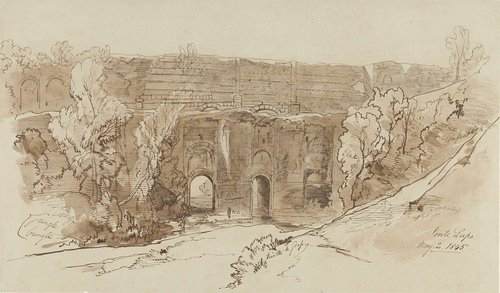
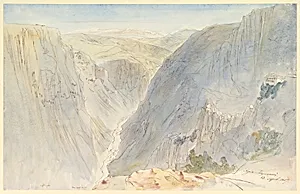
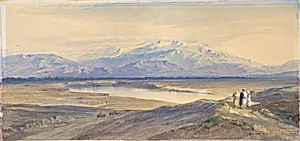
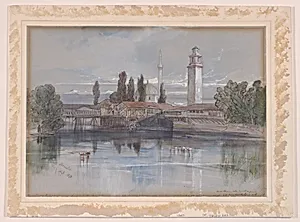
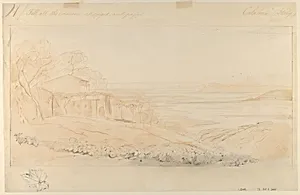
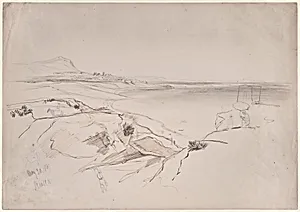
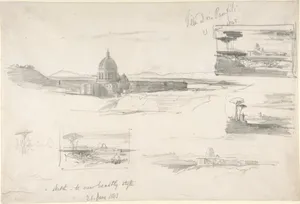
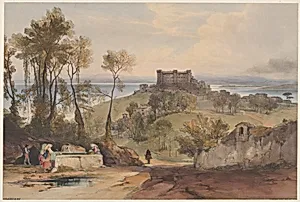
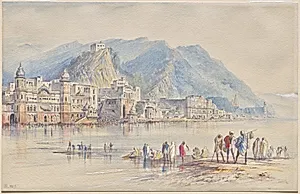
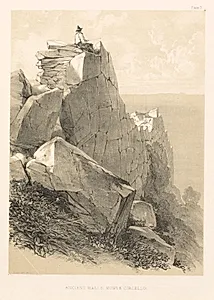
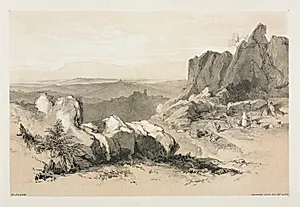
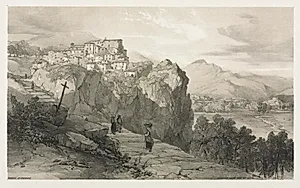
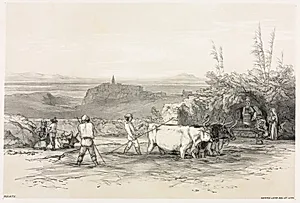
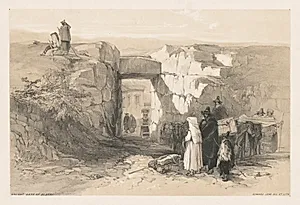
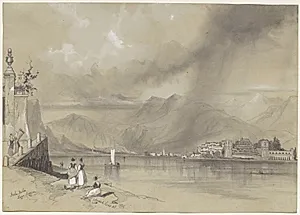
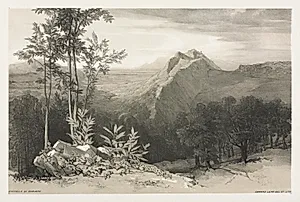
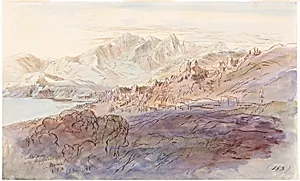
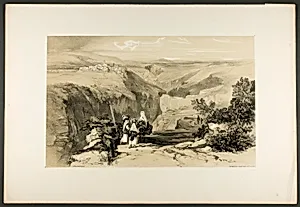
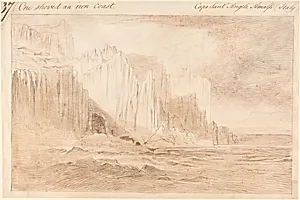
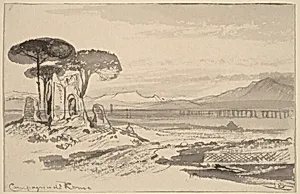
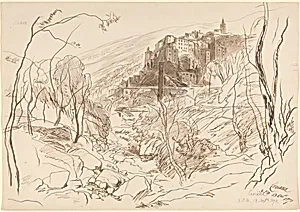
Lear's talent for landscape drawing brought him to the attention of the Earl of Derby, who commissioned him to record the animals in his private menagerie and later supported his travels abroad. These journeys — through Italy, Greece, Albania, Egypt, Palestine, India, and Ceylon — produced the illustrated travel books that established his reputation as a topographical artist. His landscape drawings and watercolors capture the particular quality of Mediterranean and Eastern light with an attentiveness to atmosphere and geological form that reflects his careful observation of the natural world.
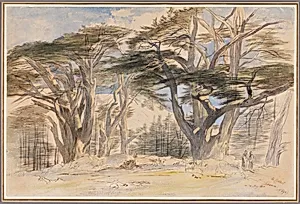
As a painter in oils, Lear worked in a tradition influenced by his friendship with the Pre-Raphaelite landscape painter William Holman Hunt, adopting a bright palette and a concern for the precise rendering of specific places. His large exhibition canvases depicting sites such as Corfu, the Cedars of Lebanon, and the Indian subcontinent were ambitious attempts to bring distant lands before the British public.
Today Lear is perhaps equally celebrated for his literary nonsense, particularly "The Owl and the Pussycat" and his collections of limericks, which have secured his place in the canon of English literature. His visual and literary work together present a picture of a restless, warmhearted observer of the world whose gentle humor and genuine curiosity made him one of the most distinctive figures of the Victorian era.