
Ctrl K
1868–1952
Edward Sheriff Curtis (1868–1952) was born on February 19 near Whitewater, Wisconsin, into a struggling family led by his father, Reverend Asahel Curtis, a Civil War veteran and farmer, and mother Ellen Sheriff. Raised in poverty amid his father's postwar frailties, Curtis left school after sixth grade and apprenticed as a photographer in a St. Paul, Minnesota, studio at age seventeen in 1885. The family relocated to Seattle in 1887, where he established a successful portrait studio, partnering briefly with Rasmus Rothi before forming Curtis and Guptill. His breakthrough came in 1895 with the poignant portrait of Princess Angeline, daughter of Chief Seattle, earning prizes like the 1898 National Photographic Society gold medal for *Homeward*, a Puget Sound scene. Encounters during a Mount Rainier climb led to his role as official photographer on the 1899 Harriman Alaska Expedition, where anthropologist George Bird Grinnell became a key influence, inviting him on a 1900 Blackfoot expedition.
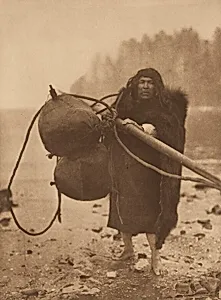
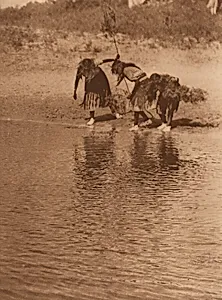
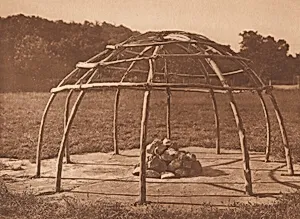
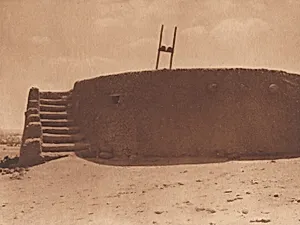
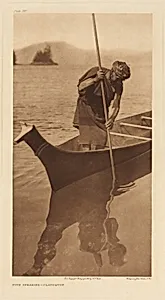
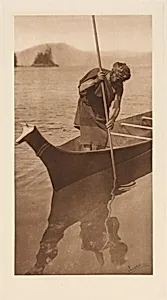
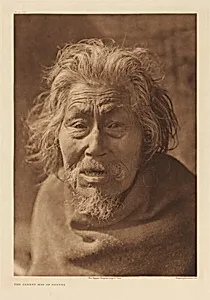
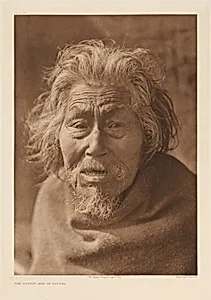
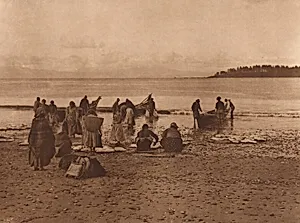
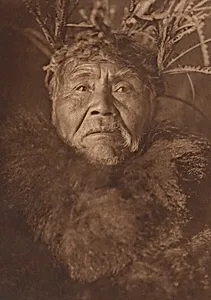
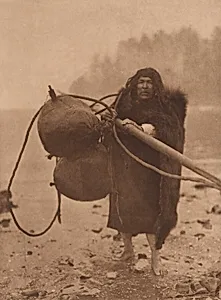
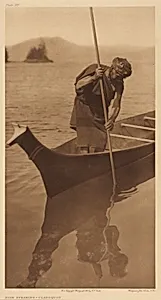
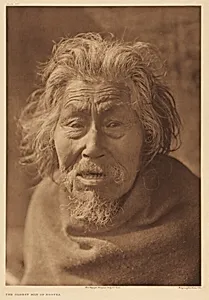
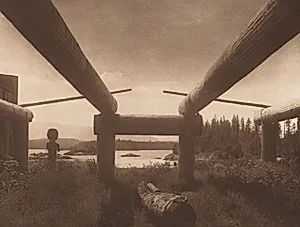
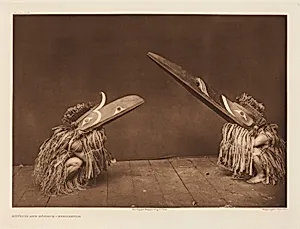
Curtis's signature style blended pictorialist aesthetics with ethnographic documentation, capturing Native American life in sepia-toned portraits and staged scenes that evoked a romantic "vanishing race"—erasing modern elements like clocks to idealize pre-contact nobility. His magnum opus, *The North American Indian* (1907–1930), a 20-volume set with 2,222 photogravures across 20 portfolios, chronicled over 80 tribes' customs, languages, myths, and ceremonies, supported by J.P. Morgan's $75,000 funding and a foreword from Theodore Roosevelt. Iconic images include *The Vanishing Race—Navajo* (1904), *Chief Joseph—Nez Perce* (1903), *In a Piegan Lodge* (c. 1910, retouched), and *On the Little Bighorn* (Crow, 1908). He also produced the pioneering silent film *In the Land of the Head-Hunters* (1914) with an all-Indigenous Kwakwaka'wakw cast.
Married to Clara Phillips from 1892 until their 1916 divorce amid his absences—which left her running the studio—Curtis fathered four children: Harold, Beth, Florence, and Katherine. Financial strains from the project culminated in Hollywood work for Cecil B. DeMille in the 1920s–1940s. His legacy endures as a monumental visual archive, though critiqued for romantic primitivism and manipulations that shaped stereotypes, it remains vital for preserving endangered cultures before assimilation accelerated.
![The Fire-Drill - Koskimo [Plate 349]](https://images.artheonmuseum.org/nga/thumb/the-fire-drill-koskimo-plate-349-nga-133006.webp)
![A Chief's Daughter - Nakoaktok [Plate 364]](https://images.artheonmuseum.org/nga/thumb/a-chiefs-daughter-nakoaktok-plate-364-nga-133010.webp)
![The North American Indian [Volume Ten]](https://images.artheonmuseum.org/nga/thumb/the-north-american-indian-volume-ten-nga-131768.webp)
![Qa'híla - Koprino [Plate 331]](https://images.artheonmuseum.org/nga/thumb/qahla-koprino-plate-331-nga-132989.webp)
![Carved Posts at Alert Bay [Plate 330]](https://images.artheonmuseum.org/nga/thumb/carved-posts-at-alert-bay-plate-330-nga-132988.webp)