Ctrl K
1855
Edward Strzalkowski was an American artist active around 1935, best known for his precise watercolor renderings created as part of the Index of American Design, a New Deal-era Federal Art Project under the Works Progress Administration (WPA). This ambitious initiative commissioned artists across the United States to document everyday objects of American folk art, crafts, and design through detailed drawings, preserving cultural heritage at risk of being lost during the Great Depression. Strzalkowski's contributions capture the whimsical yet grotesque world of handmade puppets, showcasing his skill in translating three-dimensional folk artifacts into vivid, two-dimensional studies.
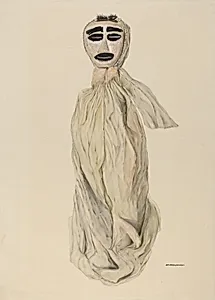
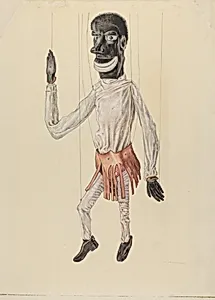
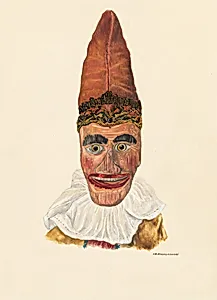
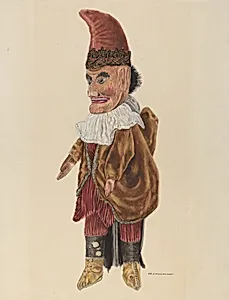
Little is known about Strzalkowski's early life or formal training, as biographical details remain sparsely documented. His known oeuvre centers on four works from circa 1937, all housed in the National Gallery of Art's Index of American Design collection. These include *Joe, the Cannibal*, a startling depiction of a carved puppet figure inscribed with the artist's name; *Ghost of Judy*, an ethereal watercolor, graphite, and gouache rendering evoking spectral folklore; *Punch's Head*, focusing intently on the exaggerated, colorful features of the iconic Punch and Judy character; and *Puppet: "Punch"*, a full-view study of the mischievous marionette. Executed in watercolor, gouache, pen and ink, and graphite on paperboard, these pieces demonstrate Strzalkowski's meticulous technique—emphasizing texture, expression, and vibrant hues to honor the naive artistry of anonymous craftspeople.
Strzalkowski's style aligns with the documentary realism of the Index of American Design, prioritizing faithful reproduction over personal interpretation, yet his works reveal a subtle fascination with the uncanny—bulbous noses, wild eyes, and theatrical grimaces that bridge folk tradition and modernist observation. Though his career appears brief and project-specific, these renderings endure as vital records of American vernacular culture, particularly the Punch and Judy puppetry tradition imported from England and adapted in vaudeville and street performances. Today, they educate viewers on the interplay between popular entertainment and craft, reminding us of the WPA's role in sustaining artistic labor amid economic hardship. Strzalkowski's modest legacy lies in these preserved artifacts, inviting contemplation of overlooked makers whose ingenuity he so capably immortalized.
All 4 artworks loaded