Ctrl K
1819–1863
Occupations
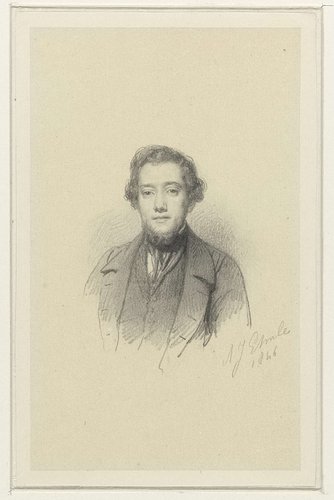
Adrianus Johannes Ehnle (1819-1863) was a Dutch painter who specialized in historical and genre subjects during the mid-nineteenth century. Born at The Hague in 1819 and dying in Haarlem in 1863 at only forty-four years of age, Ehnle's brief career produced works that combined historical narrative with careful attention to period detail and composition. Ehnle studied under C. Kruseman (Cornelis Kruseman), one of the leading Dutch painters of historical and portrait subjects in the early nineteenth century, receiving training in academic painting techniques and historical composition. His artistic practice encompassed both large-scale historical paintings and genre scenes. Among his documented works are "Cornelis de Witt at Dordrecht," depicting an episode from Dutch history involving the statesman Cornelis de Witt (1623-1672), and "The Reception of a Child at the Orphan House at Haarlem," which shows his interest in contemporary institutional subjects rendered with historical painting techniques. Beyond painting, Ehnle also created lithographic works, collaborating with artists such as Kruseman and Van den Berg. His work demonstrates the mid-nineteenth-century Dutch interest in national history and institutional life, rendered with the compositional clarity and attention to costume and setting characteristic of academic historical painting. Works by Ehnle are preserved in the Rijksmuseum and other Dutch collections, as well as in portrait galleries documenting nineteenth-century Dutch cultural figures.
Adrianus Johannes Ehnle was born in 1819 at The Hague, the seat of Dutch government and an important artistic center. He studied under Cornelis Kruseman (C. Kruseman), a prominent painter known for historical subjects and portraits. Under Kruseman's instruction, Ehnle learned academic painting techniques, compositional strategies for historical narratives, and the careful rendering of period costumes and settings that characterized Dutch historical painting.
Ehnle established himself as a painter of historical and genre subjects, creating works that combined narrative clarity with careful period detail. His painting "Cornelis de Witt at Dordrecht" depicts an episode from seventeenth-century Dutch history, showing the statesman Cornelis de Witt in a significant moment. "The Reception of a Child at the Orphan House at Haarlem" demonstrates his interest in contemporary institutional subjects, applying historical painting techniques to documenting nineteenth-century Dutch charitable institutions. Beyond his paintings, Ehnle worked as a lithographer, collaborating with Kruseman and Van den Berg on prints. His lithographic work contributed to the dissemination of images in an era when reproductive prints remained important for sharing artistic compositions with wider audiences. Ehnle died in Haarlem in 1863 at age forty-four, his career cut short but having produced a body of work that documents both Dutch historical consciousness and contemporary institutional life.
Artheon Research Team
Last updated: 2025-11-09
Biography length: ~447 words
Wikidata (CC0); Getty ULAN (ODC-By)