
Ctrl K
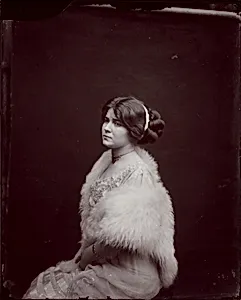
1873–1949
Ernest Joseph Bellocq (1873–1949) was born into an aristocratic white Creole family in New Orleans on August 19, 1873. His father, Paul Bellocq, worked as a bookkeeper, while his mother, Marie, came from a wealthy French merchant family; his younger brother, Leo, became a Jesuit priest and Bellocq's sole heir. Raised near the French Opera House in comfortable circumstances, Bellocq received a classical education for ten years at the College of the Immaculate Conception, a Jesuit institution that later became Jesuit High School. He began photography as an amateur, joining the New Orleans Camera Club in 1891 and gaining local recognition by 1898, before transitioning to a professional career around 1902 following his mother's death.
As a commercial photographer operating a studio on Canal Street, Bellocq documented architecture, school class portraits, grave plots, shipyards during World War I, and everyday New Orleans life, including boxers and baseball players for local newspapers. His most renowned body of work, however, was the private series of Storyville Portraits created circa 1912 in New Orleans' legalized red-light district. Using an 8x10-inch view camera, he produced at least 89 glass plate negatives featuring intimate, full-figure portraits of prostitutes—some clothed, others nude or masked, posed in relaxed, narrative-like scenes within brothel interiors. Many negatives bear deliberate scratches over the faces, likely made by Bellocq himself while the emulsion was wet, adding to their haunting, enigmatic quality.
Bellocq's reclusive later years ended in 1949 after a fall; his Storyville negatives, stored in poor conditions, surfaced posthumously via art dealer Larry Borenstein and were acquired by Lee Friedlander in 1966–1967. Friedlander's gold-toned prints debuted at the Museum of Modern Art in 1970, catapulting Bellocq to fame and inspiring publications like *Storyville Portraits* (1970) and *Bellocq: Photographs from Storyville* (1996). The Museum of Modern Art holds 50 of his untitled works from circa 1912. His sensual yet tender images—evoking trust amid vulnerability—have influenced literature, such as Michael Ondaatje's *Coming Through Slaughter* and Natasha Trethewey's *Bellocq's Ophelia*, and Louis Malle's 1978 film *Pretty Baby*, securing his legacy as a shadowy pioneer of intimate documentary photography.
No artworks found for this artist