Ctrl K
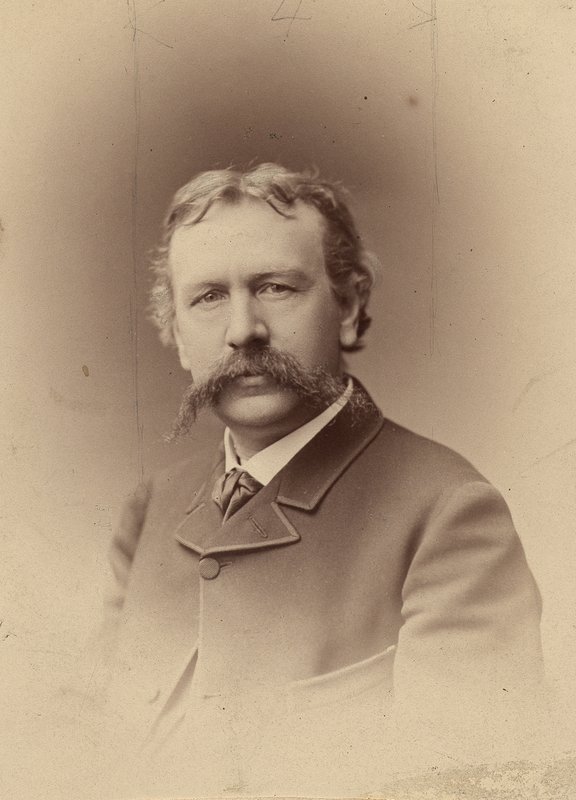
1836–1923
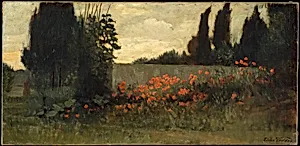
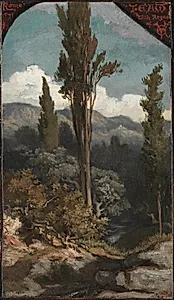
Elihu Vedder was born on February 26, 1836, in New York City to Dr. Elihu Vedder Sr., a dentist, and his cousin Elizabeth Vedder. As a young boy, his family relocated to Cuba for his father's ventures, an experience that sparked his artistic aspirations amid the Caribbean landscapes. He later divided his time between a boarding school and his maternal grandfather Alexander Vedder's home in Schenectady, New York, with his mother encouraging his creative pursuits despite his father's preference for a practical trade like that of his brother, Navy surgeon Dr. Alexander Madison Vedder. Vedder began formal training under genre and historical painter Tompkins H. Matteson in New York, followed by studies with François-Édouard Picot in Paris from 1856 to 1861. He then journeyed to Italy in 1858, immersing himself in Renaissance art, the Macchiaioli movement, and the works of friend Giovanni Costa, forging a lifelong bond with the Italian countryside.
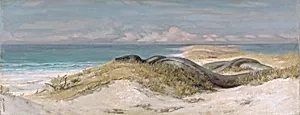
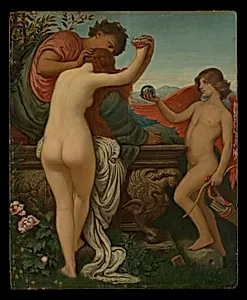
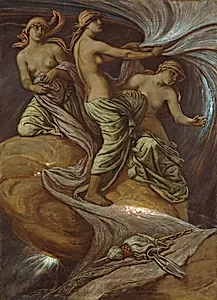
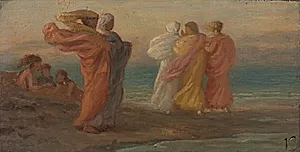
In 1869, Vedder married Caroline Beach Rosekrans in Glens Falls, New York; the couple had four children, though only daughter Anita Herriman Vedder—who managed his business affairs—and son Enoch Rosekrans Vedder, a promising architect, survived to adulthood. Returning to the U.S. during the Civil War, he supported himself through illustrations for *Vanity Fair* and other publications before settling permanently in Rome in 1866, later acquiring a home on Capri. His visionary, dream-derived paintings blended Romanticism, Symbolism, and Pre-Raphaelite influences with Oriental motifs and mysticism akin to William Blake. Early masterpieces like *The Questioner of the Sphinx* (1863), *Lair of the Sea Serpent* (1864), *The Lost Mind* (1864–65), *Peasant Girl Spinning* (1867), and *Dancing Girl* (1871) established his reputation for melancholic fantasy.
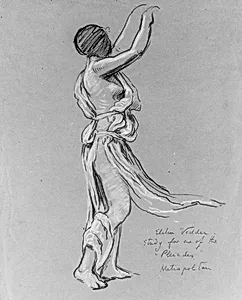
Vedder's pinnacle achievement came with his 55 intricate illustrations for the 1884 deluxe edition of Edward FitzGerald's *Rubáiyát of Omar Khayyám*, a commercial triumph that secured his fame. He executed major public commissions, including the *Rome* lunette mural for Bowdoin College (1894) and five paintings plus the *Minerva* mosaic for the Library of Congress (1896–97), embodying ideals like "Government" as "of the people, by the people, for the people." A member of the American Academy of Arts and Letters since 1865, Vedder published *The Digressions of V* (1910), reflecting his poetic soul. He died in Rome on January 29, 1923, leaving a legacy as America's pioneering Symbolist, whose ethereal works continue to captivate in collections like the Metropolitan Museum and National Gallery of Art.