Ctrl K
1855
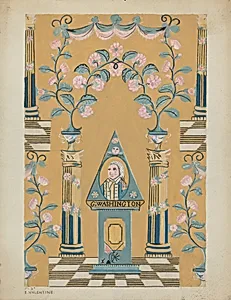
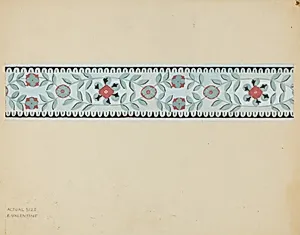
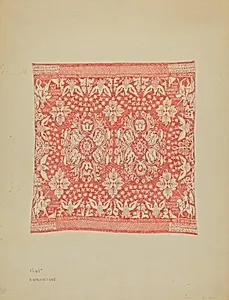
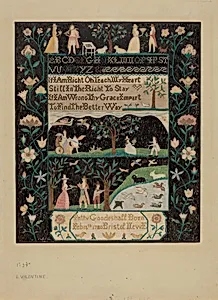
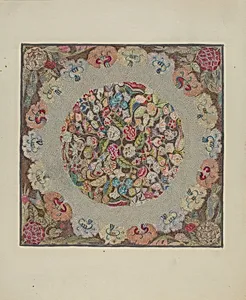
Elizabeth Valentine was an American artist active around 1935, best known for her precise renderings of everyday American folk art objects as part of the Index of American Design. This ambitious Federal Art Project, sponsored by the Works Progress Administration (WPA) during the Great Depression, aimed to catalog and celebrate the nation's artistic heritage through detailed watercolor and gouache drawings. Valentine's contributions, now housed in the National Gallery of Art with 13 works in total, capture the intricate patterns and textures of domestic textiles, preserving a visual record of vernacular craftsmanship that might otherwise have been overlooked.
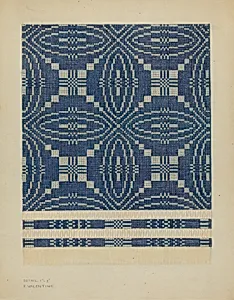
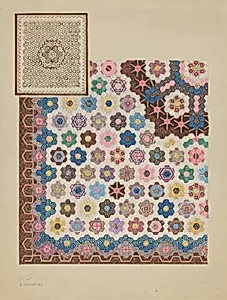
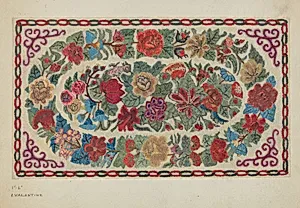
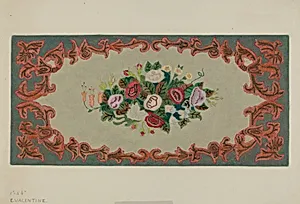
Little is known about Valentine's early life or formal training, as biographical details remain sparsely documented. No records of specific teachers, art schools, or mentors have surfaced, suggesting she may have been a self-taught practitioner or one of many regional artists recruited for WPA initiatives. Her style aligns closely with the Index's mission: meticulous, almost scientific depictions that blend artistic skill with documentary precision. Working primarily in watercolor, gouache, graphite, and pen and ink on paper or paperboard, she rendered the vibrant motifs of hooked rugs, woven coverlets, and wallpapers with a keen eye for color, pattern, and material quality, evoking the folk art traditions of rural America.
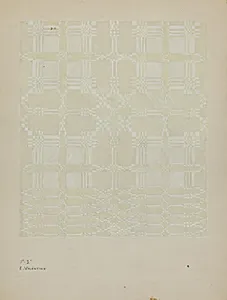
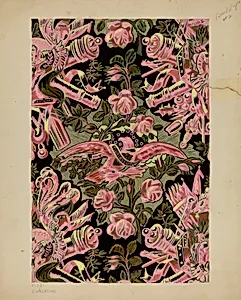
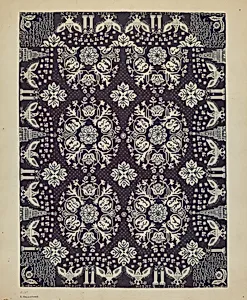
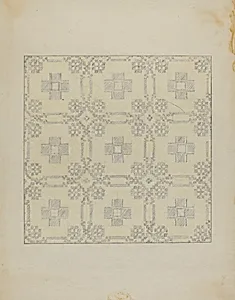
Among her major works are *Hooked Rug* (c. 1936, watercolor and graphite on paper, NGA 1943.8.254), *Wall Paper* (c. 1937, watercolor, gouache, pen and ink, and graphite on paper, NGA 1943.8.16035), *Patchwork Quilt* (c. 1936, watercolor, graphite, and gouache on paper, NGA 1943.8.433), and *Coverlet* (c. 1940, gouache and graphite on paperboard, NGA 1943.8.18127), alongside depictions of tablecloths, bedspreads, and wallpaper borders—all dated between 1935 and 1942. These pieces highlight her ability to transform humble household items into celebrated artifacts, showcasing geometric designs, floral motifs, and bold color combinations typical of 19th-century American needlework and weaving.
Valentine's legacy endures through her role in the Index, which influenced mid-20th-century appreciation for folk art and informed later museum collections and scholarship. Her drawings not only document a disappearing craft tradition but also embody the democratic spirit of New Deal-era cultural projects, making American design history accessible and vivid for future generations.