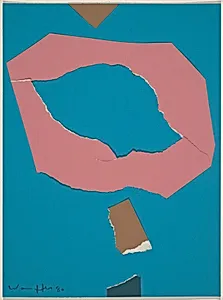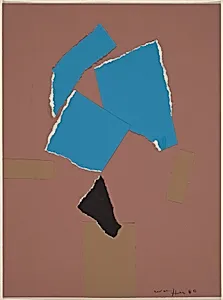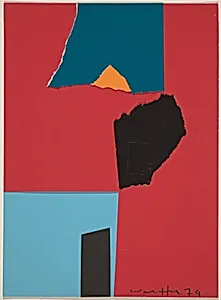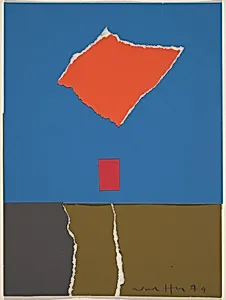
Emerson Woelffer (1914–2003) was an American abstract painter whose long career placed him at the intersection of Abstract Expressionism and a more lyrical, Mediterranean-inflected modernism. Born in Chicago, he studied at the School of the Art Institute of Chicago, where he later taught, and subsequently received a fellowship from the Institute of Design — the Chicago Bauhaus — where contact with Moholy-Nagy's rigorous formal thinking sharpened his understanding of abstract visual language.
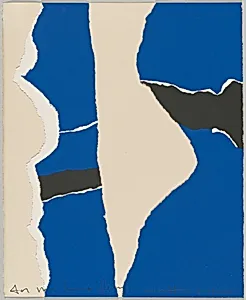
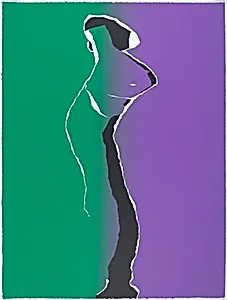
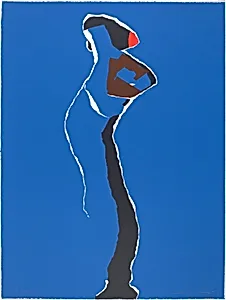
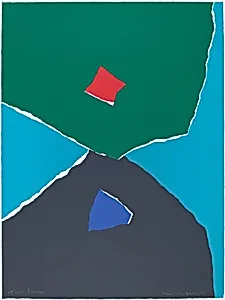
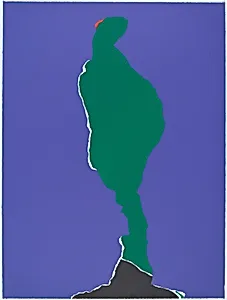
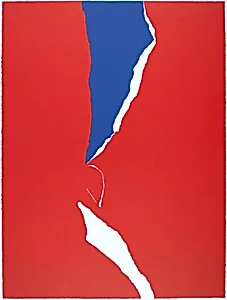
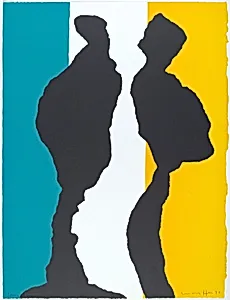
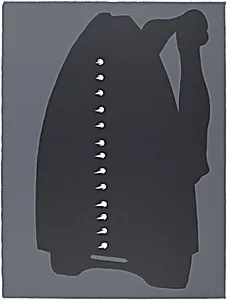
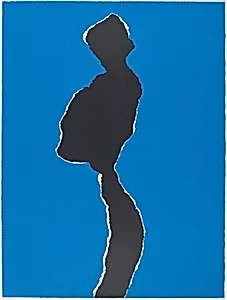
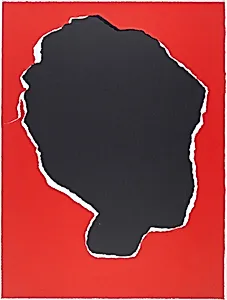
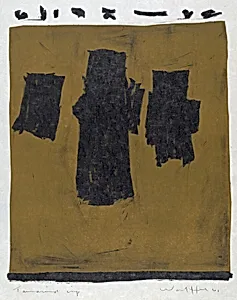
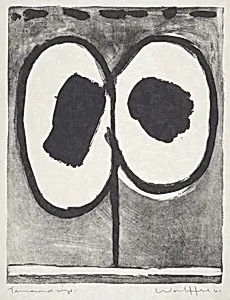
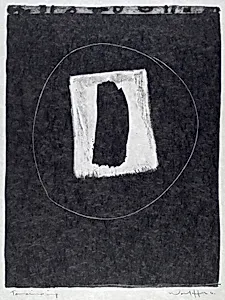
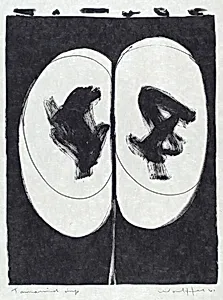
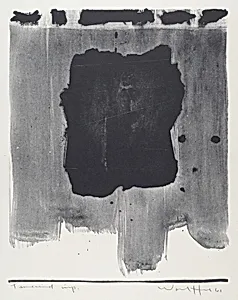
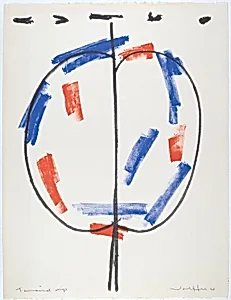
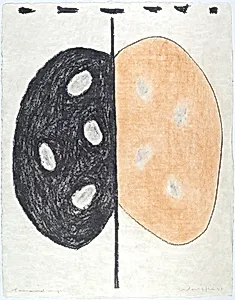
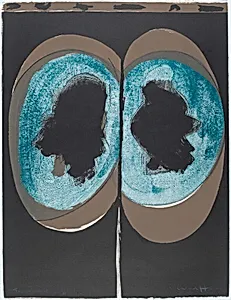
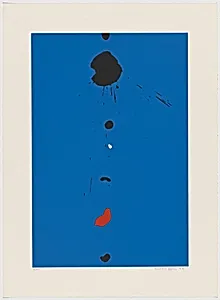
Woelffer's early work showed the influence of the gestural abstraction sweeping through American art in the postwar years, but his palette and sensibility gradually moved toward a warmer, more joyful register, shaped in part by extended periods in Spain, Mexico, and the American Southwest. His mature paintings are characterized by bold, free-floating shapes — often suggestive of organic or architectural forms — set against luminous fields of color, combining the energy of Abstract Expressionism with a Mediterranean lightness and clarity.
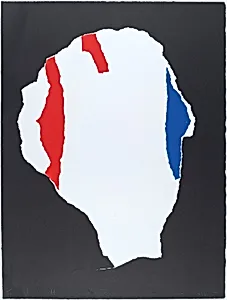
He spent significant years in Colorado Springs, where he directed the Colorado Springs Fine Arts Center, and later settled in Los Angeles, becoming an important if underrecognized figure in the Southern California art scene. His collages, which playfully incorporate fragments of printed ephemera with painted passages, are among his most inventive works and anticipate aspects of later postmodern practice.
Though Woelffer never achieved the fame of his New York contemporaries, critical reassessment has increasingly recognized the quality and consistency of his contribution. His career represents the rich diversity of American abstraction beyond the Manhattan axis, and his paintings retain a vitality and generosity of spirit that reward close attention.