
Ctrl K
1800–1868
Émile-Charles Wattier (also known as Charles-Émile Wattier) was a French painter, etcher, and lithographer born in Paris on November 17, 1800, and who died there on November 22, 1868. His career spanned the first half of the nineteenth century, during which he produced works in multiple media, contributing to the vibrant artistic scene of his native city.
Early biographical details about Wattier remain limited in historical records, with no documented information on formal training, mentors, or specific art schools. He is consistently identified across museum and auction databases simply as a multifaceted French artist active in painting, printmaking, and lithography. His output often featured architectural and religious subjects, rendered with attention to dramatic lighting and elaborate details that reflect the period’s interest in historical and ornamental themes.
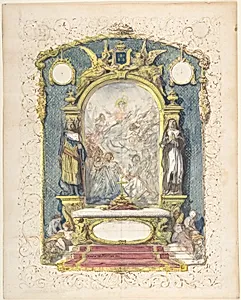
One of Wattier’s documented works is the mid-nineteenth-century watercolor *Altar Flanked by St. Louis and St. Theresa*, now in the collection of the Metropolitan Museum of Art. This piece exemplifies his skill in ornamental and architectural drawing, combining devotional imagery with precise decorative elements. Additional works by the artist appear in public collections including the Yale University Art Gallery, the National Gallery of Art in Washington, D.C., and the British Museum, confirming his presence in major institutional holdings.
Wattier’s legacy endures through the continued appearance of his paintings, etchings, and lithographs at auction and in scholarly catalogs, where he is recognized for his technical versatility. Though not among the most celebrated figures of French Romanticism or academic art, his contributions to printmaking and watercolor helped preserve visual records of nineteenth-century taste in religious and architectural subjects. His works remain valued by collectors and institutions for their craftsmanship and historical resonance.