Ctrl K
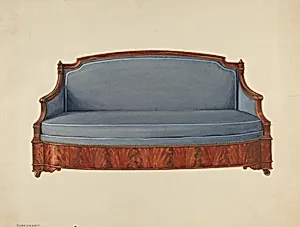
**Ernest Busenbark (1887–1982)** was an American artist whose career spanned illustration, graphic design, watercolor, oil painting, and art education, with significant contributions to public art projects and Florida’s mid-century art scene. Born in Crawfordsville, Indiana, in 1887, he demonstrated early technical skill through formal training that included studies with the San Francisco landscape painter Arthur W. Best, as well as at the Art Institute of Chicago, the Art Students League, and Cooper Union in New York City.
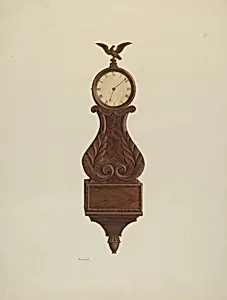
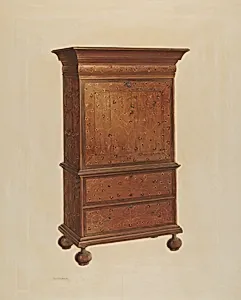
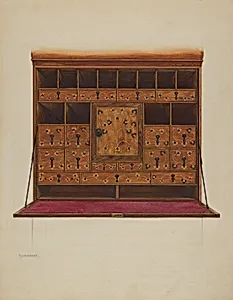
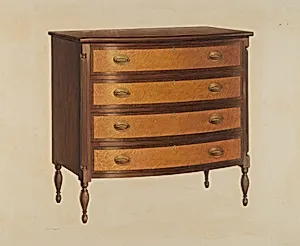
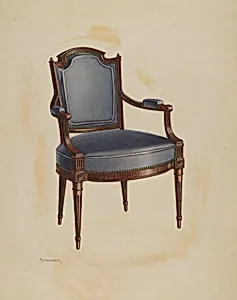
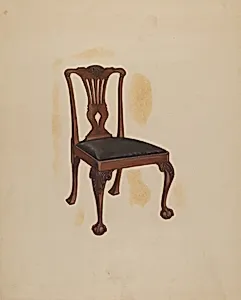
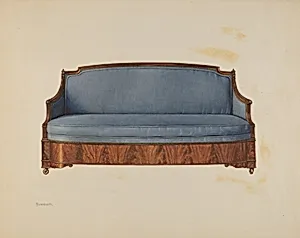
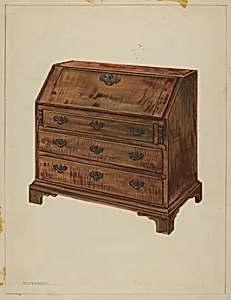
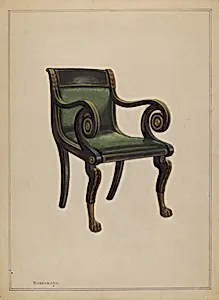
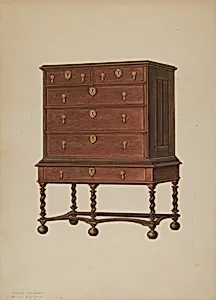
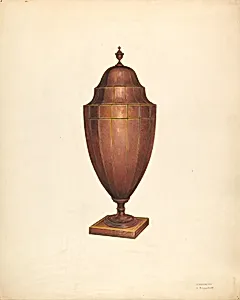
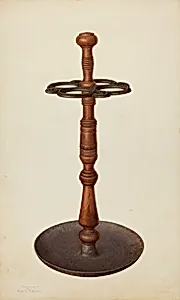
His professional path included early exhibitions, such as a 1923 watercolor titled *Bringing in the Lobster Pots* at the Art Institute of Chicago. During the 1930s and 1940s he worked extensively for the Works Progress Administration (WPA), producing numerous illustrations for the *Index of American Design*—a project documenting American decorative arts from the colonial period to 1900. These watercolors, graphite, and gouache works are now part of the National Gallery of Art’s collection in Washington, DC (thirteen examples are held there). He later served as head of the WPA’s Poster Division, creating public communications ahead of World War II.
After the WPA era, Busenbark maintained a studio in New York City, where he co-authored the 1938 book *The Silk Screen Printing Process* and published *Symbols, Sex and the Stars* in 1949. In 1955, at age 68, he relocated to Clearwater, Florida, quickly becoming active in the local scene as president of the Clearwater Art Group and an instructor at the Florida Gulf Coast Art Center. There he taught silk-screen techniques and painted Florida landscapes in an American Impressionist style influenced by his teacher Arthur W. Best, often working on masonite to achieve textured, broken brushwork. He also exhibited widely, won awards such as first prize for traditional oil at the 1964 Florida County Fair, and advocated for realism over abstraction.
Busenbark lived to the age of 95, passing away in Pinellas County, Florida, in 1982. Though his later recognition faded, his dual legacy endures through the enduring institutional presence of his *Index of American Design* illustrations and his role in nurturing Florida’s postwar art community. His paintings, signed simply “E. Busenbark,” continue to appear at auction and in private collections, valued for their luminous landscapes and technical versatility.