Ctrl K
1876–1925
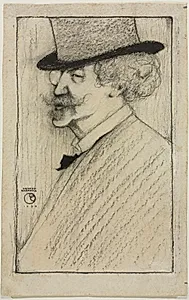
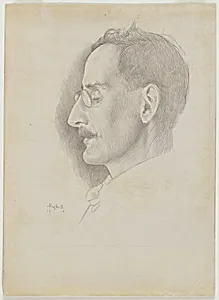
Ernest Haskell (1876–1925) was born on June 30 in Woodstock, Connecticut, on the family farm, where he spent his childhood sketching amid rural surroundings. After attending Woodstock Academy and recovering from typhoid fever through drawing, he was encouraged by his artist sister, Mabel Percy Haskell. Largely self-taught at first, Haskell made three extended trips to Paris starting in 1897, briefly enrolling at the prestigious Académie Julian before pursuing independent studies of old masters like Rembrandt, Leonardo da Vinci, and Albrecht Dürer. There, he became the protégé of James McNeill Whistler, who taught him etching techniques that defined his career.
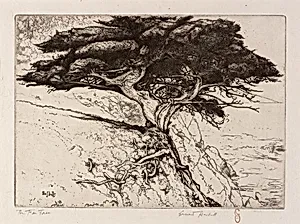
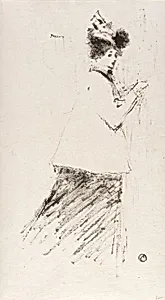
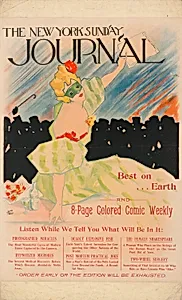
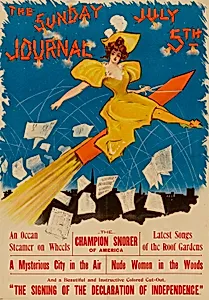
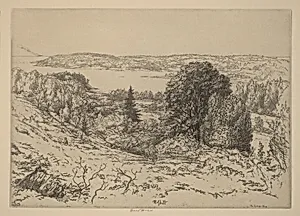
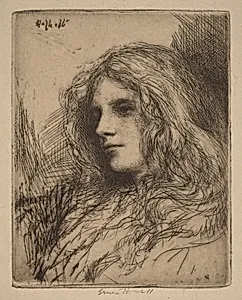
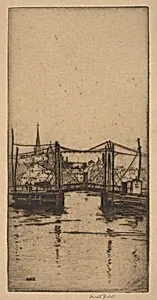
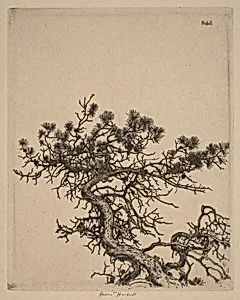
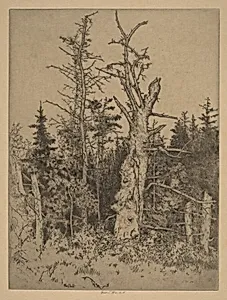
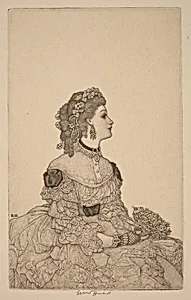
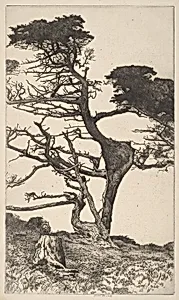
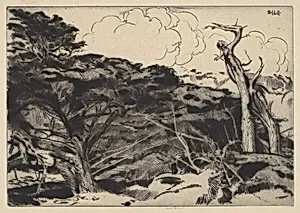
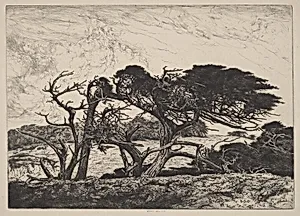
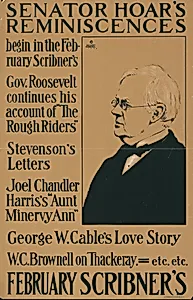
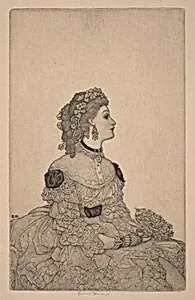
Returning to New York, Haskell worked in the art department of the *New York American*, pioneering theatrical posters for magazines like *Scribner's* and *Collier's*, as well as stars such as Ethel Barrymore and Maude Adams. His etchings and intaglio prints—over 400 in total—earned international acclaim, blending Whistler's lyrical precision with dramatic landscapes and figures, as seen in *The Drawbridge* (1912), *Spectre* (c. 1914–1916), and *The Sylvan Sea* (1924). He exhibited at Alfred Stieglitz's 291 Gallery, the Art Institute of Chicago, and with the Brooklyn Society of Etchers, while contributing camouflage designs during World War I. Later watercolors adopted a modern flair during travels to California and Florida.
Haskell divided time between New York winters—where he held portrait commissions—and Maine summers at his Phippsburg farmhouse, now on the National Register of Historic Places. Married twice, first to writer Elizabeth Foley (d. 1918) with whom he had two children, then to Emma Loveland Laumeister, mother of his twins, he died tragically in a car accident near West Point, Maine. Eulogized by Childe Hassam and John Marin, his legacy endures in collections at the Metropolitan Museum of Art and National Gallery of Art, with retrospectives affirming his mastery of printmaking in the Whistler tradition.