Ctrl K
1874–1958
Eugene Higgins, born Patrick Eugene Higgins in Kansas City, Missouri, in 1874, endured a modest upbringing marked by hardship. The son of an Irish immigrant stonecutter, he lost his mother at age four and relocated with his father to St. Louis boarding houses. There, he attended public schools and night classes at the St. Louis School of Fine Arts, finding the academic structure unsatisfying, before briefly working in an architect's office. Drawn to art from childhood—inspired early by Michelangelo through his father's admiration and Jean-François Millet via magazine reproductions—Higgins departed for Paris in 1897.
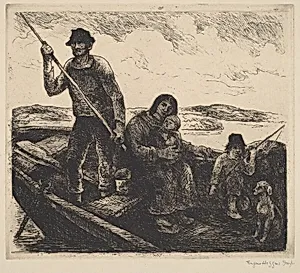
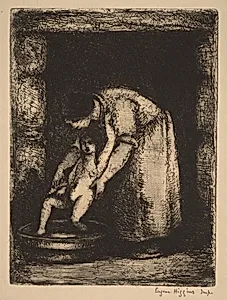
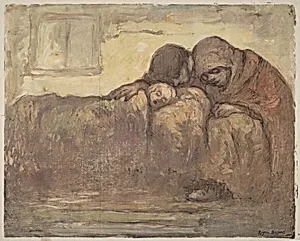
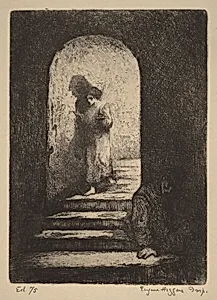
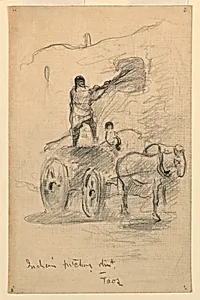
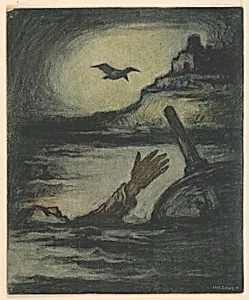
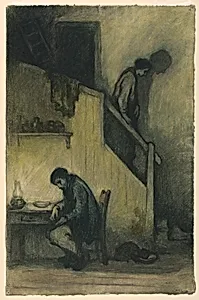
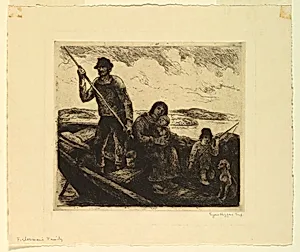
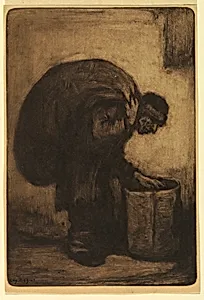
In France, Higgins immersed himself in rigorous training, studying first at the Académie Julian under Jean-Paul Laurens and Jean-Joseph Benjamin-Constant, then at the École des Beaux-Arts from 1899 to 1904 under Jean-Léon Gérôme. He honed etching skills, copied masters in the Louvre, and traveled Europe, absorbing influences from Honoré Daumier and Rembrandt. Returning to New York in 1904 (after a stint in St. Louis), he married fellow artist Mabel Dwight in 1906—though their union ended after about a decade—and later wed Anita Rio, a former music teacher, in the early 1920s. Higgins worked in the Millet-Daumier tradition, crafting poignant, socially conscious depictions of the urban poor, refugees, flood victims, and laborers, imbued with compassion and Christian dignity rather than sentimentality. His monumental figures, etched or painted simply yet forcefully, humanized society's downtrodden, echoing Victor Hugo's *Les Misérables*.
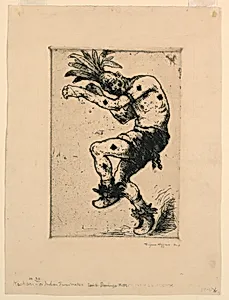
Higgins's oeuvre spans paintings, monotypes, and over 240 etchings acquired by the Library of Congress in 1957. Key works include the prize-winning oil *The Black Cloud* (1931), early illustration *Les Pauvres* (1904), and WPA-era murals like *The First Settlers* (1939, Shawano, Wisconsin post office), *Early Settlers Entering Mt. Pleasant* (1942, Tennessee), and *The Armistice Letter* (1938). He exhibited at the Armory Show (1913), Paris Salon, and National Academy of Design—where he became an associate (1921) and academician (1928)—earning the Altman Prize and others. Summers in Old Lyme, Connecticut, fueled his output until his death in New York in 1958.
Higgins's legacy endures in major collections, including the National Gallery of Art (15 works), Smithsonian American Art Museum, Whitney, Metropolitan Museum, and MoMA, affirming his role as a steadfast chronicler of human resilience amid poverty. Untouched by modernism, his empathetic realism bridges 19th-century humanism with American social art, inviting viewers to confront dignity in despair.