Ctrl K
1855
**Eva Noe** was an American artist active around 1935, best known for her precise, documentary-style drawings created as part of the Index of American Design project. This federal initiative, launched during the Great Depression, aimed to record and preserve examples of American folk art, decorative objects, and design traditions through detailed illustrations. Noe contributed multiple works to this archive, which are now held in the collection of the National Gallery of Art in Washington, D.C.
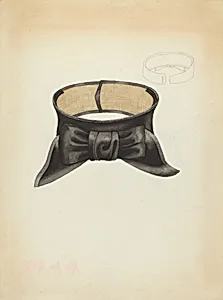
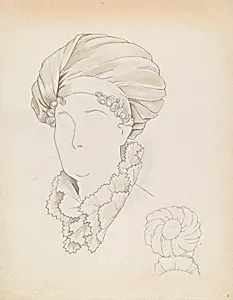
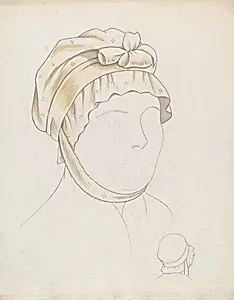
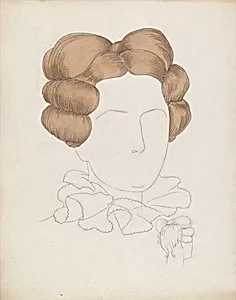
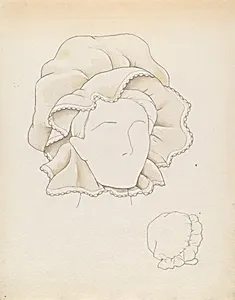
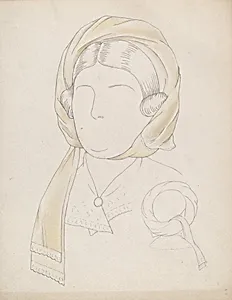
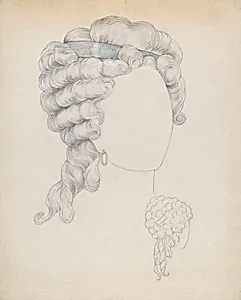
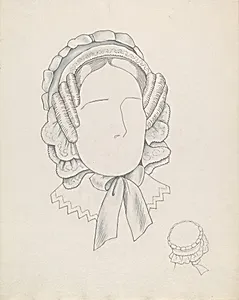
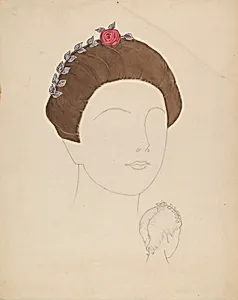
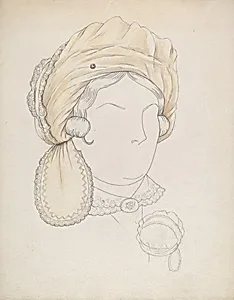
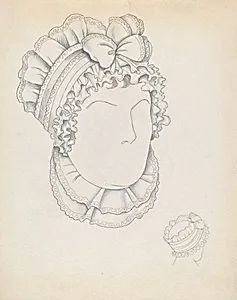
Her surviving pieces focus on intricate renderings of historical and ornamental headwear. Notable examples include a series of “Headdress” drawings dated circa 1937, executed in graphite and watercolor on paper (with some incorporating gouache). These works meticulously capture the shapes, textures, fabrics, and decorative details of bonnets and elaborate coverings, often emphasizing form and surface over facial features. Another key piece is “Stock,” a circa 1940 watercolor and graphite study. All eleven of her known works in the NGA collection belong to the Index of American Design, highlighting her role in this important visual documentation effort.
Little is documented about Noe’s early life, formal training, or personal background. Her artistic approach aligns with the careful, observational techniques favored by Index artists, who worked in a realistic, almost scientific manner to catalog cultural artifacts for posterity. Through these contributions, Noe helped ensure that examples of American decorative arts from earlier eras would remain accessible to future generations of scholars and the public.
Today, her drawings stand as valuable records within one of the nation’s premier art institutions, offering insight into both the objects they depict and the artistic practices of the 1930s. While her overall output appears focused on this project, the enduring presence of her works in a major museum collection underscores their lasting historical and aesthetic significance.