Ctrl K
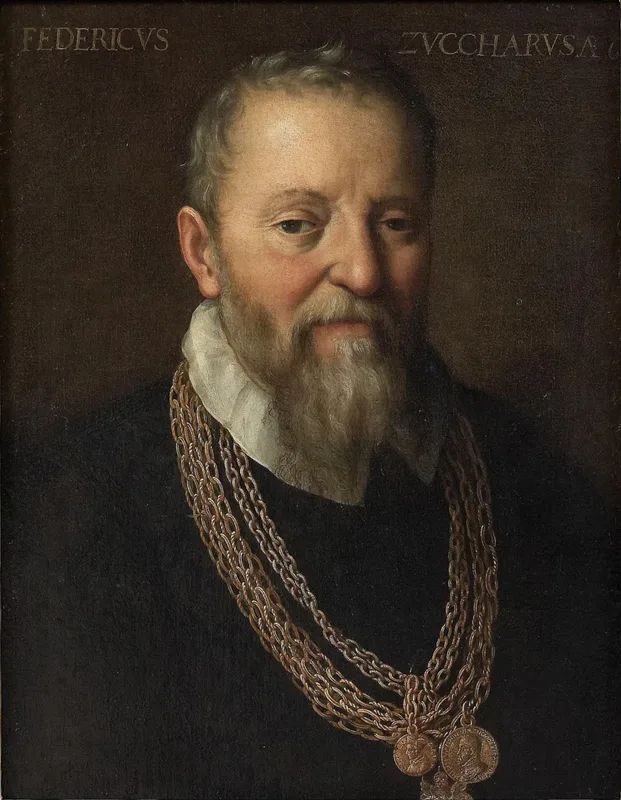
1542–1609
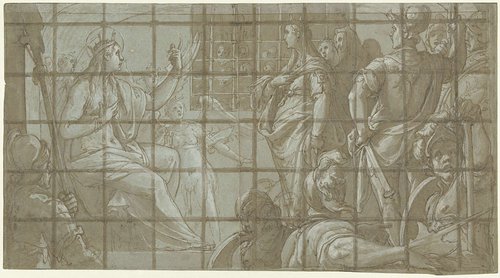
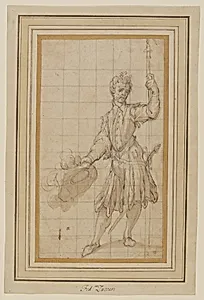
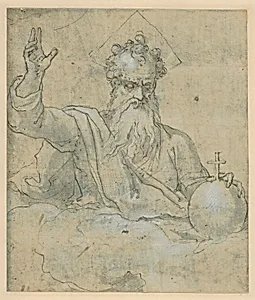
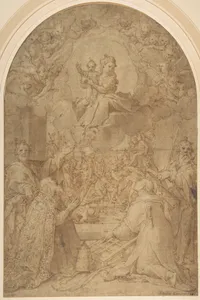
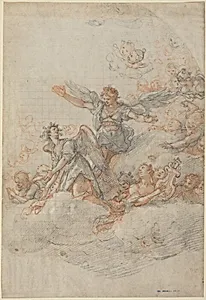
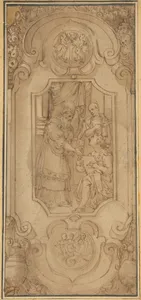
Federico Zuccari, born around 1540 or 1541 in Sant'Angelo in Vado near Urbino, emerged as one of the leading figures of late Mannerism, the younger brother of the acclaimed painter Taddeo Zuccari. The son of a modest painter, Ottaviano, he moved to Rome at age 11, where he studied under his elder brother Taddeo in his bustling workshop, assisting on major commissions and honing his skills in fresco and draftsmanship. Taddeo's sudden death in 1566 thrust the young Federico into prominence, as he completed his brother's unfinished projects, including frescoes at the Villa Farnese in Caprarola. This close mentorship shaped Zuccari's style, blending Mannerist elongation and complexity with Renaissance clarity, evident in his architectural illusions and dramatic compositions.
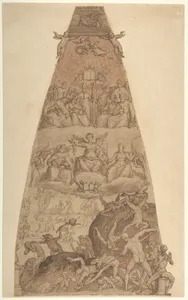
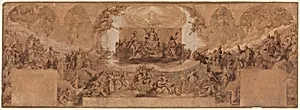
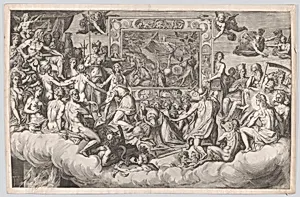
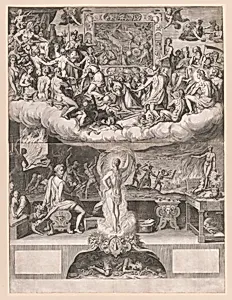
Zuccari's career flourished through prolific commissions across Europe. In Venice, he painted the Adoration of the Magi in 1564 for San Francesco della Vigna and later completed grand frescoes in the Doge's Palace by 1603. He traveled extensively—to Florence, where he finished the Last Judgement fresco in the Cathedral dome (1576–1579) after Giorgio Vasari's death; to England in 1575 for portraits of Queen Elizabeth I and others; and to Spain (1585–1588) for Philip II's Escorial, producing Dante illustrations along the way. Religious subjects dominated, from the Pauline Chapel in the Vatican (c. 1580) to the Passion cycle at Rome's Oratorio del Gonfalone (1569–1576), alongside portraits and allegories like Calumny (c. 1570), a satirical jab at patrons.
In his later years, Zuccari solidified his influence by founding the Accademia di San Luca in Rome in 1595, serving as its first president and mentoring artists like Bartolomeo Carducci. His 1607 treatise, L'idea de' pittori, scultori ed architetti, theorized artistic design, cementing his role as a Mannerist theorist amid shifting tastes. He died in Ancona on July 20, 1609, leaving a vast oeuvre of drawings, frescoes, and oils that bridged Renaissance grandeur and Baroque dynamism, his academy enduring as a cornerstone of art education.