Ctrl K
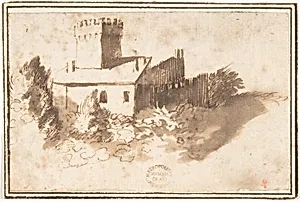
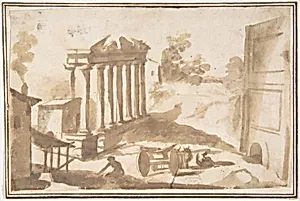
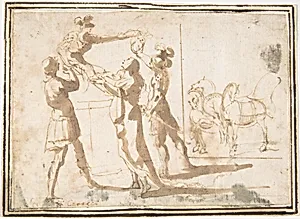
Francesco Allegrini (c. 1615–after 1679) was an Italian painter associated with the Carracci school tradition, a pivotal Bolognese movement that revolutionized art in the late 16th and early 17th centuries. Born around 1615, likely in or near Bologna, Allegrini emerged during the transition from Mannerism to Baroque naturalism championed by the Carracci family—Annibale (1560–1609), Agostino (1557–1602), and Ludovico (1555–1619). These cousins founded the Accademia degli Incamminati in 1582, emphasizing life drawing, classical monumentality, and expressive realism over the artificiality of Mannerism. Allegrini's work aligned with this reformist ethos, though specifics of his early training remain undocumented.
Little is known of Allegrini's formal education or mentors, as his biography is not well detailed in surviving records. He did not study directly under the Carracci brothers, who had passed away by the time of his maturity, but operated within the enduring legacy of their academy. Painters in this school tradition, including those in subsequent generations, absorbed influences from Venetian colorism, Lombard realism, and ancient Roman art, producing dynamic compositions with heightened naturalism and emotional depth. Allegrini's style reflected this synthesis, favoring balanced narratives in religious and mythological subjects, often with a focus on landscape elements and atmospheric light.
Among Allegrini's known works are a small number preserved in public collections, including pieces in British institutions documented by Art UK, attesting to his activity into the late 17th century. Specific dated paintings are scarce, but his output contributed to the dissemination of Carracci ideals beyond Bologna, influencing Roman and northern Italian workshops. His canvases typically featured genre scenes or allegorical figures, echoing Annibale's Palazzo Farnese frescoes in their vitality and humanism.
Allegrini's legacy lies in sustaining the Carracci reform amid the rise of full-blown Baroque drama from artists like Caravaggio and Bernini. As a secondary figure, he helped embed the school's principles—natural observation and anti-mannerist clarity—into the broader fabric of 17th-century Italian painting, bridging the foundational innovations of the 1590s with later developments. Today, his modest oeuvre underscores the collaborative spirit of Bolognese art, where even lesser-known adherents perpetuated a transformative vision. (Word count: 348)