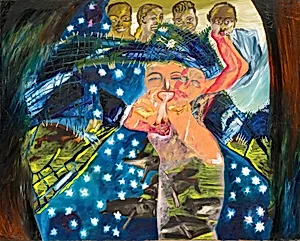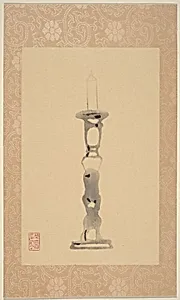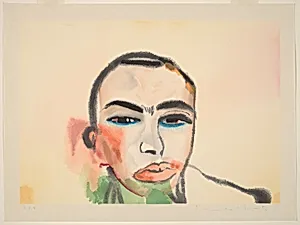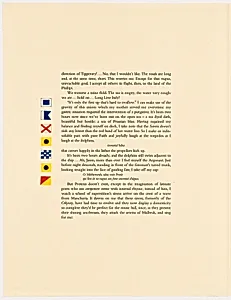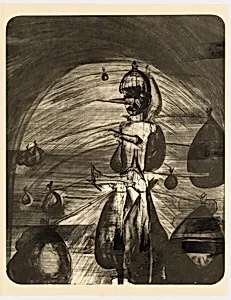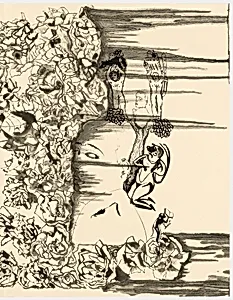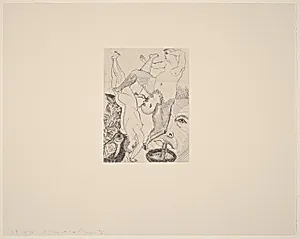
Francesco Clemente was born on March 23, 1952, in Naples, Italy, into an aristocratic family as the only son of Judge Marchese Lorenzo Clemente di San Luca and his wife, Bianca Quarto. Drawn to art from childhood through dreamlike drawings inspired by recollections, he moved to Rome in 1970 to study architecture at Sapienza University but soon abandoned it for visual arts. There, he met the conceptual artist Alighiero Boetti, who became his friend and mentor, encouraging him to pursue painting; they traveled together to Afghanistan in 1974. Influenced by Arte Povera figures like Pino Pascali and Michelangelo Pistoletto, as well as Cy Twombly's presence in Rome, Clemente held his first solo exhibition in 1971 at Galleria Giulia, showing collages.
Clemente's nomadic life profoundly shaped his oeuvre. Beginning trips to India in 1973, he established a studio in Madras (now Chennai), immersing himself in Sanskrit, Vedic texts, and local craftsmanship, which infused his work with mystical, erotic symbolism drawn from Hindu iconography and ancient sites. A principal figure in the Transavanguardia movement—alongside Sandro Chia, Enzo Cucchi, and others—he rejected conceptualism for bold, figurative neo-expressionism, featuring fragmented bodies, contorted self-portraits, and dreamlike narratives in vivid colors. His style evoked Marc Chagall and William Blake, blending Western traditions with Eastern mysticism.
Major works include the groundbreaking *Francesco Clemente Pinxit* (1980–1981), a series of 24 gouaches on antique rag paper created with Indian miniature painters from Orissa and Jaipur, merging contemporary eroticism with traditional techniques. The *Fourteen Stations* (1981–1982), monumental oil-and-wax paintings on linen meditating on suffering and transformation, fetched record prices, with No. XI selling for $1.86 million in 2022. In New York from 1982, he collaborated with Jean-Michel Basquiat, Andy Warhol, Allen Ginsberg, and William S. Burroughs, producing murals for the Palladium nightclub (1985) and over 200 paintings for Alfonso Cuarón's *Great Expectations* (1998), alongside co-founding Hanuman Books.
Clemente's legacy endures through retrospectives at the Solomon R. Guggenheim Museum (2000), Philadelphia Museum of Art (1990), and others, revitalizing figurative painting amid 1980s neo-expressionism and inspiring global artists with his shape-shifting, spiritually charged iconography. His daughter, filmmaker Chiara Clemente, continues the family's creative lineage. With 88 works in our collection, Clemente's oeuvre invites viewers into a transformative realm of the body, myth, and the subconscious.