
Ctrl K
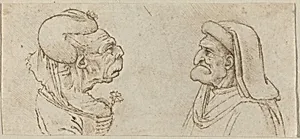
Francesco Melzi (c. 1491–1570) was an Italian painter of the Renaissance born into a noble Milanese family in Lombardy. He joined Leonardo da Vinci’s workshop around 1508 and became the master’s favored pupil, closest friend, and lifelong professional assistant. Melzi accompanied Leonardo through his later years in Rome and France, providing essential support until Leonardo’s death in 1519.
Melzi worked firmly in the Leonardeschi tradition, producing paintings that closely followed Leonardo’s compositional ideas, sfumato technique, and idealized figures. His surviving works include the oil-on-panel *St Anne with the Virgin and Child Embracing a Lamb* (c. 1520–1525), which echoes Leonardo’s famous Louvre composition while demonstrating Melzi’s own refined handling of light and form. After Leonardo’s passing, Melzi returned to Italy, married Angiola di Landriani in 1519, and fathered eight children; he also served as literary executor of Leonardo’s vast notebooks.
Melzi’s most enduring contribution was the careful compilation of Leonardo’s scattered notes and sketches into the *Codex Urbinas*, later known as the basis for the *Trattato della Pittura* (Treatise on Painting). He preserved these manuscripts at his villa in Vaprio d’Adda, where Giorgio Vasari visited him in old age and noted Melzi’s reverent care for the anatomical drawings. One of Melzi’s sons, Orazio, later inherited the collection.
Today Melzi is remembered less for his own paintings than for safeguarding Leonardo’s intellectual legacy, ensuring that the master’s ideas on art and science survived for future generations. His role as faithful disciple and archivist places him among the most important figures in the transmission of Leonardo’s genius.