
Ctrl K
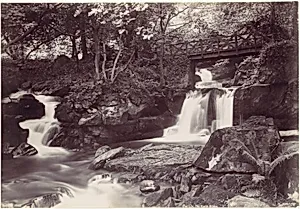
1816–1894
Francis Bedford (1816–1894) was a pioneering British photographer, born in London as the eldest son of the church architect Francis Octavius Bedford.) He trained as an architectural draughtsman and lithographer, exhibiting drawings of architectural subjects from his late teens and listing "Lithographic Artist" as his profession in the 1851 census.) In the early 1850s, Bedford turned to photography as a practical aid to his work, establishing a studio in London around 1850 and becoming a founding member of the Royal Photographic Society in 1853. He married Mary Graham in 1843, and they had at least two sons, Arthur and William, the latter of whom also pursued photography.)
Bedford quickly gained royal favor, receiving commissions that elevated his status. In 1854, Queen Victoria tasked him with photographing objects in the Royal Collection at Marlborough House; this was followed in 1857 by a commission from Prince Albert to document his birthplace in Coburg, Germany.) His pinnacle achievement came in 1862, when he became the first photographer to accompany a royal tour, joining the future Edward VII (then Prince of Wales) on a four-month journey through the Middle East, including Palestine, Syria, Egypt, Athens, and the Mediterranean islands. The resulting *Photographic Pictures Made by Mr. Francis Bedford During the Tour in the East*—three albums of nearly 150 views, such as the Sphinx and Egyptian pyramids or the Temple of Jupiter at Baalbek—were exhibited and published to acclaim.) At home, Bedford excelled in landscape photography, producing stereographs and albumen prints of Wales, England, and architectural sites, including *Photographic Views of North Wales* (1864), *West Facade of Exeter Cathedral* (c. 1864–1865), *Kenilworth Castle* (1860s), and *Photographic Views of Tenby* (1860s). Associated with the Architectural Photographic Association, his style evolved from early artistic manipulations—like painting clouds or enhancing details—to a purer, simpler approach by the late 1870s.
Over four decades, Bedford created nearly 9,000 wet collodion negatives and prints, establishing himself as one of Victorian Britain's finest landscape photographers. His topographic series of England and Wales are hailed as masterpieces of the era, blending technical precision with topographic grandeur.) Works reside in prestigious collections like the J. Paul Getty Museum, National Gallery of Art, and Royal Collection, cementing his legacy as a bridge between lithography, architecture, and the nascent art of photography. A 2009 auction of his royal tour albums fetched $132,000, underscoring enduring appreciation for his pioneering contributions.)
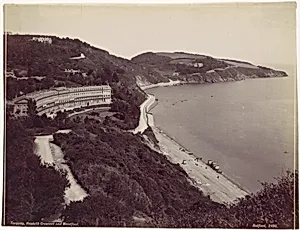
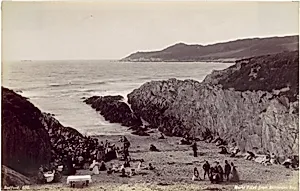
![[Rocky Inlet with Seascape]](https://images.artheonmuseum.org/met/ph/thumb/rocky-inlet-with-seascape-259897.webp)
![[View Through Rocks' Of Tower On Hill]](https://images.artheonmuseum.org/met/ph/thumb/view-through-rocks-of-tower-on-hill-259898.webp)