Ctrl K
1746–1828
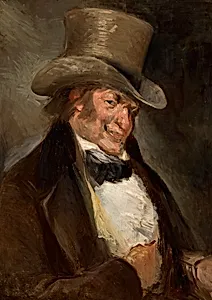
Francisco José de Goya y Lucientes was born on March 30, 1746, in the small Aragonese village of Fuendetodos, Spain, to José Benito de Goya, a master gilder, and Gracia de Lucientes. The fourth of six children in a modest lower-middle-class family, Goya received a basic education before beginning his artistic training at age 14 under the local painter José Luzán y Martínez in Zaragoza, where he spent four years copying prints and honing his skills. Ambitious, he moved to Madrid to study with court favorite Anton Raphael Mengs, though their relationship soured amid failed academy entrance exams in 1763 and 1766 at the Real Academia de Bellas Artes de San Fernando. Returning to Zaragoza, he worked under Francisco Bayeu y Subías, marrying Bayeu's sister Josefa in 1773; of their 20 children, only son Javier reached adulthood.
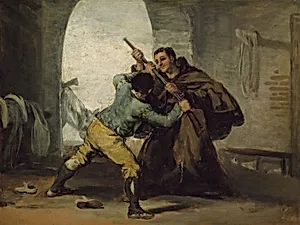
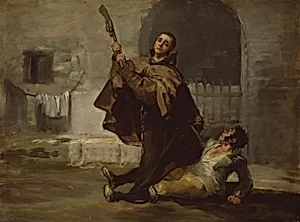
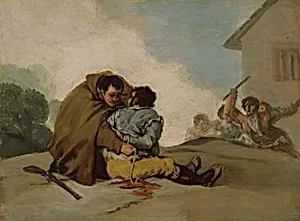
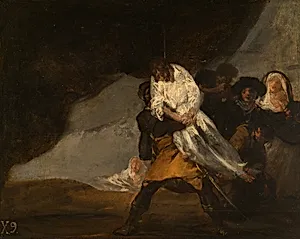
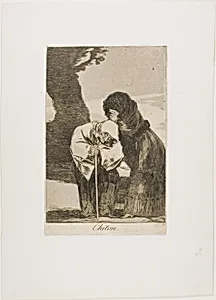
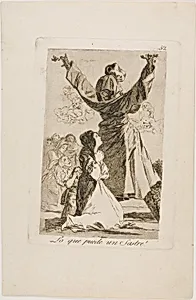
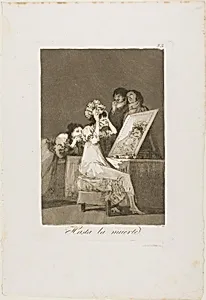
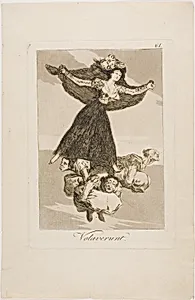
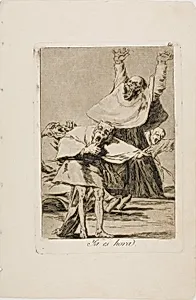
Goya's early career flourished in the Rococo tradition, designing 42 vibrant tapestry cartoons (1775–1780) for the Royal Tapestry Factory, destined for royal palaces like El Escorial and El Pardo. Appointed court painter in 1786 and Primer Pintor de Cámara in 1799, he produced incisive portraits such as *The Family of the Infante Don Luis* (1784) and *Charles IV of Spain and His Family* (1800–1801), subtly echoing Velázquez while critiquing corruption. A 1792–1793 illness left him profoundly deaf, ushering in a darker, proto-Romantic style marked by psychological depth and social satire. Iconic works include the provocative *La maja desnuda* (c. 1790–1800) and its clothed counterpart (c. 1800–1805), and the etching series *Los Caprichos* (1799), exposing folly and superstition with the famous plate "The sleep of reason produces monsters."
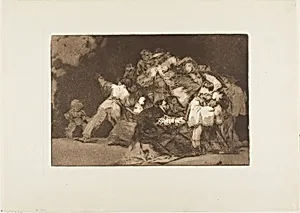
The Peninsular War (1808–1814) horrors inspired Goya's masterpieces *The Second of May 1808* and *The Third of May 1808* (both 1814), raw depictions of rebellion and execution, alongside the unflinching etchings *The Disasters of War* (c. 1810–1820, published 1863). In reclusive later years at his Quinta del Sordo home, he painted the nightmarish *Black Paintings* (1819–1823), including *Saturn Devouring His Son*, directly on walls in brooding oils. Exiled to Bordeaux in 1824 with companion Leocadia Weiss, Goya died on April 16, 1828. Hailed as the last Old Master and first modern artist, his vast oeuvre—over 700 paintings, 280 prints—profoundly shaped Romanticism, Realism, and modernists like Picasso and Dalí, bridging Enlightenment optimism with existential dread.